
Why It Matters
The discovery reshapes our understanding of insect cognition, suggesting even tiny brains can exhibit insight, which has implications for neuroscience, AI modeling, and the ethical treatment of pollinators. It also highlights the potential for bio‑inspired robotics that mimic such efficient problem‑solving.
Key Takeaways
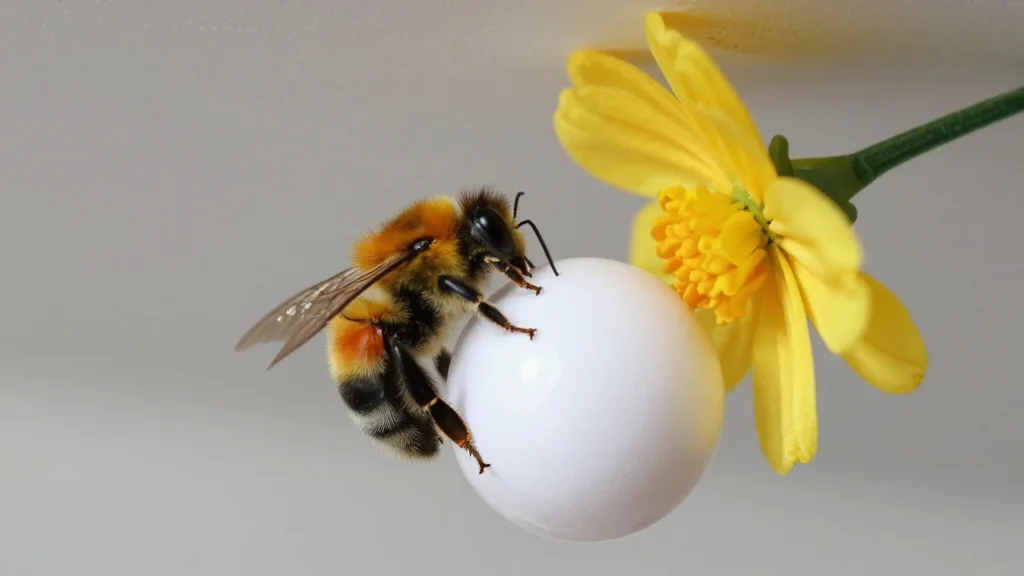
- •Bumblebees rolled a polystyrene ball to reach a flower
- •Experiment mirrors classic 100‑year‑old chimpanzee box‑stacking test
- •Findings dispute the view that insects rely solely on instinct
- •Study published in Science suggests flexible problem‑solving in tiny brains
Pulse Analysis
The recent study from the University of Oulu adds a striking new chapter to the story of animal intelligence. By adapting the famous 1920s chimpanzee experiment—where primates stacked boxes to retrieve a banana—researchers presented bumblebees with a low‑hanging artificial flower that could only be accessed by moving a lightweight ball into position. The insects not only pushed the ball but also climbed onto it, demonstrating a clear understanding of the tool’s purpose. This behavior, captured on high‑speed video and analyzed by behavioral ecologists, marks the first documented instance of true tool use among insects, expanding the roster of species that can solve novel problems without prior training.
Beyond the novelty, the findings challenge entrenched assumptions in biology and psychology that insects operate purely on reflexes and trial‑and‑error learning. Dr. Olli Loukola emphasizes that while bees do not think like humans, their miniature neural circuits can produce flexible, goal‑directed actions. This insight fuels ongoing debates about the evolution of cognition, suggesting that complex problem‑solving may arise from far simpler neural architectures than previously thought. For AI researchers, the study offers a compelling model: efficient, low‑power computation that can adapt to new tasks, informing the design of bio‑inspired algorithms and micro‑robots.
The broader implications touch agriculture, conservation, and ethics. Recognizing bees as capable problem‑solvers may shift public perception, encouraging more humane pollinator management practices and reinforcing the urgency of protecting habitats that support these intelligent foragers. Moreover, the tool‑use paradigm could inspire novel pollination technologies, such as autonomous micro‑drones that mimic bee strategies to enhance crop yields. As the scientific community digests these results, the consensus is clear: even the smallest brains hold profound lessons for both nature and technology.
Bees Can Use Tools To Solve Problems, Study Finds
Comments
Want to join the conversation?
Loading comments...