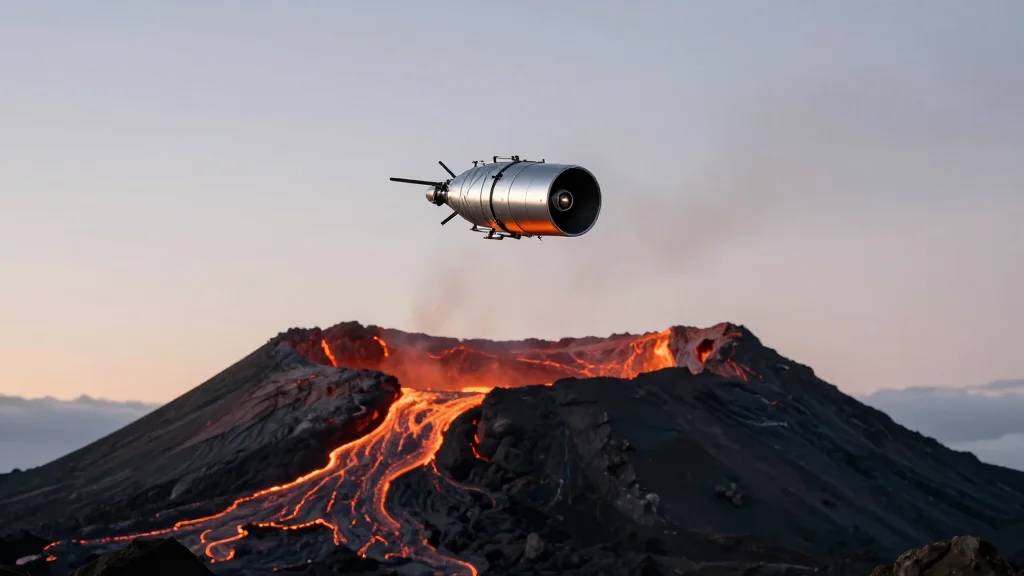
Better Volcano Eruption Predictions on Earth—And Venus—Thanks to Mauna Loa Study
Why It Matters
Improved eruption forecasting enhances public safety and infrastructure protection, while the cross‑planetary insights advance volcanic research beyond Earth.
Key Takeaways
- •Integrated public and private satellite data mapped lava flow in real time.
- •ML algorithm detected thermal rise a month before Mauna Loa eruption.
- •New technique estimates lava‑flow thickness, improving hazard assessments.
- •Findings aid modeling of volcanic activity on Venus and other worlds.
Pulse Analysis
The fusion of commercial and government satellite feeds has transformed volcano monitoring from a reactive to a predictive discipline. By stitching together high‑resolution optical, thermal, and radar observations, the Pitt team produced near‑real‑time maps of Mauna Loa’s advancing lava front, allowing officials to gauge the threat to critical roadways such as Saddle Road within hours. This level of situational awareness reduces evacuation uncertainty and can save millions in infrastructure repair costs.
Beyond real‑time tracking, the researchers leveraged a custom machine‑learning model to flag a subtle thermal uptick a month before the eruption began. Coupled with a novel algorithm adapted from glacier‑thickness studies at NASA Goddard, the system also quantified lava‑flow depth, a metric that directly informs estimates of volume, flow speed, and cooling timelines. Such granular data empower volcanologists to tailor monitoring networks to each volcano’s unique behavior, moving away from one‑size‑fits‑all approaches.
The implications stretch to planetary science. Venus, with its dense atmosphere and extreme surface temperatures, shows enigmatic hot spots that may be active lava flows. By grounding cooling‑rate models in Earth‑based observations from Mauna Loa, scientists can better interpret Venusian thermal anomalies and refine hypotheses about extraterrestrial volcanism. As satellite constellations expand and AI tools mature, the framework pioneered in this study promises faster, more accurate eruption forecasts for communities worldwide and deeper insights into volcanic processes across the solar system.
Better volcano eruption predictions on Earth—and Venus—thanks to Mauna Loa study
Comments
Want to join the conversation?
Loading comments...