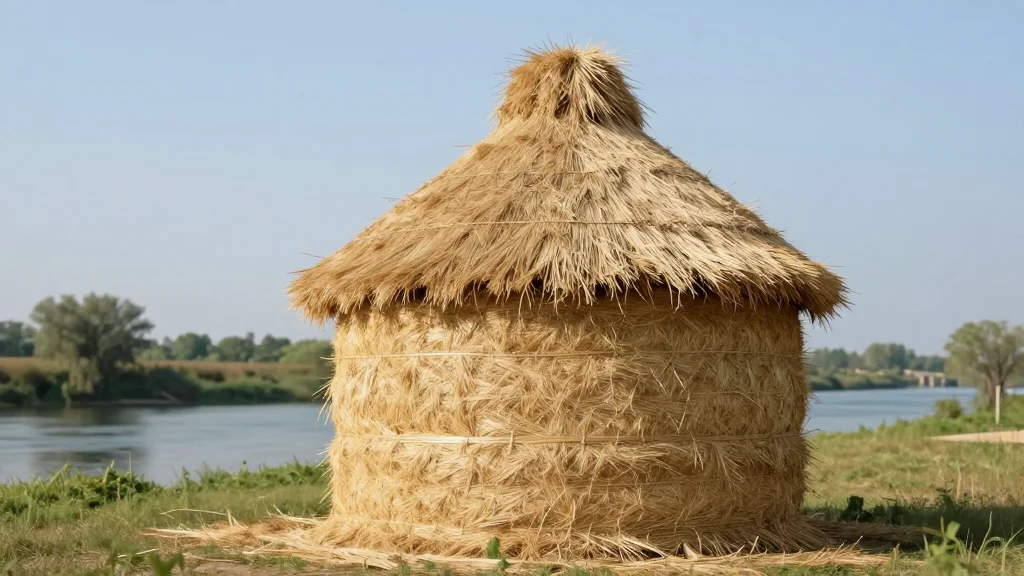
Beware of Wolves, but Straw Houses Could Help With Climate Change
Why It Matters
Straw‑based construction could dramatically cut embodied carbon in the building sector, turning agricultural waste into a climate‑positive resource. Its adoption would help meet net‑zero targets while reducing reliance on high‑emission bricks and concrete.
Key Takeaways
- •Straw houses can sequester carbon, unlike brick construction
- •Agricultural waste turned building material reduces landfill burning
- •Princeton prototype demonstrates feasibility of straw‑based tiny homes
- •Straw offers natural insulation and lower embodied energy than concrete
- •Scaling straw construction requires research into durability and building codes
Pulse Analysis
The construction industry now accounts for roughly 40 % of global CO₂ emissions, making material choice a decisive lever in climate mitigation. Traditional bricks and concrete are energy‑intensive, releasing large amounts of carbon during production, while agricultural residues such as wheat or rice straw are abundant, inexpensive, and inherently store carbon. When left to decompose or burned, straw adds greenhouse gases to the atmosphere; repurposing it as a structural and insulating material flips that waste stream into a carbon sink, aligning building practices with net‑zero goals.
The Princeton team, led by architecture professor Paul Lewis, built a 300‑square‑foot cottage almost entirely from compressed straw bales, showcasing how the material can serve as both load‑bearing walls and high‑performance insulation. The prototype’s thermal performance rivals that of conventional walls, while its embodied energy is a fraction of concrete’s. Yet challenges remain: straw must be protected from moisture, fire risk must be mitigated, and building codes—still written for brick and steel—need updates to certify straw structures. Ongoing research focuses on engineered straw panels and hybrid systems that meet safety standards without sacrificing sustainability.
Scaling straw‑based construction could reshape the supply chain for low‑carbon housing, especially in regions with abundant grain production. Policymakers are beginning to recognize the climate advantage of bio‑based building materials, offering tax credits and fast‑track permitting for projects that meet verified carbon‑sequestration criteria. Compared with timber, straw avoids deforestation concerns and can be sourced locally, reducing transportation emissions. If research resolves durability and fire‑safety hurdles, developers may adopt straw panels for affordable multi‑family units, creating a new market segment that simultaneously cuts emissions and valorizes agricultural waste.
Beware of Wolves, but Straw Houses Could Help With Climate Change
Comments
Want to join the conversation?
Loading comments...