Why It Matters
Understanding *Muttaburrasaurus*’s specialized feeding and sensory adaptations revises models of Cretaceous herbivore niches in Gondwana and informs broader dinosaur evolutionary patterns.
Key Takeaways
- •Toothy beak shows *Muttaburrasaurus* was a selective feeder
- •Large olfactory bulbs suggest acute sense of smell
- •Inner ear structure aligns with bipedal locomotion
- •New nasal bones form air chambers slowing inhaled airflow
- •Findings refine its position on the ornithopod evolutionary tree
Pulse Analysis
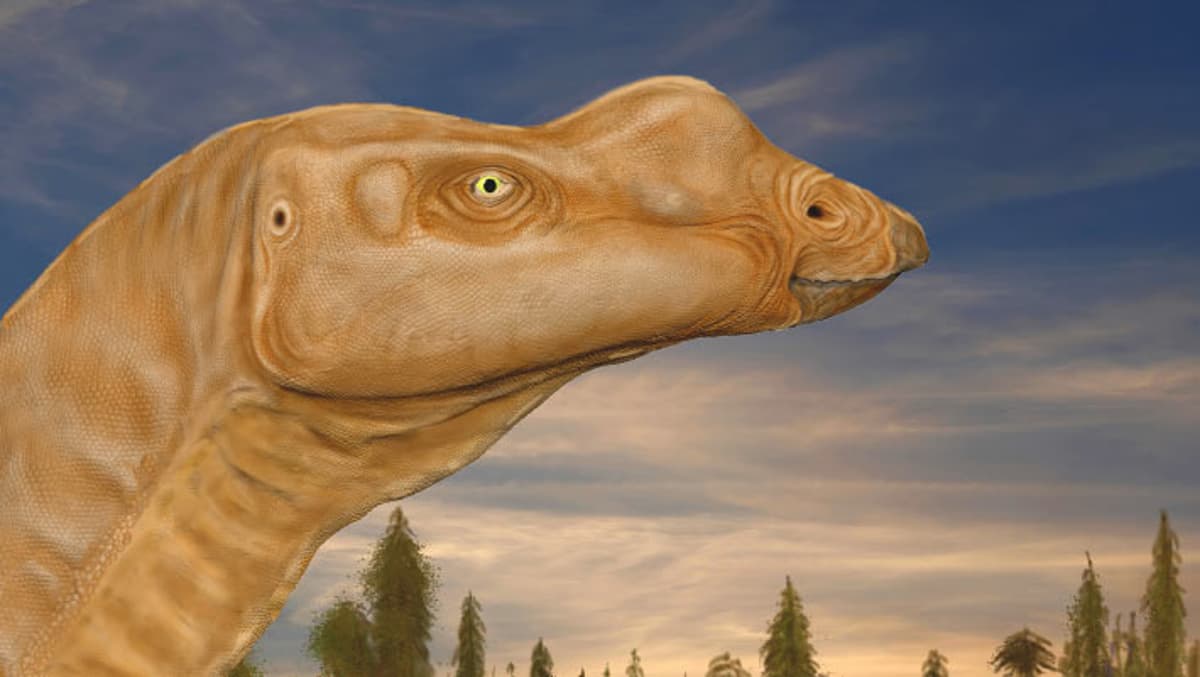
The discovery that *Muttaburrasaurus langdoni* sported a toothed beak overturns a long‑standing view of large ornithopods as uniformly toothless grazers. Using high‑resolution CT scanning, neutron scattering and synchrotron imaging, researchers reconstructed the skull in three dimensions, revealing not only the unexpected dentition but also complex nasal air chambers and massive olfactory bulbs. Such advanced imaging techniques have become indispensable for probing fossil microstructures without damaging precious specimens, allowing paleontologists to extract behavioral clues that were previously hidden in stone.
From an ecological standpoint, a tooth‑lined snout implies that *Muttaburrasaurus* could target specific foliage, seeds, and perhaps invertebrates, a dietary flexibility rarely attributed to megaherbivores of the Cretaceous. The enlarged olfactory region would have enhanced scent detection, aiding in locating nutrient‑rich plants or avoiding predators near the ancient Eromanga Sea. Moreover, the inner‑ear morphology, more akin to bipedal theropods than quadrupedal ornithischians, suggests the dinosaur could shift to rapid hind‑leg locomotion, expanding its foraging range and escape options.
These anatomical insights recalibrate *Muttaburrasaurus*’s position on the ornithopod family tree, linking it more closely to early toothed‑beak forms such as *Camptosaurus* and *Iguanodon*. By highlighting convergent evolution of sensory and locomotor traits across disparate lineages, the study underscores the mosaic nature of dinosaur adaptation in Gondwanan ecosystems. As more complete specimens emerge, researchers anticipate further revisions to the dietary and behavioral models of southern‑hemisphere dinosaurs, reinforcing the importance of interdisciplinary imaging methods in modern paleobiology.
Big-Nosed Herbivorous Dinosaur May Have Been Picky Eater
Comments
Want to join the conversation?
Loading comments...