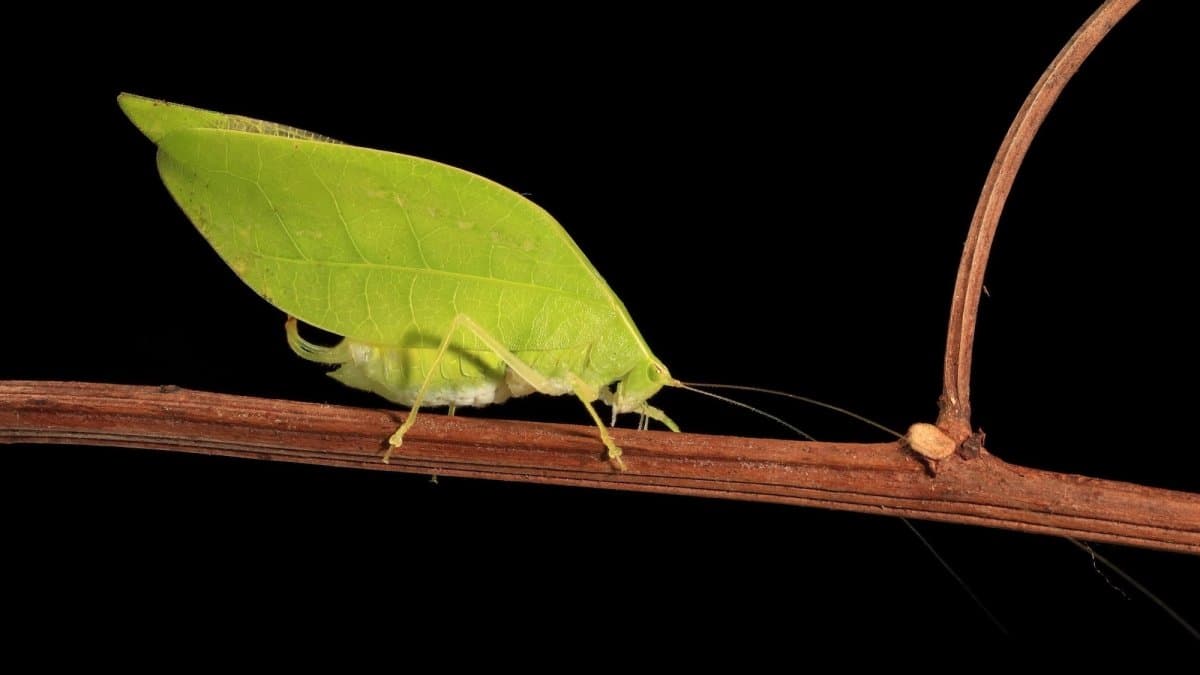
Big Wings and Sweet Songs: The Mating Lives of Panama’s Katydids
Why It Matters
The work proves natural and sexual selection can act together, reshaping how scientists view multifunctional traits and informing evolutionary theory and bio‑inspired design.
Key Takeaways
- •Leaf-mimicking wings lower song pitch, boosting female attraction
- •Removing wing leaf sections raises pitch and reduces call volume
- •Katydid wing structures amplify ultrasonic calls while providing camouflage
- •Study shows natural and sexual selection can act synergistically
- •Researchers plan to investigate evolutionary origins of this dual function
Pulse Analysis
The latest issue of *Proceedings of the Royal Society B* reports that male katydids of the species *Viadana brunneri* on Panama’s Barro Colorado Island use leaf‑shaped wing extensions to shape their courtship songs. Bioacoustic trials showed that intact leafy wings produce a lower‑frequency, louder ultrasonic call, while removal of the leaf portion raises the pitch and diminishes volume. In playback experiments, females consistently responded more often to the lower‑pitch calls, indicating a direct reproductive advantage tied to the wing’s morphology.
This finding challenges the conventional view that defensive camouflage and sexual signaling are mutually exclusive. In many animals, elaborate ornaments increase predation risk, yet the katydid’s leaf mimicry simultaneously dampens acoustic detection by predators and enhances female perception. The study provides a rare empirical example of natural and sexual selection operating in concert, echoing similar dual‑purpose traits observed in fireflies and crickets but with a unique acoustic‑mechanical mechanism. Understanding how such multifunctional structures evolve helps refine models of trait integration across taxa.
The katydid’s acoustic advantage also sparks interest in bio‑inspired engineering. Engineers designing low‑power ultrasonic transmitters could mimic the wing’s resonant leaf geometry to boost signal range without increasing energy use. Moreover, the research opens new avenues for field biologists to explore how habitat‑specific foliage influences signal evolution in other insect groups. As the authors note, future work will trace the phylogenetic steps that linked leaf camouflage to song amplification, offering deeper insight into the co‑evolution of form and function in the natural world.
Big wings and sweet songs: The mating lives of Panama’s katydids
Comments
Want to join the conversation?
Loading comments...