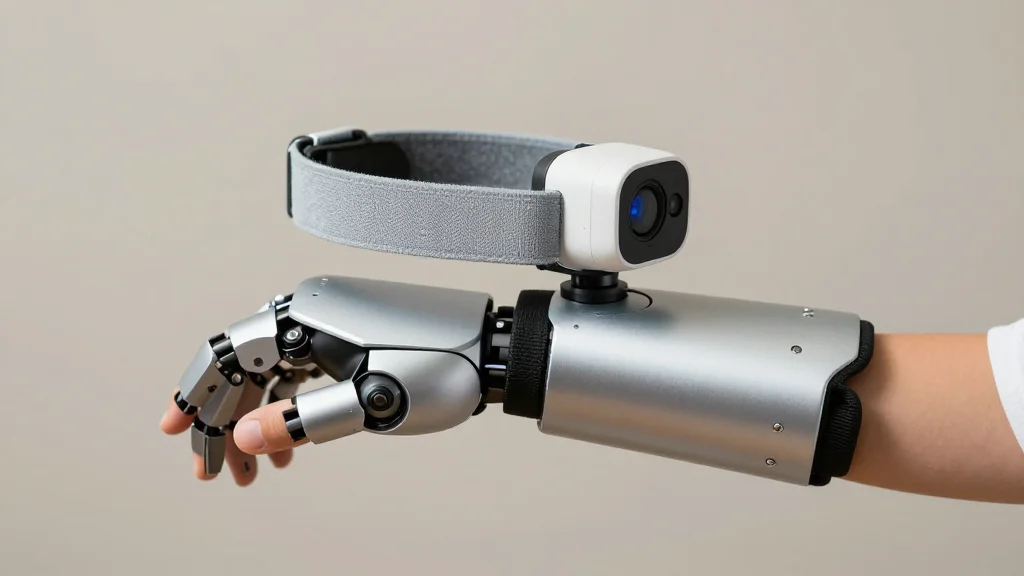
Bimanual versus Unimanual Capacity and Visuospatial Monitoring in Children with and without Unilateral Cerebral Palsy
Why It Matters
These task‑specific deficits highlight the need for targeted bimanual training in uCP rehabilitation and provide objective metrics for clinicians to monitor progress.
Key Takeaways
- •Children with uCP show greater arm asymmetry in bimanual tasks
- •Bimanual tasks reduce use of the more affected arm in uCP
- •uCP children’s gaze variability lower during bimanual coordination
- •uCP gaze stays closer to body, limiting anticipatory visual exploration
- •Visuomotor deficits in uCP are task‑specific, not present in unimanual tasks
Pulse Analysis
Unilateral cerebral palsy affects roughly 2‑3 % of children with cerebral palsy, often leaving one arm markedly weaker. Daily life—from buttoning a shirt to using a tablet—relies on coordinated bimanual actions that demand precise motor planning and continuous visual monitoring. Because the condition creates a clear disparity between a more and less affected limb, clinicians have long sought objective ways to quantify how this asymmetry translates into functional performance, especially under the complex demands of real‑world tasks.
In the recent study, 43 children with uCP and 76 typically developing peers performed both unimanual and bimanual reaching tasks while a robotic exoskeleton recorded arm contributions and an eye‑tracker captured gaze patterns. Results showed a pronounced increase in arm asymmetry during bimanual trials for the uCP group, indicating that the more affected arm is further under‑utilized when both hands must cooperate. Simultaneously, gaze data revealed that uCP children exhibited reduced lateral gaze variability and kept their visual focus nearer to the body, contrasting with the broader, anticipatory visual scanning seen in controls. These findings suggest that bimanual tasks expose a combined motor‑visual coordination deficit not evident in simpler unimanual activities.
The implications for therapy are immediate. Rehabilitation programs can leverage these objective metrics to design and evaluate bimanual training protocols that specifically address the reduced arm contribution and constrained visual exploration. Moreover, the integrated exoskeleton‑eye‑tracking platform offers a scalable assessment tool for clinicians to track progress over time. Future research may explore whether targeted interventions—such as augmented visual feedback or constraint‑induced movement therapy—can normalize gaze patterns and improve the functional use of the affected limb, ultimately enhancing independence for children with uCP.
Bimanual versus unimanual capacity and visuospatial monitoring in children with and without unilateral cerebral palsy
Comments
Want to join the conversation?
Loading comments...