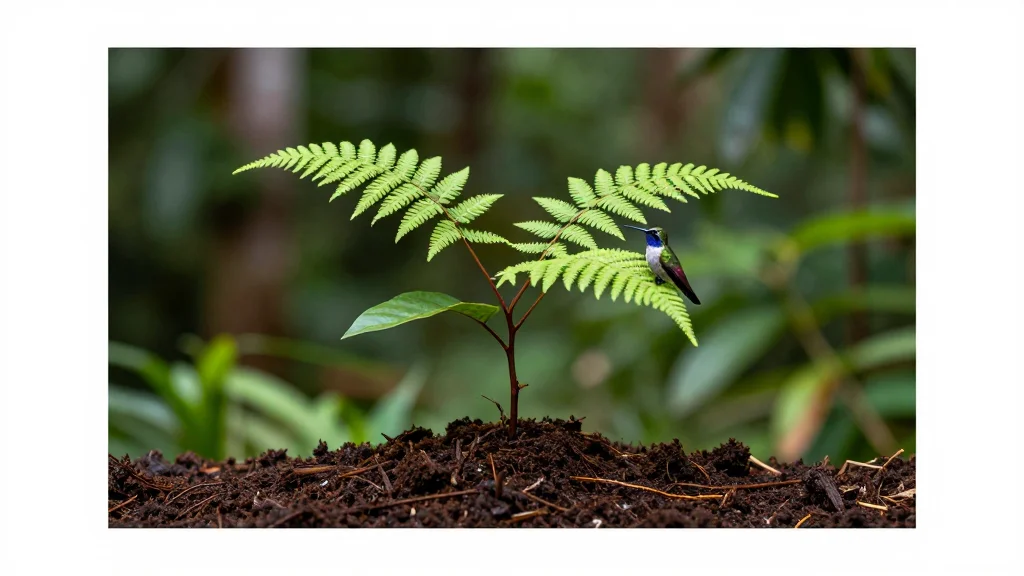
Biodiversity Resilience in a Tropical Rainforest
Why It Matters
Understanding taxon‑specific recovery speeds helps policymakers prioritize natural regeneration and target assisted restoration where natural recovery is too slow, accelerating biodiversity goals and climate benefits.
Key Takeaways
- •Secondary forests can regain 90% species composition in 30–80 years.
- •Animal groups recover faster than trees, especially in former cacao sites.
- •Soil bacteria show the longest recovery, often exceeding centuries.
- •Resistance varies widely; trees exhibit low resistance after agricultural clearing.
- •Land‑use legacy (cacao vs pasture) strongly influences animal recovery speed.
Pulse Analysis
Tropical forests continue to lose area at an alarming rate, with more than half already degraded. As the UN Decade on Ecosystem Restoration urges nations to reverse deforestation, secondary forests have emerged as a critical, cost‑effective avenue for biodiversity recovery. However, the pace at which different organisms bounce back remains uncertain, limiting the ability of governments and NGOs to design evidence‑based restoration programs.
The Ecuadorian chronosequence study fills that gap by tracking 10,856 species and 23,590 bacterial sequences across 62 plots spanning active agriculture, secondary growth, and pristine old‑growth forest. Using negative‑exponential models, the team calculated resistance (the proportion surviving disturbance) and return rates (speed of return) for each taxon. Results show animal groups—particularly pollinators and seed dispersers—can reach 90% of old‑growth similarity within 4 to 25 years, whereas tree species composition may require up to 724 years. Soil bacteria exhibited the slowest recovery, often showing negligible change even after several centuries.
These findings have direct implications for restoration strategy. In landscapes where former cacao plantations dominate, animal communities rebound more quickly, suggesting that natural regeneration can be relied upon for functional recovery. Conversely, areas previously used as pastures or where tree species are the primary concern may need assisted measures such as enrichment planting or soil inoculation. Policymakers can now set realistic timelines for biodiversity targets, allocate resources efficiently, and monitor progress with taxon‑specific benchmarks, ultimately accelerating the transition toward resilient, carbon‑sequestering tropical forests.
Biodiversity resilience in a tropical rainforest
Comments
Want to join the conversation?
Loading comments...