Biometric Face Morph Attack Detection Breakthroughs Offer Border Security Hope
Why It Matters
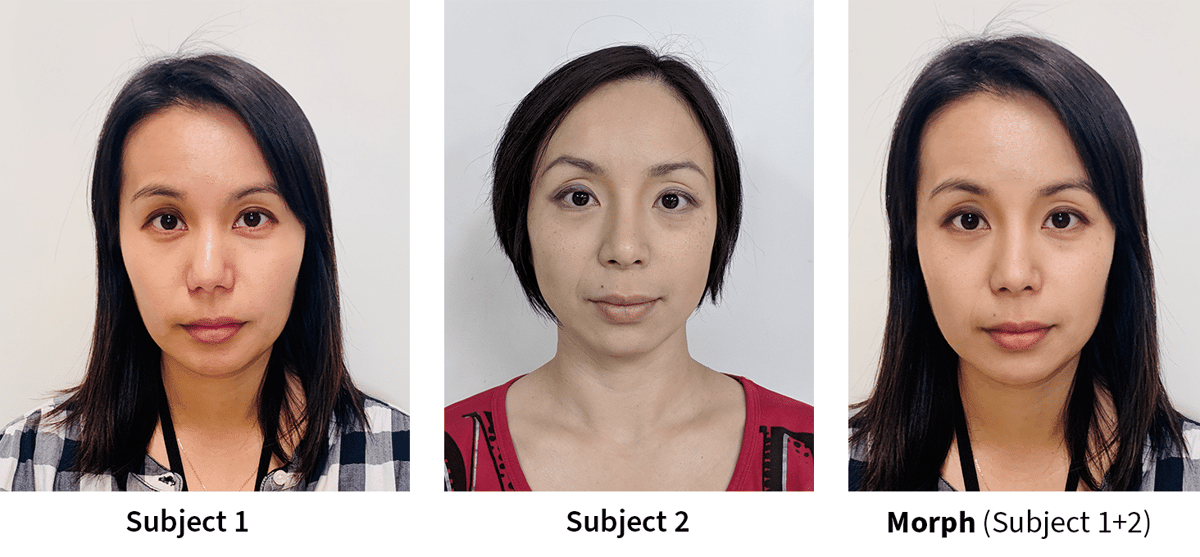
Morph attacks threaten the integrity of passport and ID verification, potentially enabling large‑scale fraud at borders. Effective MAD solutions are critical to safeguard national security and maintain trust in biometric travel systems.
Key Takeaways
- •Diffusion models generate morphs that evade detection up to 99.8%
- •Human border officers detect morphs only marginally better after training
- •Single-image MAD struggles with false positives and evolving attack generators
- •Differential MAD leverages reference images to spot cross‑image inconsistencies
- •Distributed model training can update MAD while preserving privacy
Pulse Analysis
Artificial intelligence has transformed face‑morphing from a niche research curiosity into a practical weapon for fraudsters. Early techniques relied on landmark warping, leaving visible artifacts that could be flagged by simple algorithms. Today, diffusion models synthesize highly realistic composites that blend facial features without the tell‑tale distortions, pushing detection rates to near‑perfect evasion in laboratory tests. This escalation forces biometric vendors to expand training datasets with synthetic morphs and to redesign algorithms that can spot subtle statistical irregularities rather than obvious visual glitches.
Human operators, even those stationed at high‑traffic border checkpoints, struggle to keep pace with these sophisticated attacks. Studies presented at the workshop revealed that untrained observers accepted two‑thirds of 50/50 morphs as genuine, and targeted training lifted that figure by only ten percent. The modest gain suggests that conventional awareness programs are insufficient. Instead, agencies may need to recruit "super‑recognizers"—individuals with innate talent for unfamiliar face matching—to serve as the final line of defense, while relying on automated systems for the bulk of verification.
Technical countermeasures are evolving in parallel. Single‑image MAD (S‑MAD) attempts to flag morphs at the point of document issuance but suffers from high false‑positive rates and the lack of a reference image. Differential MAD (D‑MAD) compares the presented photo against a stored reference, detecting cross‑image inconsistencies, while video‑based MAD (V‑MAD) leverages multiple frames from automated border gates to improve robustness. Researchers also propose distributed model training, where each new data point updates the detection model locally before the aggregated model is shared, preserving privacy and mitigating catastrophic forgetting. Continued investment in large‑scale, diverse datasets and collaborative European research projects will be essential to stay ahead of morphing threats.
Biometric face morph attack detection breakthroughs offer border security hope
Comments
Want to join the conversation?
Loading comments...