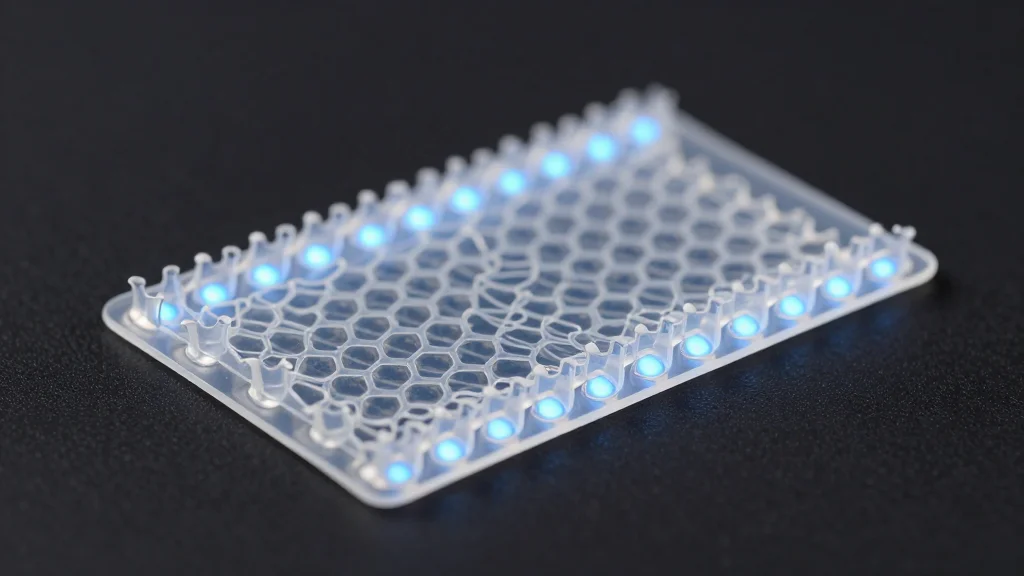
Biomimetic Ion Channel Design for Simultaneous Lithium‐Ion Flux Regulation and Interfacial Stabilization in Lithium Metal Batteries
Why It Matters
By simultaneously controlling ion flux and interfacial chemistry, the technology tackles the primary safety and lifespan barriers of lithium‑metal batteries, paving the way for higher‑energy EVs and portable devices.
Key Takeaways
- •BCE‑encapsulated MOFs form bionic Li+ channels in separators.
- •Uniform Li+ flux suppresses dendrite formation, extending cycle life.
- •Anion‑rich solvation sheath yields inorganic‑rich SEI (LiF, Li3N).
- •Symmetric cells run >1500 h; full cells keep 86% after 1200 cycles.
- •Strategy bridges bio‑inspired design with commercial battery manufacturing.
Pulse Analysis
Lithium‑metal anodes promise energy densities far beyond conventional graphite, a key advantage for electric‑vehicle ranges and next‑generation consumer electronics. Yet the high reactivity of lithium creates an unstable electrode‑electrolyte interface, leading to dendritic growth that can short‑circuit cells and accelerate capacity fade. Conventional separator designs struggle to deliver the uniform ion transport needed to suppress these filaments, while electrolyte additives alone cannot guarantee a robust solid‑electrolyte interphase (SEI). A paradigm shift toward engineered ion pathways is therefore essential for commercial viability.
The new approach embeds benzo‑12‑crown‑4‑ether (BCE) within metal‑organic framework (MOF) pores, producing bionic ion channels that mimic biological membranes. The crown‑ether sites create strong ion‑dipole interactions, equalizing Li+ flux across the separator and weakening Li+‑solvent coordination, which shifts the solvation sheath toward anion dominance. During cycling, these anions preferentially decompose, generating an SEI rich in inorganic LiF and Li3N that mechanically stabilizes the lithium surface. Laboratory tests show symmetric Li||Li cells operating stably for more than 1,500 hours and Li||LiFePO4 full cells maintaining 86 % capacity after 1,200 cycles at 2C, confirming the dual‑function design.
If the separator can be produced at scale, the biomimetic channel concept could be retrofitted into existing lithium‑metal battery factories, offering a low‑cost route to safer, longer‑lasting packs. The inorganic‑rich SEI not only blocks dendrite penetration but also improves coulombic efficiency, a critical metric for fast‑charging applications. Industry analysts see such advances as a catalyst for broader EV adoption, where every 10 % increase in energy density translates into hundreds of additional miles per charge. Ongoing research will focus on optimizing MOF pore size, crown‑ether loading, and electrolyte compatibility to further push cycle life beyond the 1,200‑cycle benchmark.
Biomimetic Ion Channel Design for Simultaneous Lithium‐Ion Flux Regulation and Interfacial Stabilization in Lithium Metal Batteries
Comments
Want to join the conversation?
Loading comments...