Why It Matters
The finding proves that dormant supermassive black holes still generate feedback, reshaping models of galaxy evolution and energy balance in the interstellar medium.
Key Takeaways
- •ALMA data revealed a 3‑light‑year cone‑shaped cavity around Sgr A*.
- •Hot outflow estimated to have persisted for at least 20,000 years.
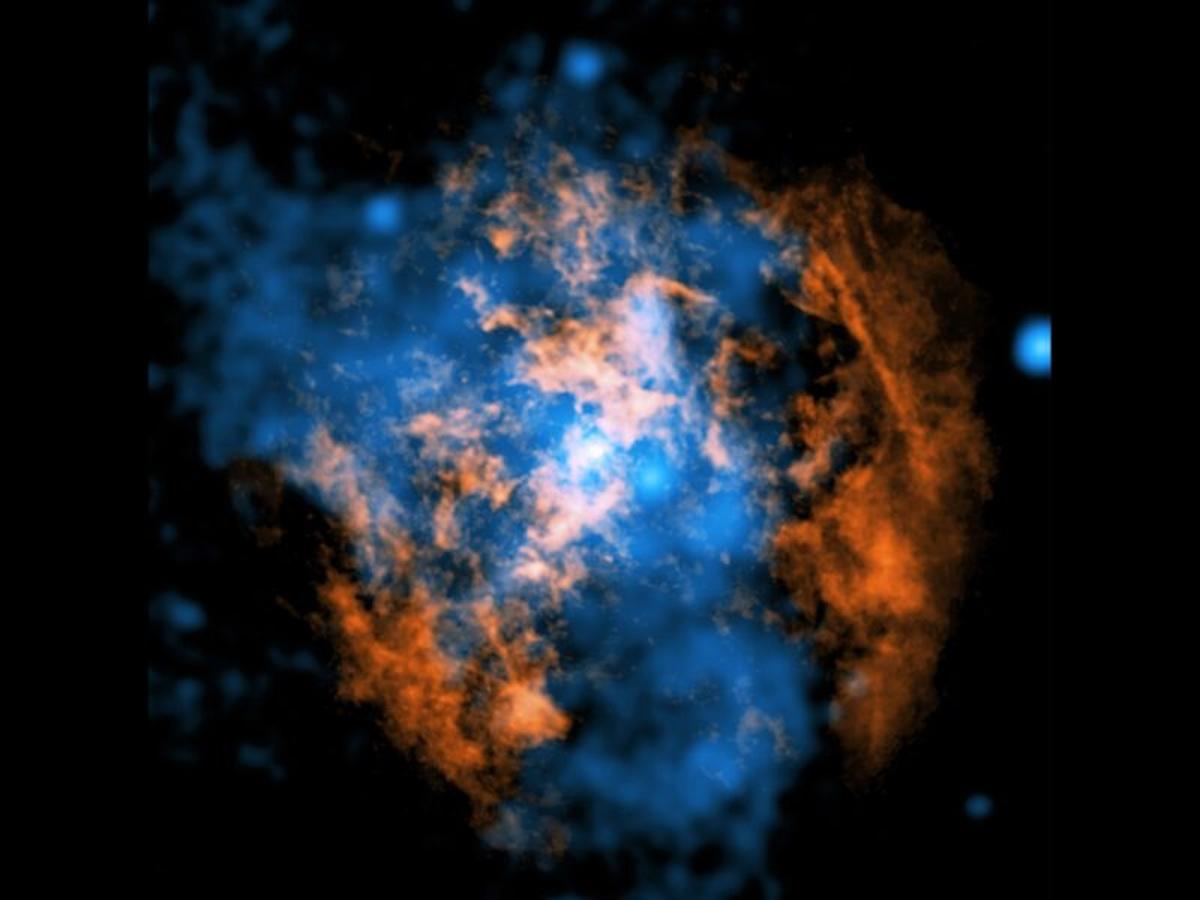
- •Chandra X‑ray images align with molecular cavity, confirming wind origin.
- •Nearby stars lack energy to carve cavity, ruling out alternative sources.
- •Discovery shows quiescent black holes still drive feedback into their galaxies.
Pulse Analysis
Black holes are not merely cosmic vacuum cleaners; theory predicts they also expel matter through winds and jets that regulate their surroundings. While active galactic nuclei display spectacular outflows, the Milky Way’s own supermassive black hole, Sagittarius A*, has long appeared dormant, leaving a gap in empirical evidence for such feedback during quiescent phases. The recent detection of a hot wind from Sgr A* bridges that gap, confirming that even low‑luminosity black holes generate outflows capable of reshaping nearby interstellar material. Such winds transport energy and momentum, influencing star formation and gas dynamics on parsec scales.
The breakthrough relied on five years of ultra‑high‑resolution observations from the Atacama Large Millimeter/Submillimeter Array (ALMA) combined with archival Chandra X‑ray data. By filtering out the bright radio core of Sgr A*, the team produced the sharpest molecular‑gas map yet, exposing a three‑light‑year, cone‑shaped void where cold gas is absent. The alignment of this cavity with X‑ray emission provides a multi‑wavelength fingerprint of a hot outflow, overcoming the long‑standing obstacle of viewing the Galactic Center through dense dust and ionized gas. The analysis also ruled out stellar winds, confirming the black hole as the sole energy source.
Identifying a persistent wind from a quiescent supermassive black hole reshapes our understanding of galactic feedback cycles. It suggests that the majority of galaxies spend most of their lifetimes in a low‑activity state, yet still inject energy into their interstellar medium, moderating star‑formation rates and preventing runaway cooling. The Sgr A* discovery offers a nearby laboratory to calibrate theoretical models that have relied on distant, highly active nuclei. Future observations with next‑generation interferometers will likely reveal similar quiet‑phase outflows across the local universe. These findings will refine predictions of black‑hole growth and its impact on cosmic structure.
Black hole wind emerges after 50-year search
Comments
Want to join the conversation?
Loading comments...