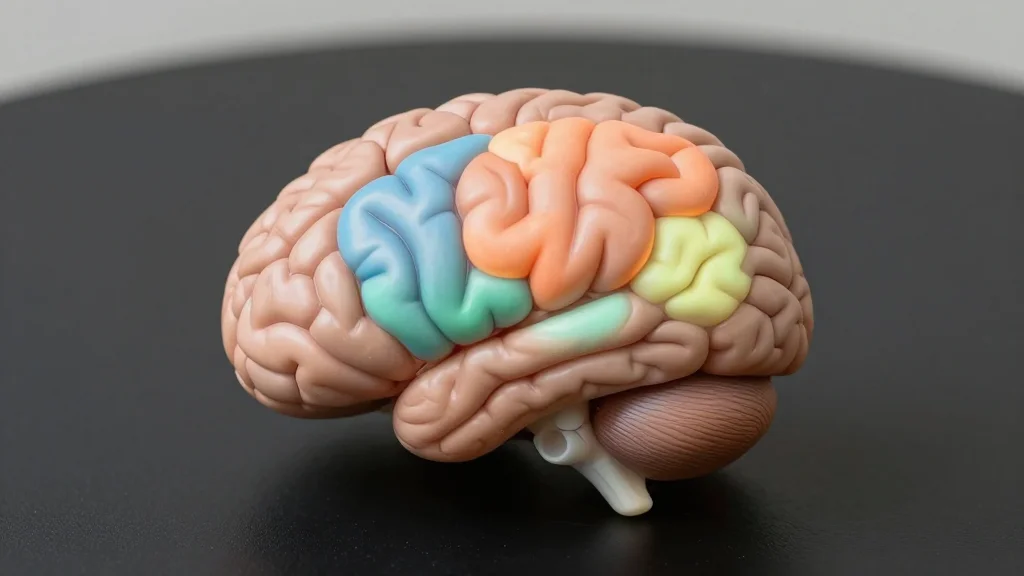
Brain Activity Reveals How Well People Adapt Their Behavior to Others
Why It Matters
Identifying brain markers of adaptive social reasoning offers a quantitative tool for assessing and potentially treating conditions that impair interpersonal interaction.
Key Takeaways
- •Study involved 550+ participants playing repeated rock-paper-scissors.
- •fMRI identified temporoparietal and dorsomedial prefrontal cortices as key nodes.
- •Neural activity patterns predicted adaptation accuracy for unseen participants.
- •Prediction success reached nearly 90% across the cohort.
- •Findings may inform diagnostics for autism and borderline personality disorder.
Pulse Analysis
Adaptive mentalization—the ability to continuously infer and adjust to others' intentions—has long been studied through static tasks like story comprehension. The Zurich team shifted the paradigm by embedding participants in a dynamic, repeated rock‑paper‑scissors game, mirroring real‑world social exchanges where strategies evolve moment by moment. This methodological leap provides richer data on how the brain negotiates uncertainty and updates social models, offering fresh insight into the fluid nature of human interaction.
Using functional magnetic resonance imaging, the researchers pinpointed a network of regions that surge when participants reconsider an opponent's behavior. The temporoparietal cortex, a hub for theory of mind, worked alongside the dorsomedial prefrontal cortex, which evaluates social information, while the anterior insula and ventrolateral prefrontal cortex signaled prediction errors. By feeding these activation patterns into a computational model, the team could forecast an individual's adaptive flexibility with almost 90% accuracy, even for participants whose neural data were not part of the training set. This "neural fingerprint" demonstrates that brain dynamics can serve as reliable predictors of social adaptability.
The implications extend beyond basic neuroscience. Quantifiable neural markers of mentalization could transform clinical approaches to autism spectrum disorder, borderline personality disorder, and other conditions marked by social cognition deficits. Objective biomarkers would enable earlier detection, personalized therapy monitoring, and more targeted interventions. Moreover, the study's dynamic design sets a precedent for future research aiming to bridge laboratory findings with everyday social behavior, paving the way for neuro‑economics to inform mental health strategies.
Brain activity reveals how well people adapt their behavior to others
Comments
Want to join the conversation?
Loading comments...