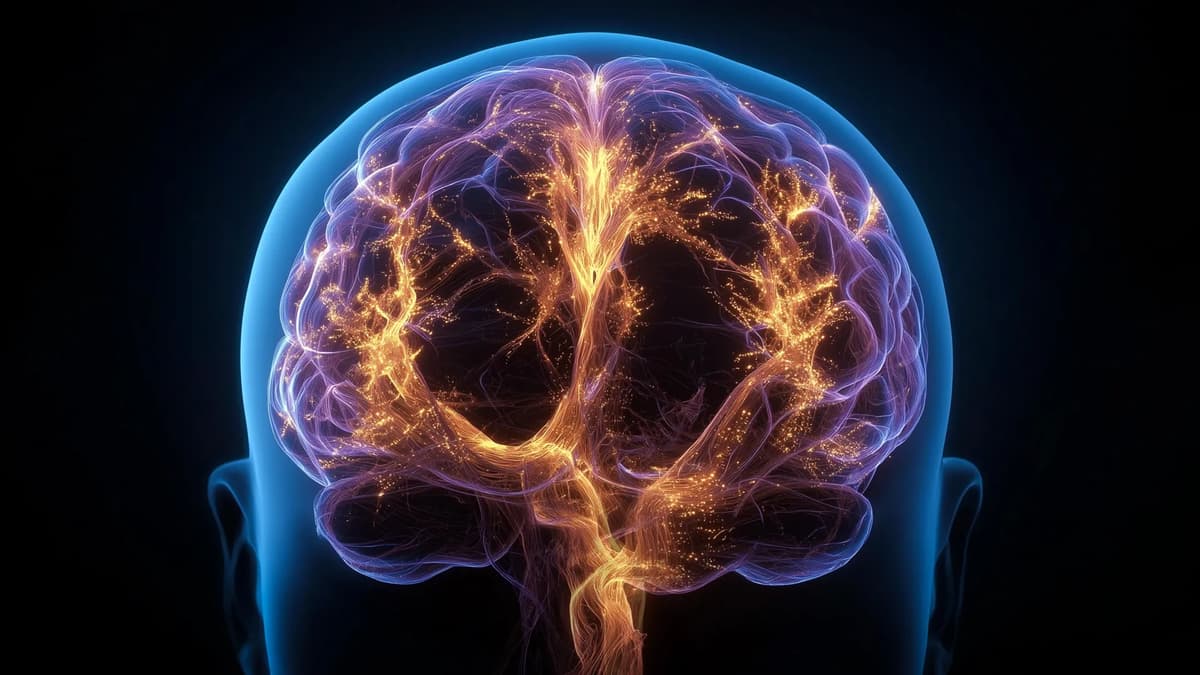
Brain Scans Reveal a Shocking Difference Between Psychopaths and Other People
Why It Matters
The discovery provides a measurable neurobiological marker that could refine risk assessment, inform treatment strategies, and shape policies aimed at preventing antisocial behavior.
Key Takeaways
- •Striatum volume 10% larger in individuals with psychopathic traits
- •Larger striatum linked to heightened stimulation‑seeking and impulsivity
- •Study used community sample, including 12 women, expanding beyond prisons
- •Findings support neurodevelopmental theories of psychopathy’s biological roots
- •Later work points to broader brain network involvement beyond striatum
Pulse Analysis
The enlarged striatum finding adds a concrete anatomical dimension to a field long dominated by behavioral and environmental theories. By quantifying a 10 percent size increase, the study bridges the gap between abstract concepts of reward circuitry and observable brain morphology. This aligns with a growing body of neuroimaging work that treats psychopathy as a spectrum, where structural variations influence motivation, risk‑taking, and emotional regulation. For investors and policymakers, such biomarkers hint at more precise diagnostic tools and potential early‑intervention pathways.
Clinically, a measurable brain marker could reshape assessment protocols for at‑risk youth and adults. Incorporating MRI‑based metrics alongside the Psychopathy Checklist‑Revised may improve predictive accuracy for violent or impulsive behavior, guiding targeted therapeutic programs. However, the ethical stakes are high; labeling individuals based on brain size raises privacy concerns and the risk of stigmatization. Stakeholders must balance scientific insight with safeguards that prevent misuse in legal or employment contexts.
Future research is already moving beyond a single‑region focus toward network‑level analyses. Recent meta‑studies map psychopathy onto disrupted default‑mode and subcortical circuits, suggesting that the striatum interacts with frontal‑subcortical pathways governing impulse control. Integrating genetics, longitudinal development data, and environmental factors will be essential to untangle causality. As the field matures, multidisciplinary collaborations could yield interventions that modulate neural pathways—through pharmacology, neurofeedback, or behavioral training—offering a more nuanced approach to reducing antisocial outcomes.
Brain scans reveal a shocking difference between psychopaths and other people
Comments
Want to join the conversation?
Loading comments...