Brainwide Blood Volume Reflects Opposing Neural Populations
Why It Matters
Understanding that blood‑flow signals arise from two antagonistic neuronal groups resolves long‑standing inconsistencies in fMRI and neurovascular research, enabling more accurate interpretation of brain imaging data for both basic neuroscience and clinical diagnostics.
Key Takeaways
- •fUSI shows whisking-driven brain-wide blood volume changes.
- •Two neuronal populations have opposite haemodynamic responses to arousal.
- •Combined activity of these populations predicts blood volume across states.
- •Opposing populations exist in every brain region, unifying neurovascular coupling.
- •Findings reconcile prior conflicting HRF reports across regions and states.
Pulse Analysis
Neurovascular coupling—the relationship between neuronal firing and cerebral blood flow—underpins functional imaging techniques such as fMRI. For decades, researchers have reported heterogeneous haemodynamic response functions (HRFs), with some regions showing strong, positive blood‑flow changes and others displaying weak or even negative responses. These discrepancies have been attributed to differences in brain state, cell type, or methodological variations, leaving the field without a cohesive model. A unified framework is essential because clinicians and neuroscientists rely on blood‑oxygen‑level‑dependent signals to infer neural activity, and misinterpretations can skew both basic research and diagnostic conclusions.
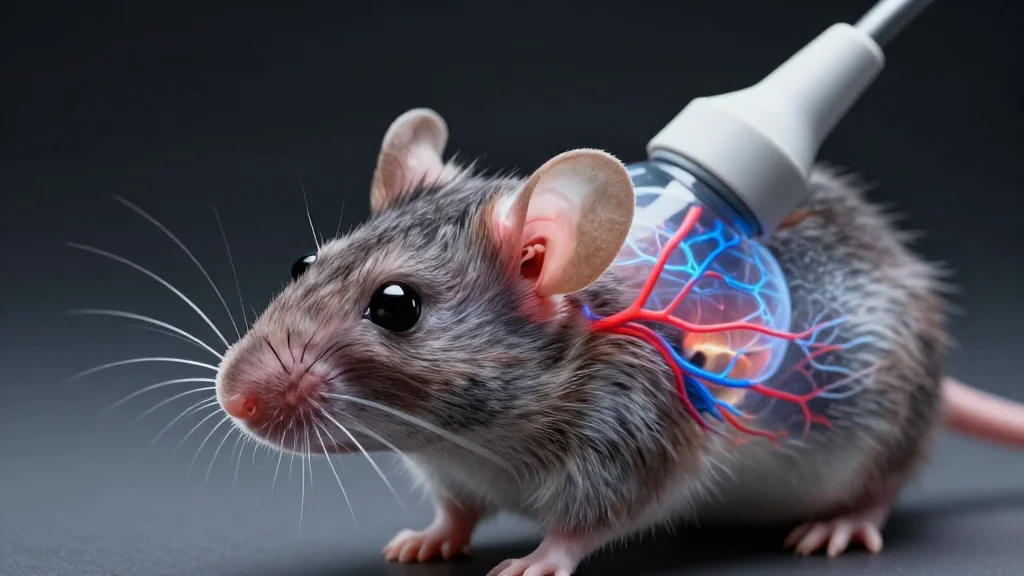
The new Nature study leverages functional ultrasound imaging (fUSI) together with high‑density Neuropixels probes to record blood volume and single‑neuron activity across the entire mouse brain during spontaneous whisking, a reliable marker of arousal. The authors identified two intermingled neuronal populations: one that ramps up firing with whisking and produces a classic, delayed positive haemodynamic response, and another that suppresses firing and generates a complementary negative response. By linearly combining the activity of these groups, the researchers could predict the observed blood‑volume fluctuations in every region, regardless of whether the animal was still, whisking, or running. This dual‑population model reconciles prior conflicting HRF observations.
The implication of a bidirectional neuronal contribution to blood flow extends far beyond mouse physiology. Human fMRI analyses can now incorporate the possibility that regional signal polarity reflects underlying mixtures of excitatory‑like and inhibitory‑like activity, improving the specificity of brain‑mapping studies and potentially refining biomarkers for neurological disorders. Moreover, the ability to predict vascular signals from neuronal ensembles opens avenues for more accurate brain‑computer interfaces and for interpreting neurovascular changes in disease states such as stroke or dementia. Future work will need to verify whether similar opposing populations exist in primates and how neuromodulators shape their haemodynamic signatures.
Brainwide blood volume reflects opposing neural populations
Comments
Want to join the conversation?
Loading comments...