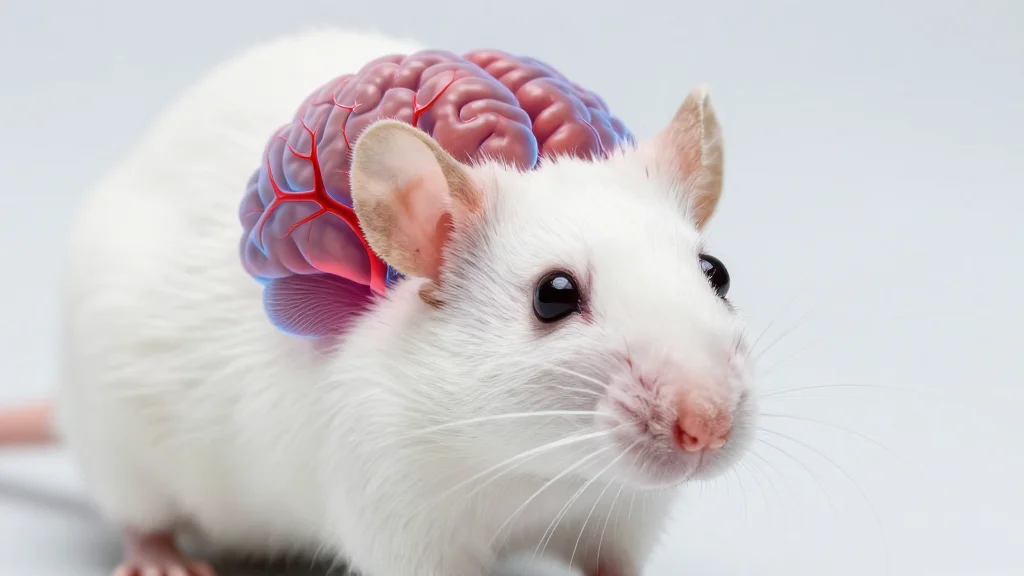
Brainwide Blood Volume Reveals Opposing Neural Activity
Why It Matters
Understanding that neuronal subtype composition, not just overall firing, governs vascular signals refines neuroimaging biomarkers and opens therapeutic avenues for arousal and attention disorders.
Key Takeaways
- •Dual-population model halves mean‑squared error across brain regions
- •Arousal+ neurons boost blood volume; Arousal‑ reduce it
- •Correlation rises from r=0.44 to r=0.63 using population ratios
- •Bulk firing adds little beyond relative neuron‑population information
- •Approach promises more accurate fMRI interpretation and disease biomarkers
Pulse Analysis
Neurovascular coupling has long been modeled on aggregate neural activity, a simplification that obscures the nuanced interplay between distinct neuronal subtypes and cerebral blood flow. The recent Nature paper by Landemard et al. challenges this paradigm by demonstrating that separating arousal‑related excitatory (Arousal+) and suppressive (Arousal‑) populations yields a far more faithful representation of blood‑volume dynamics. This shift addresses a persistent gap in functional imaging: the inability of bulk firing‑rate models to reproduce the biphasic, delayed vascular responses observed during rapid behaviors such as whisking.
The team leveraged simultaneous Neuropixels electrophysiology and high‑resolution functional ultrasound imaging across the mouse brain, assigning each recorded unit to an Arousal+ or Arousal‑ class based on its firing modulation with arousal. By fitting region‑specific hemodynamic response functions for each class, the composite model reproduced early vasodilation followed by later undershoots, cutting mean‑squared error roughly in half compared with traditional models. Quantitatively, the correlation between predicted and observed blood volume rose from 0.44 to 0.63, and the relative abundance of the two populations emerged as the dominant explanatory factor, rendering bulk firing contributions marginal.
Beyond academic insight, these findings have immediate practical implications for the interpretation of fMRI and functional ultrasound data, where vascular signals are often taken as proxies for neural activity. Incorporating population‑ratio metrics could sharpen brain‑state decoding, improve the specificity of neuroimaging biomarkers, and guide interventions for disorders marked by arousal dysregulation, such as ADHD, anxiety, and sleep disturbances. Future work may exploit optogenetic or chemogenetic tools to manipulate Arousal+ and Arousal‑ circuits, translating this mechanistic understanding into therapeutic strategies and more accurate diagnostic imaging.
Brainwide Blood Volume Reveals Opposing Neural Activity
Comments
Want to join the conversation?
Loading comments...