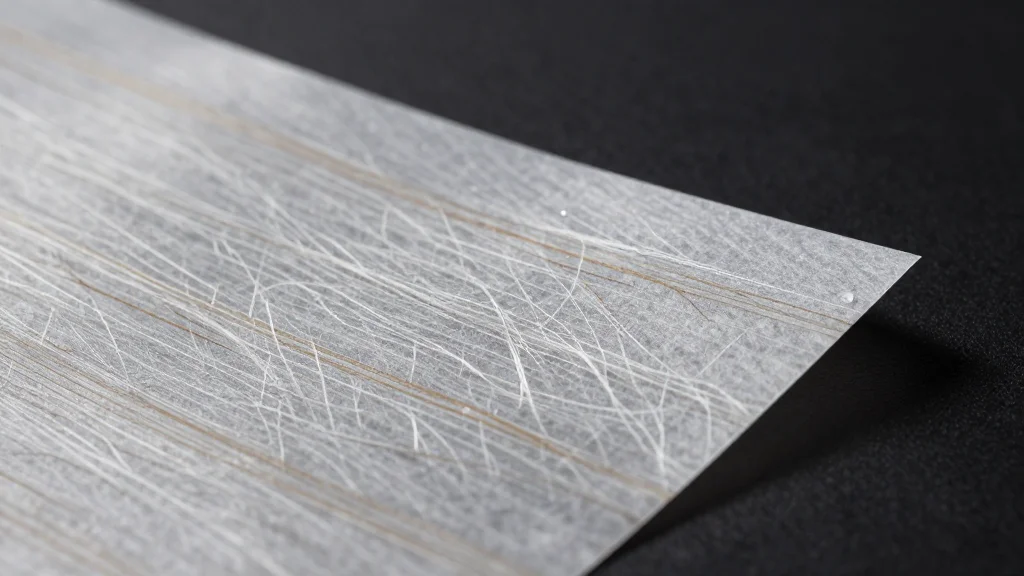
Bridging the Performance Gap: High‐Strength Lignin‐Reinforced Cellulose Papers With Plastic‐Like Barrier Properties
Why It Matters
The breakthrough delivers paper‑based materials with plastic‑like strength and barrier performance, enabling greener alternatives for high‑volume packaging markets.
Key Takeaways
- •Tensile strength reaches 82 MPa, rivaling many plastics
- •Water‑vapor transmission cuts 67% versus standard paperboard
- •Oxygen permeability drops 73% after lignin reinforcement
- •Hot‑pressing at 160 °C softens lignin for superior fiber bonding
- •Fully biodegradable composite targets sustainable packaging applications
Pulse Analysis
Paper has long been championed as a renewable substitute for plastic, yet its inherent hydrophilicity and limited barrier properties have confined it to low‑value applications. Consumers and regulators are increasingly demanding packaging that reduces carbon footprints while maintaining product protection, driving research into hybrid materials that can deliver both sustainability and performance. The lignin‑cellulose composite addresses this tension by leveraging lignin—a natural polymer traditionally viewed as a low‑value by‑product of pulping—to enhance the functional profile of paper without compromising its biodegradability.
The technical advance hinges on micronizing softwood kraft lignin into 4‑micron particles and dispersing them throughout a cellulose network at loadings up to 40% by weight. A subsequent hot‑press at 160 °C softens the lignin, allowing it to flow and form intimate bonds with surrounding fibers. This interfacial synergy yields a sheet with a tensile strength of 82 MPa and a folding endurance of 891 cycles—metrics that approach or exceed many thin‑wall plastics. Simultaneously, the composite’s water‑vapor transmission rate falls to 287 g/m²·day and oxygen transmission to 114 cm³/m²·day·0.1 MPa, representing dramatic improvements of 67% and 73% over conventional paperboard.
For the packaging industry, the material promises a viable route to replace single‑use plastics in applications ranging from food trays to protective wraps. Its density of 1 g/cm³ matches that of traditional paper, facilitating existing converting equipment, while its biodegradability aligns with circular‑economy goals. Scaling the process will require integration of lignin recovery streams from pulp mills and optimization of hot‑press cycles, but the demonstrated performance suggests a clear commercial pathway. As brands seek to meet stricter sustainability standards, lignin‑reinforced cellulose papers could become a cornerstone of next‑generation, eco‑friendly packaging solutions.
Bridging the Performance Gap: High‐Strength Lignin‐Reinforced Cellulose Papers With Plastic‐Like Barrier Properties
Comments
Want to join the conversation?
Loading comments...