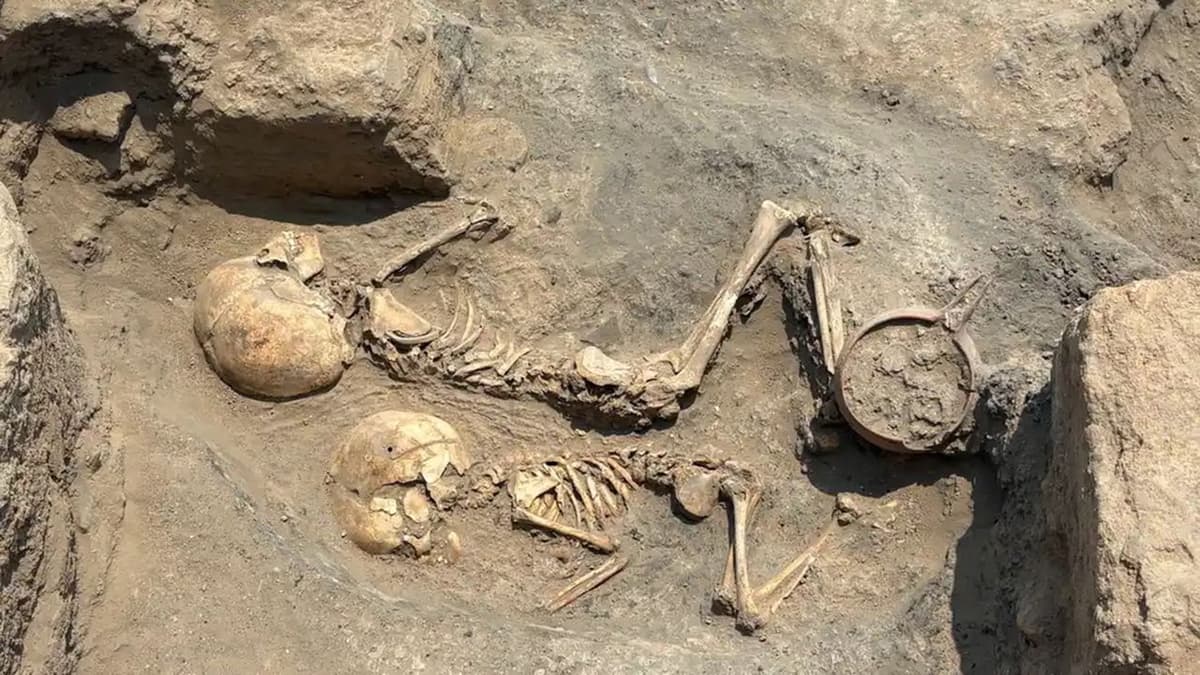
Bronze Age 5-Year-Old's Skull Found in Uzbekistan Is the Oldest Known Evidence of Surgery in Central Asia
Why It Matters
The discovery pushes back the timeline for complex medical interventions in Central Asia, reshaping our understanding of early healthcare and the interplay between medicine and ritual in ancient societies.
Key Takeaways
- •4,000‑year‑old child’s skull shows trepanation, earliest Central Asian surgery
- •Trepanation performed with stone or bone tools on a 5‑year‑old
- •Discovery made at Djarkutan, an Oxus civilization urban centre
- •Highlights blurred line between medicine and ritual in Bronze Age societies
- •Raises questions about specialist roles and surgical knowledge in ancient BMAC
Pulse Analysis
The Djarkutan excavation adds a new chapter to the global history of trepanation, a practice documented in prehistoric Europe, the Near East, and parts of South America. While dozens of ancient skulls show similar perforations, this is the first evidence from the Bronze Age Oxus civilization, a culture renowned for its agricultural surplus and urban planning. By confirming that skilled individuals could drill into a child's cranium with stone or bone implements, the find underscores a level of anatomical awareness previously uncredited to Central Asian societies.
Scholars debate whether the procedure was therapeutic, ritualistic, or a blend of both. In many ancient contexts, trepanation was linked to treating seizures, severe headaches, or spiritual afflictions, reflecting a worldview where health and the supernatural were intertwined. The fact that a five‑year‑old underwent the operation raises questions about the perceived urgency of the child’s condition and the existence of a specialized practitioner class within Djarkutan. Comparisons with contemporaneous sites in the Indus Valley and Anatolia suggest a possible diffusion of medical knowledge across trade routes that crisscrossed the Oxus basin.
Looking ahead, the interdisciplinary team plans to employ micro‑CT scanning and isotopic analysis to reconstruct the child’s diet, health status, and the exact technique used. Such data could illuminate broader patterns of disease, social stratification, and the role of medical expertise in Bronze Age economies. Moreover, understanding why the Oxus civilization collapsed—potentially due to climate‑driven river loss—may reveal how environmental stressors influenced the evolution or disappearance of early medical practices. This discovery not only enriches archaeological narratives but also informs the long‑term trajectory of human health innovation.
Bronze Age 5-year-old's skull found in Uzbekistan is the oldest known evidence of surgery in Central Asia
Comments
Want to join the conversation?
Loading comments...