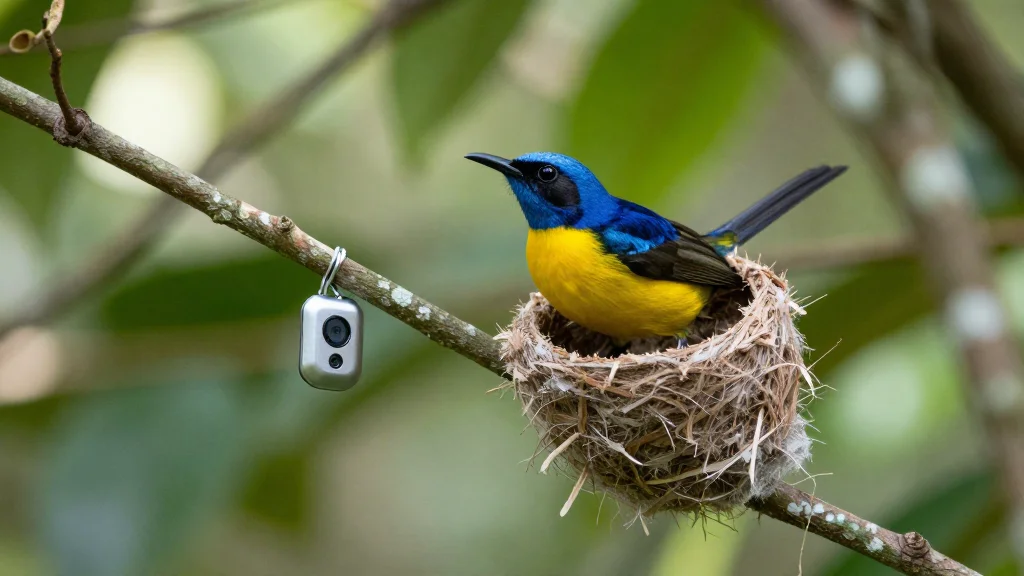
Building Nests Is Hard. That’s Why Some Birds Steal.
Why It Matters
Understanding nest‑material kleptoparasitism reveals hidden pressures on already vulnerable Hawaiian honeycreepers, informing conservation strategies aimed at preserving these endemic species.
Key Takeaways
- •GPS tracking of 216 nests revealed 39 theft incidents
- •Three honeycreeper species engage in nest material kleptoparasitism
- •Theft occurred mostly in inactive nests; two caused failures
- •First quantitative study of avian nest‑material theft worldwide
Pulse Analysis
Hawaiian honeycreepers, iconic for their vivid plumage and specialized bills, have long been celebrated as evolutionary marvels of the islands’ isolated kīpuka habitats. These forest patches, spared by ancient lava flows, host a delicate assemblage of endemic birds that thrive at high elevations where disease‑carrying mosquitoes cannot survive. Yet the same rugged environment imposes severe resource constraints, prompting species to evolve unconventional survival tactics beyond foraging, such as the newly documented practice of stealing nest building materials from rivals.
The breakthrough came from a collaborative effort between the University of California, Riverside and local conservation groups, who deployed miniature GPS loggers on 216 honeycreeper nests across the island of Hawaii. Data analysis uncovered 39 distinct theft events, all involving three closely related scarlet and golden honeycreeper species. Most incidents targeted abandoned nests, allowing thieves to acquire ready‑made twigs and soft linings without expending energy on collection. However, two thefts disrupted active nests, leading to parental abandonment and chick mortality, underscoring a direct reproductive cost linked to this behavior. By quantifying a phenomenon previously known only anecdotally, the study provides a rare glimpse into intra‑species competition in a high‑stakes ecosystem.
For conservationists, the findings raise critical questions about how nest‑material scarcity and habitat fragmentation may exacerbate kleptoparasitic pressures on already endangered honeycreepers. Management plans that enhance the availability of natural nesting substrates—through invasive plant control and native vegetation restoration—could mitigate theft incentives. Moreover, the research sets a methodological precedent for using GPS technology to monitor subtle behavioral interactions in other threatened avian communities worldwide, offering a powerful tool to refine protection efforts in the face of climate change and habitat loss.
Building Nests Is Hard. That’s Why Some Birds Steal.
Comments
Want to join the conversation?
Loading comments...