Key Takeaways
- •Rising bubbles collect dust, viruses, and microplastics from water
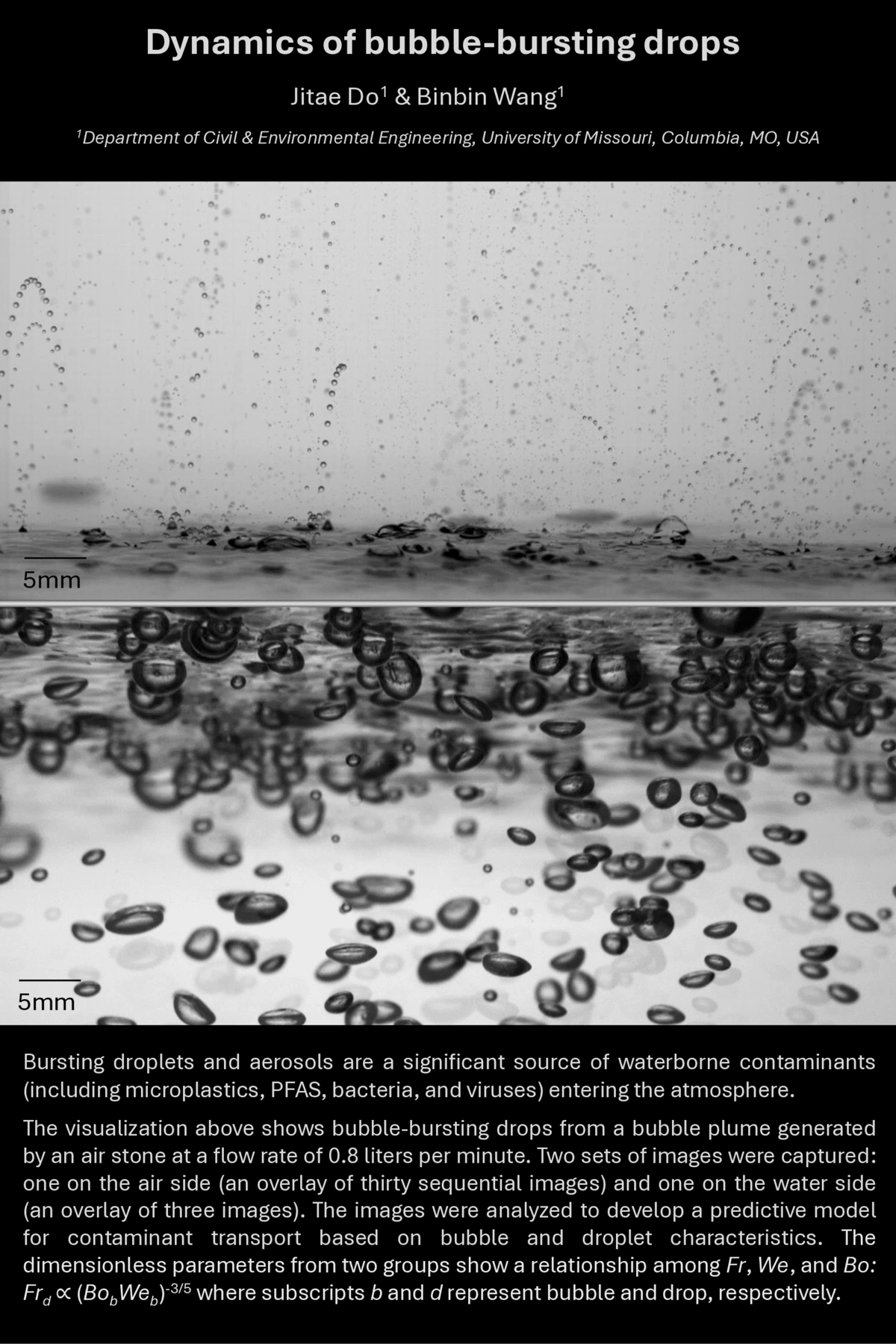
- •Bursting bubbles eject microdroplets that travel several centimeters
- •Microdroplet spray can carry contaminants into indoor air
- •Study visualizes droplet trajectories using stacked sequential images
- •Findings inform aerosol transmission models and water‑treatment design
Pulse Analysis
The dynamics of bubble‑driven aerosol generation have long been a curiosity for fluid scientists, but recent visual evidence brings the process into sharp focus. By capturing three‑dimensional stacks of images—three beneath the surface and thirty above—researchers illustrated how bubbles act as scavengers, gathering particulate matter as they rise. When the thin liquid film at the water‑air interface ruptures, it releases a spray of microdroplets that follow predictable parabolic paths. This high‑resolution depiction bridges a gap between laboratory observation and real‑world phenomena such as the fizz of champagne or the fizz of soda, where similar droplet clouds are routinely observed.
Beyond the visual appeal, the study carries weighty implications for health and environmental science. The microdroplets inherit the contaminants clinging to the bubble surface, meaning pathogens, microplastics, and airborne pollutants can transition from liquid reservoirs to the breathing zone. In indoor settings—think kitchens, laboratories, or wastewater treatment plants—this mechanism could augment exposure to viruses or chemical residues, reshaping risk models for aerosol transmission. Moreover, the findings suggest that water bodies rich in organic or particulate load may act as hidden sources of airborne microplastics, a concern for both climate researchers and policymakers.
Understanding this bubble‑bursting pathway opens avenues for mitigation and innovation. Engineers could design surfactant additives or surface‑active agents that suppress droplet formation, reducing aerosol release from industrial effluents. Public‑health guidelines might incorporate bubble‑induced aerosol risks when assessing ventilation needs in spaces where carbonated beverages or aerated processes are common. Future research will likely explore how variables such as bubble size, liquid viscosity, and surface tension modulate droplet yield, providing the data needed to refine predictive models and inform safer water‑handling practices.
Bursting Bubbles
Comments
Want to join the conversation?