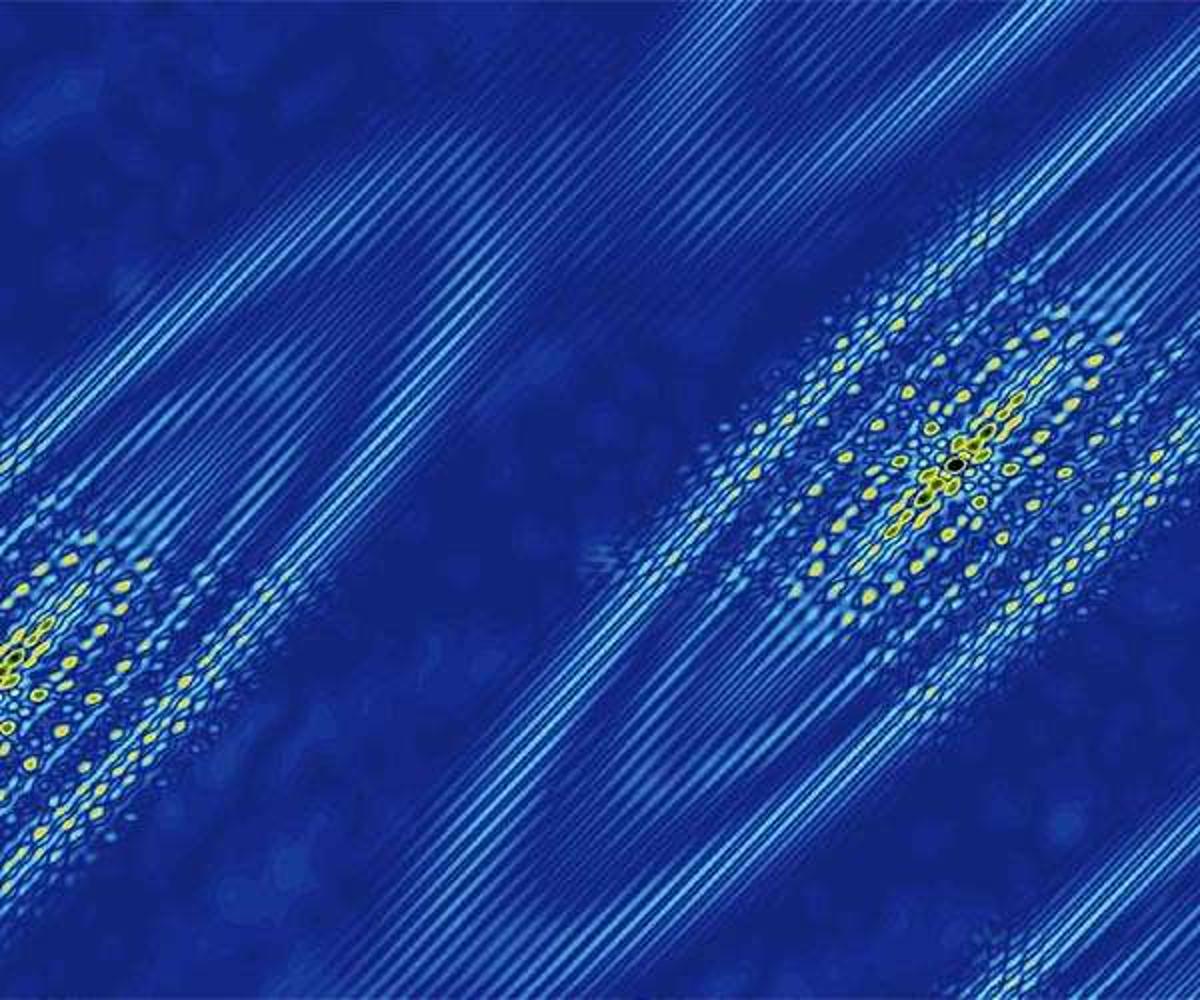
Butterfly Wing Pattern Emerges From Hundreds of Fractional Quantum Hall States in Ultra-Cold Magnetic Fields
Why It Matters
Organizing FQH states into a universal butterfly‑wing diagram clarifies many‑body interactions and accelerates the search for novel quantum phases, a key step toward fault‑tolerant quantum technologies.
Key Takeaways
- •~100 fractional quantum Hall states mapped onto butterfly‑wing diagram.
- •Dry refrigerator achieves 0.09 mK, world‑record for helium‑free cooling.
- •Composite‑fermion theory explains outer wing states as integer‑like.
- •Pattern extends to graphene, WSe₂, and other 2‑D materials.
- •Deviations could reveal entirely new quantum phases.
Pulse Analysis
The quantum Hall effect has long served as a benchmark for condensed‑matter physics, showcasing how electrons confined to two dimensions form discrete, topologically protected states under strong magnetic fields. While integer quantum Hall plateaus are well understood through single‑particle Landau level filling, fractional quantum Hall (FQH) phenomena demand a collective description, making experimental observation both rare and technically demanding. Recent advances in ultra‑low‑temperature refrigeration have finally opened a window onto a richer landscape of FQH states, enabling researchers to probe the subtle interplay of electron interactions that give rise to exotic quasiparticles.
In the latest breakthrough, a team led by Riko Seibo employed a dry nuclear adiabatic demagnetisation refrigerator that cools to 0.09 mK—setting a new record for helium‑free systems. Using this platform, they systematically surveyed high‑mobility GaAs quantum wells and plotted each observed FQH state in a polar coordinate system, where angular position reflects the filling factor and radial distance encodes the denominator magnitude. The resulting butterfly‑wing motif reveals that most states cluster along the outer edges, corresponding to composite fermions behaving like non‑interacting particles, while interior points signal deeper fractionalisation requiring interaction‑driven theories. Composite‑fermion theory emerged as the most coherent explanatory model, outperforming hierarchical approaches and offering a clear visual taxonomy for over a hundred distinct states.
Beyond its immediate scientific merit, the butterfly‑wing framework provides a powerful diagnostic tool for emerging two‑dimensional materials such as graphene and transition‑metal dichalcogenides. By comparing future measurements against the established pattern, researchers can swiftly flag anomalies that may herald new topological orders or non‑abelian excitations—key ingredients for robust quantum computing architectures. Moreover, the success of cryogen‑free ultra‑low‑temperature technology democratizes access to this frontier, promising accelerated discovery across labs worldwide and reinforcing the strategic importance of low‑temperature physics in next‑generation information technologies.
Butterfly Wing Pattern Emerges From Hundreds of Fractional Quantum Hall States in Ultra-Cold Magnetic Fields
Comments
Want to join the conversation?
Loading comments...