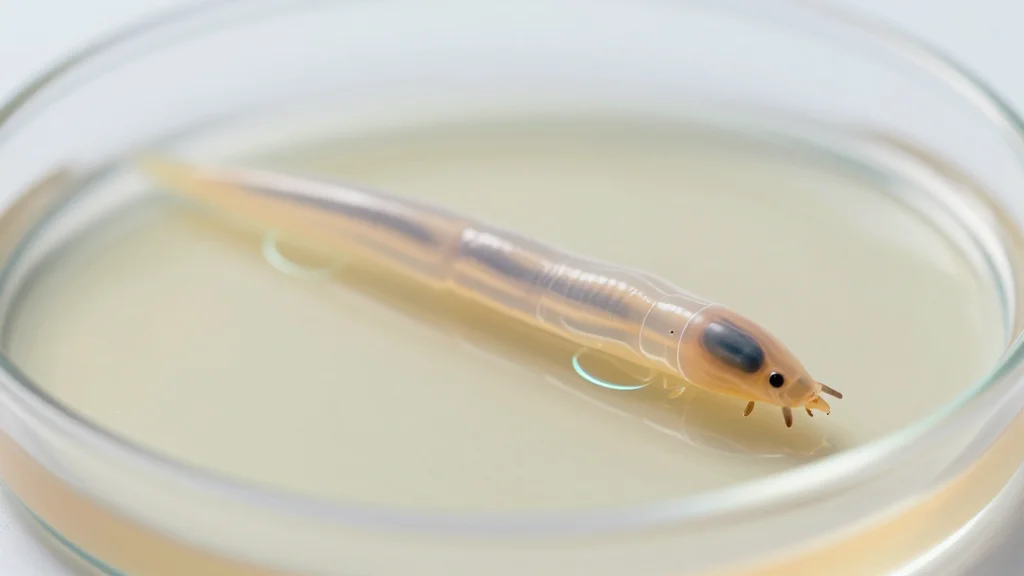
C. Elegans Researchers Uncover First Non‑Repeating Developmental Clock

Why It Matters
The discovery of a non‑repeating developmental clock reshapes fundamental concepts in developmental biology, suggesting that organisms can encode a one‑way developmental program without reliance on cyclical signals. This insight could explain why timing errors in humans lead to congenital anomalies and may guide the design of interventions that correct or mimic such clocks. Moreover, the work demonstrates how AI tools like AlphaFold can accelerate basic research, potentially unlocking new classes of regulatory mechanisms across species. Beyond basic science, the findings may influence biotechnology and synthetic biology. Engineers seeking to program cells with precise, irreversible developmental pathways could borrow design principles from the MYRF‑1/LIN‑42 circuit, enabling more reliable tissue engineering, regenerative medicine, and controlled biomanufacturing processes.
Key Takeaways
- •Cold Spring Harbor researchers identified a master developmental clock in C. elegans.
- •The clock consists of proteins MYRF-1 (starter) and LIN-42 (duration regulator).
- •It is the first known non‑repeating biological timer, ensuring each larval stage occurs once.
- •Blocking MYRF-1 halts the entire developmental cycle, confirming its checkpoint role.
- •The study combines classical genetics with AlphaFold AI modeling to reveal the mechanism.
Pulse Analysis
The identification of a non‑repeating clock in C. elegans marks a paradigm shift comparable to the discovery of circadian rhythms, but with a fundamentally different logic. Whereas circadian systems are designed to reset daily, the MYRF‑1/LIN‑42 circuit enforces a unidirectional flow, akin to a molecular ratchet that prevents back‑tracking. This architecture could be an evolutionary solution for organisms that need to commit irrevocably to developmental milestones, reducing the risk of aberrant re‑entry into earlier states that might compromise fitness.
Historically, developmental timing has been attributed to gradients of morphogens, external environmental cues, or simple oscillators. The new clock suggests that intrinsic, self‑limiting feedback loops can provide the necessary precision without external input. If similar mechanisms exist in vertebrates, they could explain why certain developmental windows are so narrow and why interventions after those windows often fail. The translational potential is significant: targeting human homologs of MYRF‑1 or LIN‑42 could offer a way to reset or extend developmental windows in regenerative therapies.
Finally, the methodological blend of AI‑driven structural prediction with wet‑lab validation sets a new standard for discovery in molecular biology. AlphaFold’s ability to predict protein interfaces accelerated hypothesis generation, allowing the team to focus experimental resources on the most promising interactions. As AI models improve, we can expect a surge in uncovering hidden regulatory circuits that were previously invisible to traditional approaches, accelerating both basic discovery and its application to medicine.
C. elegans Researchers Uncover First Non‑Repeating Developmental Clock
Comments
Want to join the conversation?
Loading comments...