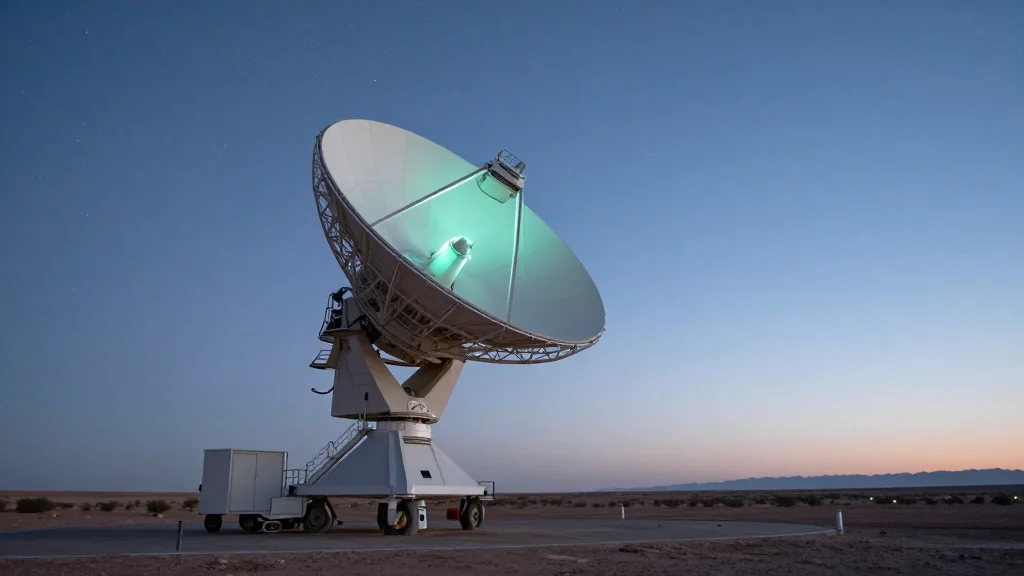
Caltech Readies to Build World's Most Sensitive Radio Telescope
Why It Matters
The unprecedented sensitivity of CUDRA will give U.S. astronomers a decisive edge in probing the early universe and detecting faint cosmic phenomena, reinforcing America’s leadership in radio astronomy.
Key Takeaways
- •Caltech to build CUDRA, ten‑times VLA sensitivity
- •$200 million funding from NSF, DOE, private donors secured
- •100‑meter dishes with cryogenic receivers operating 0.5‑30 GHz
- •Project targets epoch‑of‑reionization hydrogen mapping
- •Expected first light by 2030, enhancing pulsar and SETI research
Pulse Analysis
Radio astronomy is entering a new era as researchers chase ever‑fainter signals from the cosmos. Caltech’s Ultra‑Deep Radio Array (CUDRA) represents a leap forward, delivering a ten‑fold sensitivity boost over the current Very Large Array. By integrating large 100‑meter dishes with ultra‑cold superconducting receivers, CUDRA will capture weak emissions across a broad 0.5‑30 GHz band, opening a window onto the universe’s first billion years and the elusive neutral hydrogen that traces the epoch of reionization.
The initiative arrives at a pivotal moment for global radio‑telescope projects. While the Square Kilometre Array (SKA) in Australia and South Africa pursues massive collecting area, CUDRA focuses on ultra‑high sensitivity in a more compact, U.S.-based configuration. Backed by $200 million from the National Science Foundation, the Department of Energy and private philanthropy, the project underscores a strategic commitment to maintain American preeminence in astrophysical discovery and technology development. Its design also promises spill‑over benefits for communications, signal processing and cryogenic engineering sectors.
Beyond pure science, CUDRA’s capabilities will accelerate practical applications such as precision pulsar timing for gravitational‑wave detection and enhanced SETI searches for technosignatures. With construction slated for 2025 and first light by 2030, the telescope is poised to become a cornerstone of next‑generation research infrastructure, attracting talent, fostering industry partnerships, and delivering data that could reshape our understanding of cosmic evolution. Its success will likely stimulate further investment in high‑frequency radio instrumentation across academia and the private sector.
Caltech Readies to Build World's Most Sensitive Radio Telescope
Comments
Want to join the conversation?
Loading comments...