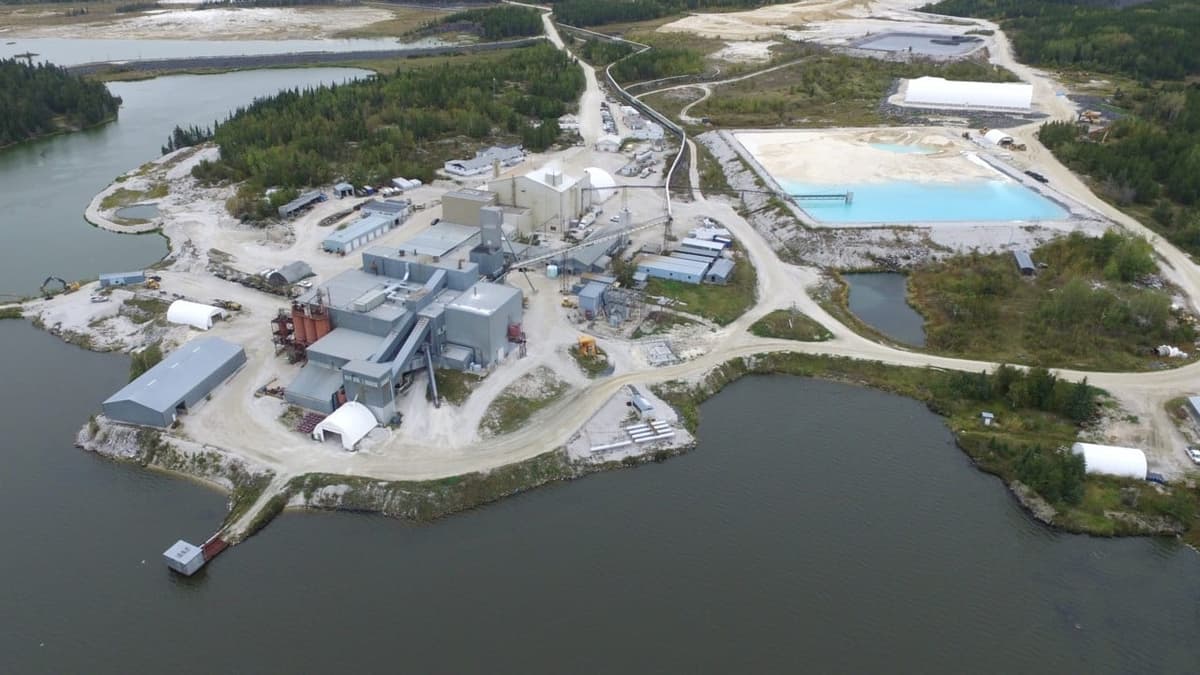
Can China’s Caesium-From-Brine Tech Cut Reliance on Canadian, Australian Ores?
Why It Matters
The technology promises to reduce China’s reliance on foreign caesium sources and lower the environmental footprint of extraction, strengthening strategic supply chains for high‑tech and defense applications.
Key Takeaways
- •New metal‑organic framework adsorbent captures 99% caesium from brine
- •Process operates at 150 °C, preserving active sites and reducing energy use
- •Material is reusable, but scaling to tonne‑level remains a challenge
- •Tibet Mining’s Zabuye project produces 200 t rubidium‑caesium salt annually
- •Adsorption could replace solvent extraction, lowering environmental impact
Pulse Analysis
Caesium is a niche but critical metal for satellite atomic clocks, missile imaging sensors and specialty glass, making it a strategic commodity for both China and the United States. Today’s market is dominated by a handful of ore deposits in Canada, Zimbabwe, Namibia and Australia, forcing China to import most of its demand. The reliance on foreign sources exposes supply chains to geopolitical risk and price volatility, prompting Beijing to explore domestic alternatives such as brine extraction from its extensive salt‑lake basins.
The breakthrough from the Qinghai Institute of Salt Lakes hinges on a tailor‑made metal‑organic framework that acts like a molecular sieve for caesium ions. By introducing structural defects and heteroatom doping, researchers boosted adsorption capacity while keeping the material stable at a modest 150 °C—far lower than the >400 °C required for conventional calcination. Laboratory columns achieved continuous 99% recovery, and the adsorbent can be regenerated repeatedly, offering a clear environmental advantage over solvent‑based extraction, which relies on toxic organic reagents. However, moving from gram‑scale tests to industrial‑scale production will demand tonnes of the material, a logistical and cost challenge that has yet to be solved.
If the adsorption method can be commercialized, it could reshape the global caesium market. An efficient, low‑impact process would allow China to tap its abundant brine resources, reducing dependence on Canadian and Australian ores and potentially lowering prices for downstream users. Moreover, the same technology shows promise for co‑extracting rubidium, uranium and even radioactive caesium from nuclear wastewater, hinting at broader resource‑recovery applications. As governments and firms seek greener mining solutions, China’s progress in brine‑based caesium extraction may set a new benchmark for strategic mineral sustainability worldwide.
Can China’s caesium-from-brine tech cut reliance on Canadian, Australian ores?
Comments
Want to join the conversation?
Loading comments...