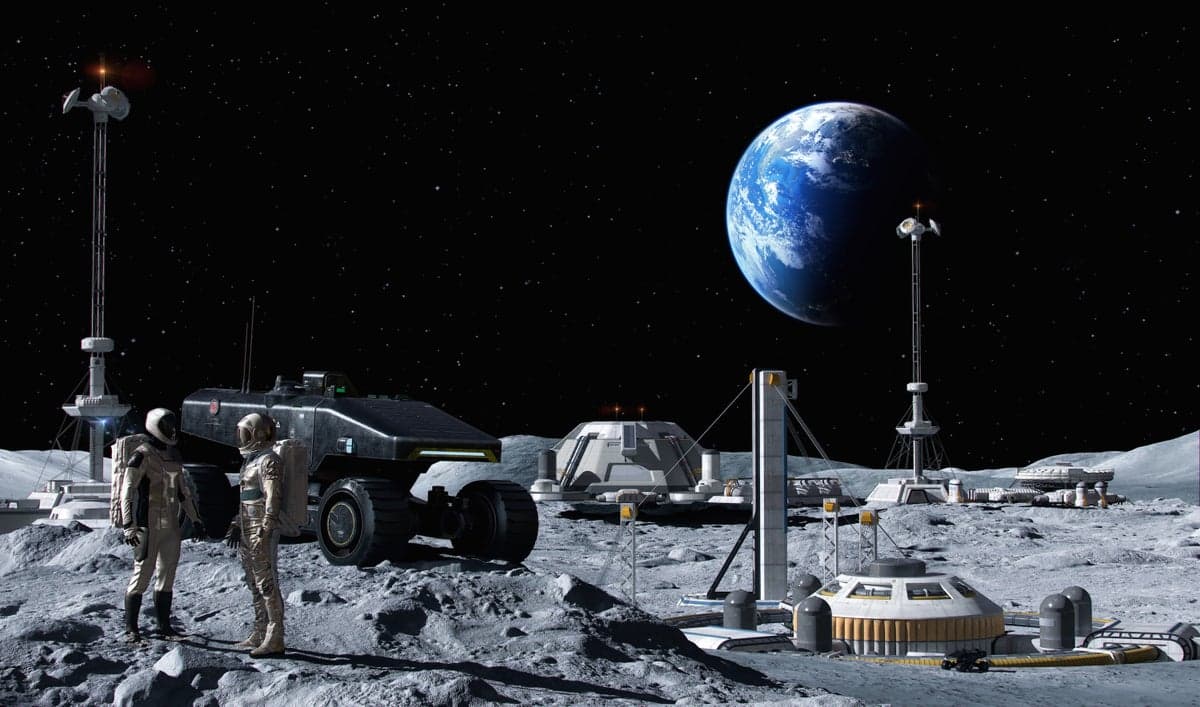
Can Helium-3 Create a ‘Gold Rush’ on the Moon?
Companies Mentioned
Why It Matters
If lunar helium‑3 can be extracted economically, it would supply critical materials for next‑generation technologies and create a new space‑based revenue stream, reshaping both the energy sector and the emerging lunar economy.
Key Takeaways
- •Helium‑3 could power quantum computers and future fusion reactors
- •Moon’s ilmenite‑rich mare may hold up to a billion kilograms
- •Interlune received a $6.9 million NASA contract to develop extraction tech
- •Extraction challenges include regolith processing, dust adhesion, and return logistics
- •Regulatory and environmental concerns could shape future lunar mining policies
Pulse Analysis
The allure of helium‑3 stems from its unique physical properties: it remains liquid at temperatures near absolute zero, making it an ideal coolant for quantum computers, and it fuels aneutronic fusion reactions that could deliver clean energy without long‑lived radioactive waste. While Earth’s supply is limited to a few kilograms per year—costing roughly $20 million per kilogram—lunar regolith, continuously bombarded by the solar wind, may contain up to a billion kilograms of the isotope. This disparity creates a compelling business case for private firms to invest in lunar extraction technologies, especially as NASA’s Artemis program and international lunar initiatives lay the groundwork for sustained surface operations.
Technical hurdles, however, are formidable. Helium‑3 is trapped within ilmenite grains at shallow depths, requiring high‑throughput processing of regolith, precise separation methods, and mitigation of abrasive lunar dust that can impair machinery. Interlune’s prototype aims to handle 100 metric tons of soil per hour and has secured a $6.9 million NASA award to refine its capture system. Parallel missions such as NASA’s VIPER rover and the Japan‑India LUPEX project will provide critical in‑situ measurements, informing both resource estimates and the regeneration rate of helium‑3 from ongoing solar wind exposure. A rapid replenishment cycle could transform the isotope into a renewable space resource, while a slow rate would limit its commercial viability.
Beyond engineering, the emerging helium‑3 market raises policy questions. The Outer Space Treaty offers limited guidance on private resource extraction, prompting debates over environmental stewardship and equitable access. As companies vie for landing sites and extraction rights, regulatory frameworks will likely evolve to balance commercial incentives with planetary protection. The outcome will determine whether the moon spawns a new frontier of high‑value resource mining or remains a scientific outpost, influencing the trajectory of both the space industry and Earth’s energy future.
Can helium-3 create a ‘gold rush’ on the moon?
Comments
Want to join the conversation?
Loading comments...