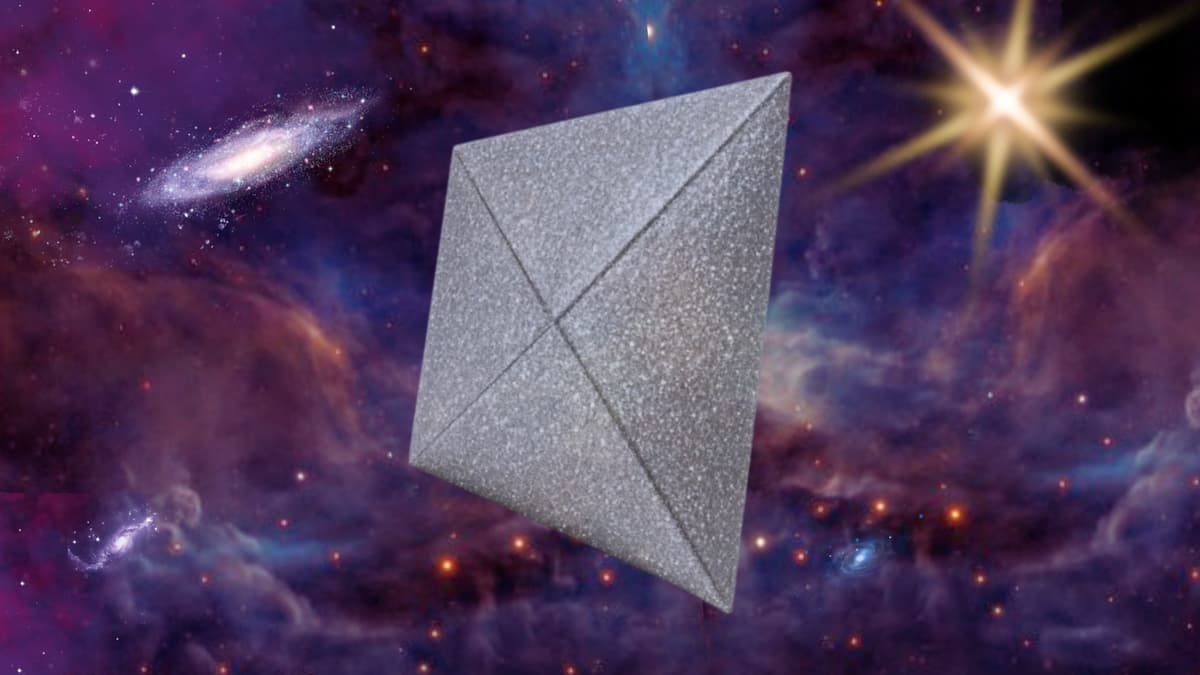
Can Solar Sails Really Send Humans Out Into Interstellar Space?

Why It Matters
Solar‑sail propulsion could deliver continuous, fuel‑free maneuverability for heliophysics missions, improving space‑weather forecasting and reducing launch costs. Demonstrating the technology now paves the way for rapid outer‑planet travel and future interstellar precursors.
Key Takeaways
- •Lightsail 2 proved photon propulsion in Earth orbit
- •Solar Cruiser could launch today after fixing reaction wheel issues
- •Sun‑diving sails may reach 5‑8 AU per year within a decade
- •Material heat‑resistance remains the biggest hurdle for extreme solar sailing
- •Near‑term heliophysics missions could boost space‑weather forecasting
Pulse Analysis
Solar sails convert photon pressure into thrust, offering propulsion without propellant. Early demonstrations such as Japan’s Ikaros (2010) and The Planetary Society’s Lightsail 2 (2019) validated basic deployment and navigation, while NASA’s recent test highlighted lingering reliability issues. A 2024 Imperial College study evaluated three concepts—Breakthrough Starshot, the student‑led Svarog, and NASA’s Solar Cruiser—rating their technology readiness. The analysis concluded that, although laser‑driven Starshot remains stalled, conventional sunlight‑driven sails are within reach for missions that stay inside the inner solar system.
The most realistic near‑term use case is a heliophysics platform that hovers between Earth and the Sun. By exploiting continuous photon pressure, a solar‑sail spacecraft can maintain an otherwise unstable L1‑type orbit without fuel, providing early warnings of solar storms. NASA’s Solar Cruiser concept already possesses a 40‑meter sail; the study suggests only modest engineering fixes—primarily reaction‑wheel control and power budgeting—are needed for launch. Thermal‑shielding and ultra‑light communications hardware remain challenges, but recent advances in thin‑film radiators and deployable antennas are narrowing the gap.
Looking farther ahead, sun‑diving missions such as Svarog or the proposed SunVane aim to skim within a few solar radii, converting intense photon flux into velocities of 5‑8 AU per year—an order of magnitude faster than Voyager 1. Achieving these speeds hinges on materials that can survive temperatures above 1,000 °C while remaining microns thin, a problem researchers are tackling with silicon‑nitride and titanium‑nitride coatings. If funding aligns, a prototype extreme sail could fly within five years, opening a pathway to rapid outer‑planet probes and, eventually, interstellar precursors.
Can solar sails really send humans out into interstellar space?
Comments
Want to join the conversation?
Loading comments...