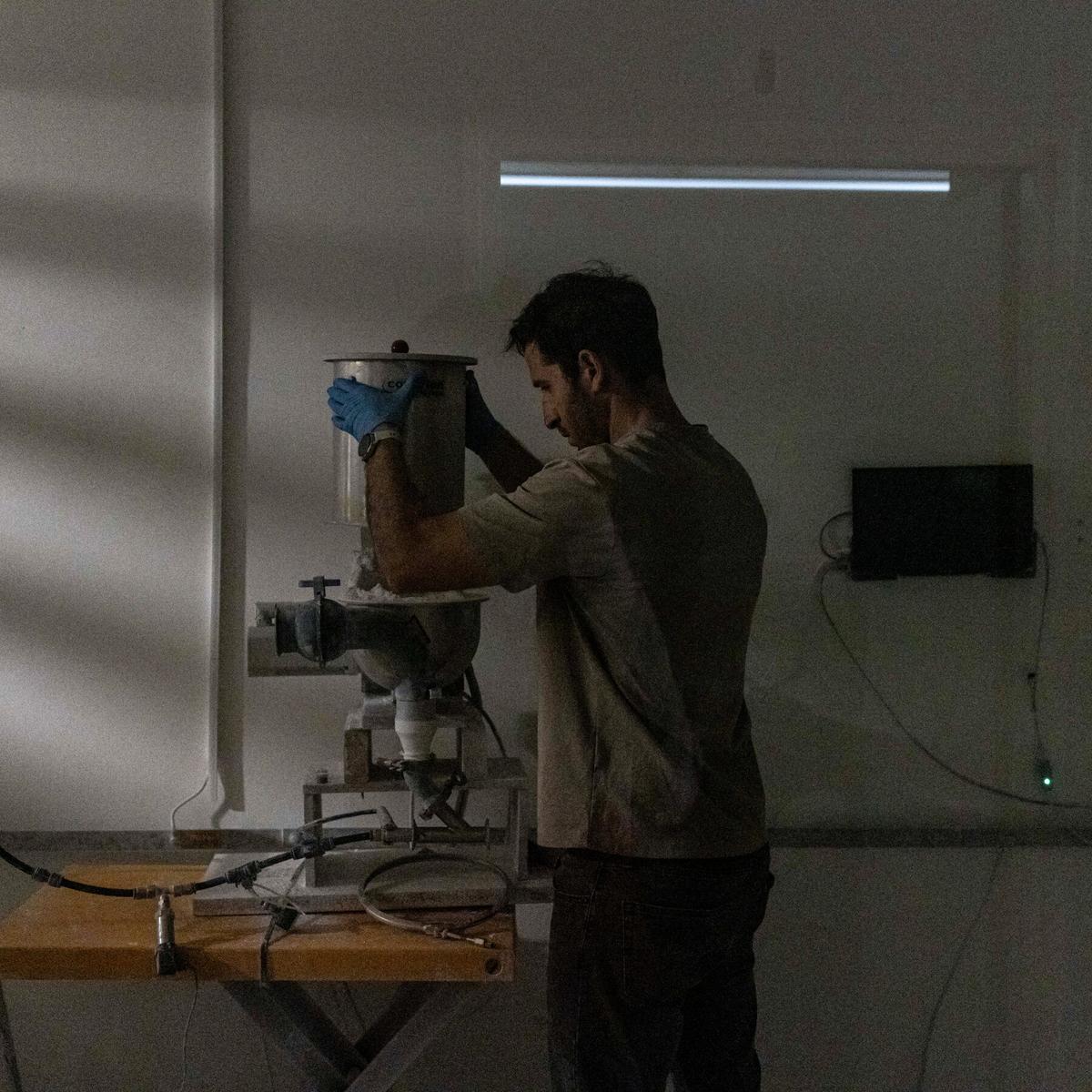
Can Some Very Tiny Particles Cool the Planet? One Tech Company Says Yes.
Why It Matters
If successful, Stardust’s low‑cost particle approach could become the first large‑scale climate‑cooling tool, offering governments an alternative to emissions cuts. However, the lack of transparency and potential environmental side effects raise profound governance and safety concerns.
Key Takeaways
- •Stardust raised $75 million to develop silica‑based solar geoengineering particles.
- •Company plans $10 billion program to spray 10 million tons, cooling 1.5 °C.
- •Particles use amorphous silica and calcium carbonate, claimed biodegradable and non‑toxic.
- •Critics warn climate, health, governance risks; 600+ scientists demand ban.
- •U.S. lobbying spend $370,000; FL and TN lawmakers propose geoengineering bans.
Pulse Analysis
Solar geoengineering has moved from speculative theory to a tangible research agenda as climate warming accelerates. Stardust Solutions, leveraging expertise from Israel’s nuclear sector, proposes a simple yet novel particle blend—amorphous silica coated to resist atmospheric gases and a calcium‑carbonate core—to reflect a modest fraction of incoming sunlight. By targeting just 1 percent of solar radiation, the company estimates a 1.5 °C cooling effect after dispersing ten million tons over several years, a scale that could be funded with roughly $10 billion, a fraction of the cost of many large‑scale mitigation projects.
The technical appeal lies in the use of well‑understood, food‑grade materials that are biodegradable and reportedly non‑toxic, contrasting sharply with earlier proposals that relied on sulfur dioxide, a compound known to damage ozone and alter stratospheric chemistry. Stardust’s laboratory tests in a sub‑zero chamber suggest the particles remain inert, disperse evenly from high‑altitude aircraft, and avoid forming ice crystals. Yet, the scientific community remains cautious; while the particles are familiar, their long‑term atmospheric interactions, deposition pathways, and potential respiratory impacts have not been fully quantified, prompting calls for independent peer‑review and field trials under strict oversight.
Policy and governance challenges dominate the debate. With $370,000 already spent on U.S. lobbying, Stardust is seeking regulatory clarity, but state bans in Florida and Tennessee and a pending federal bill underscore growing legislative resistance. Over 600 scientists have urged an international moratorium, warning that private ownership of climate‑altering technology could sideline emissions reductions and create geopolitical friction. As governments grapple with the dual imperatives of climate mitigation and risk management, the Stardust case highlights the urgent need for transparent, multilateral frameworks to evaluate any large‑scale solar radiation management effort.
Can Some Very Tiny Particles Cool the Planet? One Tech Company Says Yes.
Comments
Want to join the conversation?
Loading comments...