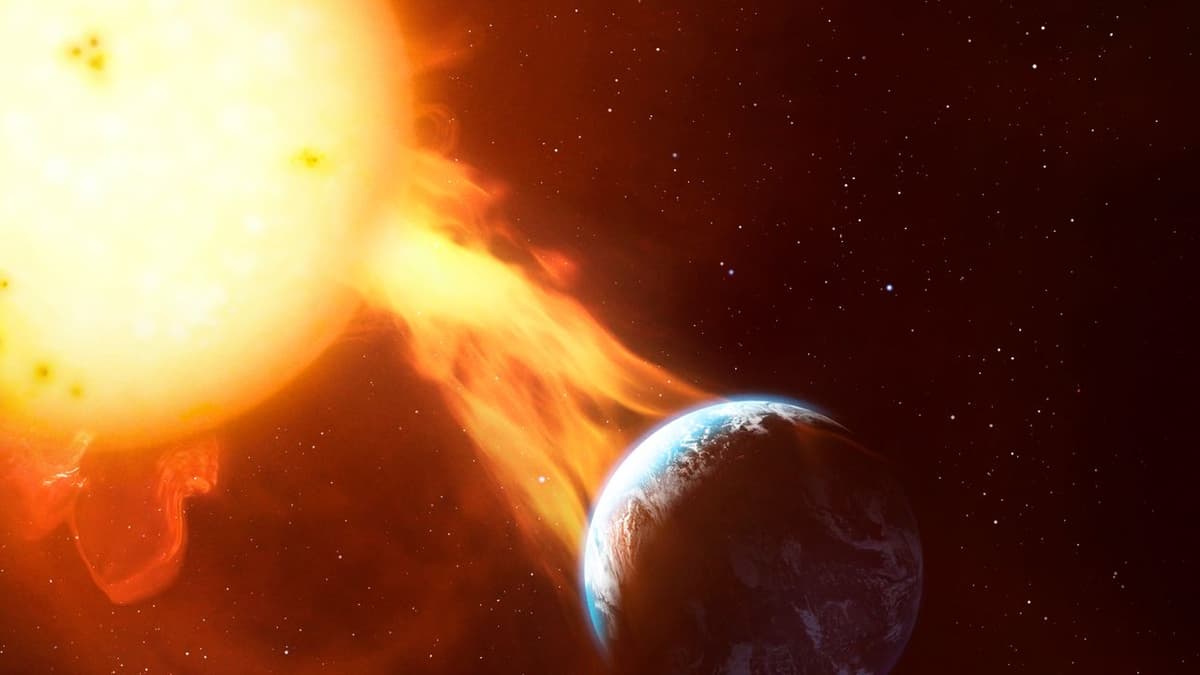
'Cannibal' CME From Rare 'Anti-Hale' Sunspot Will Slam Into Earth Today, Bringing Auroras to 23 US States
Companies Mentioned
Why It Matters
The storm poses real risks to satellite operations, power grids, and communications while offering a rare, widespread aurora display, underscoring the growing importance of space‑weather preparedness for modern infrastructure.
Key Takeaways
- •Cannibal CME combines two eruptions, boosting storm intensity.
- •G3–G4 geomagnetic storm expected to hit Earth June 4.
- •Auroras visible across 23 U.S. states, far south of poles.
- •Anti‑Hale sunspot 4455 is among <10% of such spots.
- •Solar maximum 2024 raises risk of frequent X‑class flares.
Pulse Analysis
The Sun entered its 11‑year activity peak in 2024, a phase known as solar maximum that fuels a surge in sunspots and powerful eruptions. Among the latest features is sunspot 4455, an anti‑Hale region where the magnetic polarity runs opposite to the surrounding hemisphere—a rarity found in fewer than ten percent of spots. On June 2 the region unleashed a series of X‑class flares, ejecting multiple coronal mass ejections. A faster CME overtook a slower one, creating a so‑called “cannibal” eruption that carries amplified magnetic energy toward Earth.
The merged CME is forecast to arrive mid‑afternoon EDT on June 4, generating a geomagnetic storm rated G3 and possibly reaching G4 severity. Such storms disturb the planet’s magnetosphere, inducing currents that can disrupt satellite operations, GPS accuracy, and high‑frequency radio communications. Power‑grid operators may see localized voltage fluctuations, while airlines on polar routes could face rerouting. The storm also promises vivid auroras visible as far south as the Midwest and New England, offering a rare visual spectacle for millions of observers.
Space weather forecasters at NOAA and the Space Weather Prediction Center are closely tracking the event, issuing alerts to critical infrastructure. While the Carrington Event of 1859 remains the benchmark for a superstorm, the current activity underscores that modern societies are far more vulnerable to solar disturbances. Ongoing investments in solar monitoring satellites, such as the DSCOVR and Parker Solar Probe, aim to improve early‑warning times. Continued vigilance will be essential as the Sun moves into the less‑studied “battle zone” phase, where anti‑Hale spots may become more common.
'Cannibal' CME from rare 'anti-Hale' sunspot will slam into Earth today, bringing auroras to 23 US states
Comments
Want to join the conversation?
Loading comments...