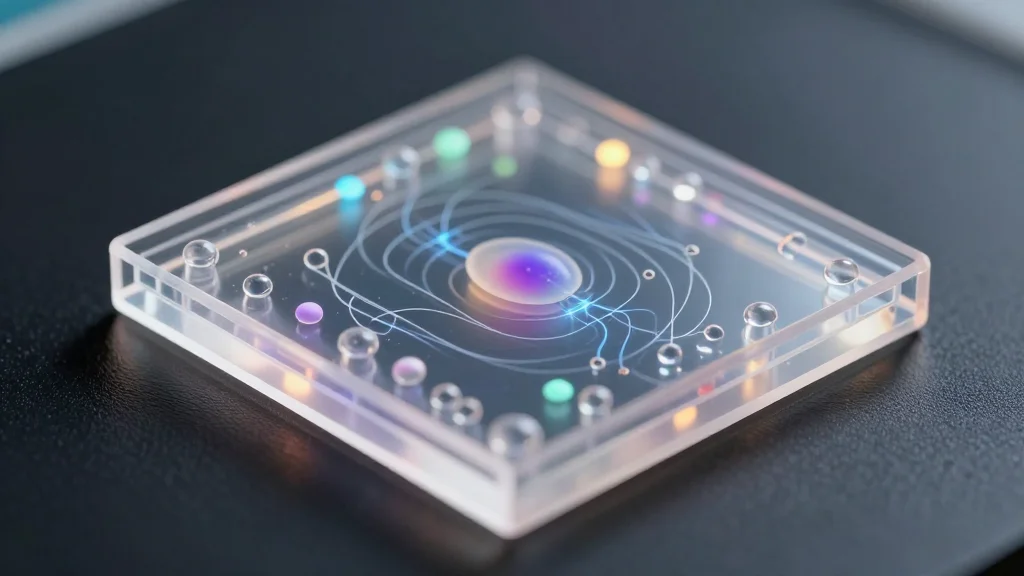
Capture, Confine, Characterize: High‐Throughput Dielectrophoresis‐Based Single‐Cell Microfluidics Platform to Analyze Mammalian and Yeast Cells Using Raman Spectroscopy
Why It Matters
MiDAS bridges the gap between high‑throughput single‑cell capture and real‑time molecular analysis, accelerating research in cellular heterogeneity, drug response, and synthetic biology. Its compatibility with Raman spectroscopy offers non‑destructive, label‑free insight, reducing reliance on costly sequencing pipelines.
Key Takeaways
- •DEP traps immobilize cells, beads, and droplets in a single platform
- •Raman spectroscopy provides label‑free chemical fingerprints of live cells
- •Trap sizes (20 µm and 40 µm) accommodate diverse particle dimensions
- •High‑throughput design supports rapid, scalable single‑cell studies
Pulse Analysis
The Microfluidic Dielectrophoretic Arresting System (MiDAS) represents a significant leap in single‑cell technology by marrying dielectrophoretic trapping with Raman spectroscopy. Traditional single‑cell platforms rely heavily on endpoint sequencing, which obscures dynamic cellular processes. MiDAS’s ability to capture and hold individual mammalian or yeast cells, as well as microdroplets, in a compact array enables continuous optical monitoring and rapid spectroscopic interrogation. This real‑time capability is especially valuable for researchers studying rapid signaling events, metabolic shifts, or drug‑induced phenotypic changes that would otherwise be missed in static assays.
Beyond its analytical power, MiDAS offers practical advantages that appeal to both academic labs and biotech firms. The device’s fabrication uses standard soft‑lithography, avoiding the need for expensive clean‑room processes. Its modular trap geometries—20 µm for cells and beads, 40 µm for droplets—provide flexibility without redesigning the entire chip. Moreover, the integration of Raman spectroscopy eliminates the requirement for fluorescent labels, cutting reagent costs and preserving native cellular states. These attributes lower the barrier to entry for high‑resolution single‑cell studies, making the technology scalable for large‑cohort experiments.
The broader impact of MiDAS lies in its potential to transform workflows across multiple sectors. In drug discovery, rapid, label‑free profiling of cellular responses can shorten lead‑optimization cycles. In synthetic biology, the platform enables precise monitoring of engineered pathways in real time, facilitating iterative design. Finally, the ability to trap and analyze droplets opens avenues for high‑throughput screening of enzymatic reactions or microbial consortia. As the demand for dynamic, single‑cell insights grows, MiDAS positions itself as a versatile, cost‑effective solution poised to accelerate innovation across life‑science disciplines.
Capture, Confine, Characterize: High‐Throughput Dielectrophoresis‐Based Single‐Cell Microfluidics Platform to Analyze Mammalian and Yeast Cells Using Raman Spectroscopy
Comments
Want to join the conversation?
Loading comments...