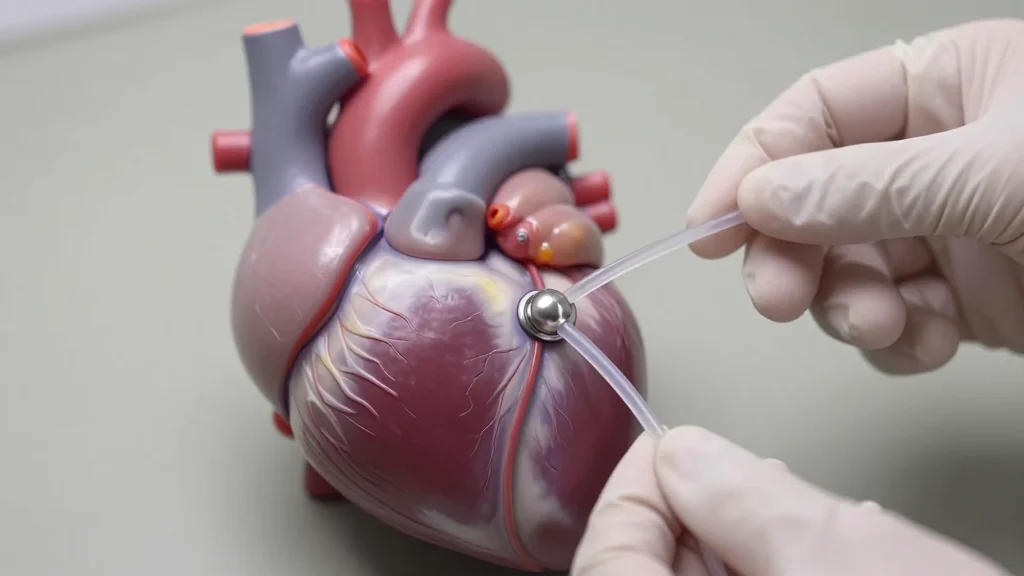
Cardiologists Are First in World to Use New Leaflet-Splitting Technique During TAVR
Why It Matters
ART directly remodels bicuspid anatomy, potentially expanding TAVR eligibility and reducing reliance on surgical valve replacement for a growing patient cohort.
Key Takeaways
- •ART split fused leaflets, enabling symmetric trileaflet geometry
- •Seven bicuspid patients underwent successful ART‑assisted TAVR, no 30‑day deaths
- •Median total procedure time 125 minutes; ART added roughly 46 minutes
- •Two patients needed permanent pacemakers, matching typical TAVR complication rates
Pulse Analysis
Bicuspid aortic valve disease has long limited the reach of transcatheter aortic valve replacement, because the fused, calcified leaflets resist full expansion of the prosthetic valve. The newly described transcatheter aortic root tricuspidization (ART) uses a controlled electrosurgical laceration to split the fused leaflets, converting a bicuspid configuration into a more symmetric trileaflet anatomy. By addressing the root cause of device‑patient mismatch, ART could shift the treatment paradigm from adapting devices to reshaping anatomy, a concept that resonates with the broader trend toward minimally invasive structural heart interventions.
In the first‑in‑human series published in JACC: Cardiovascular Interventions, seven patients with severe, symptomatic bicuspid stenosis underwent ART‑assisted TAVR. All procedures were technically successful, with a median total procedural time of 125 minutes and no major vascular complications, strokes, or 30‑day mortality. The safety profile mirrored conventional TAVR, aside from two permanent pacemaker implantations, which aligns with known conduction‑system risks. The use of cerebral embolic protection in 71% of cases and transesophageal echocardiographic guidance underscores the meticulous approach required for this novel technique.
If larger trials confirm these early results, ART could unlock a sizable market segment currently relegated to surgical aortic valve replacement. Device manufacturers may invest in dedicated delivery systems or integrate leaflet‑splitting capabilities into next‑generation platforms. Hospitals could see shorter intensive‑care stays and lower overall costs, while patients benefit from a less invasive option. The study’s call for expanded research signals a pivotal moment for both clinicians and industry as they evaluate how best to incorporate anatomy‑modifying strategies into the evolving TAVR ecosystem.
Cardiologists are first in world to use new leaflet-splitting technique during TAVR
Comments
Want to join the conversation?
Loading comments...