Why It Matters
The finding reveals a hidden chemical signaling system in a familiar amphibian, reshaping our understanding of its ecology and defensive strategies. It also opens new research pathways into novel fluorophores with potential scientific and biotechnological value.
Key Takeaways
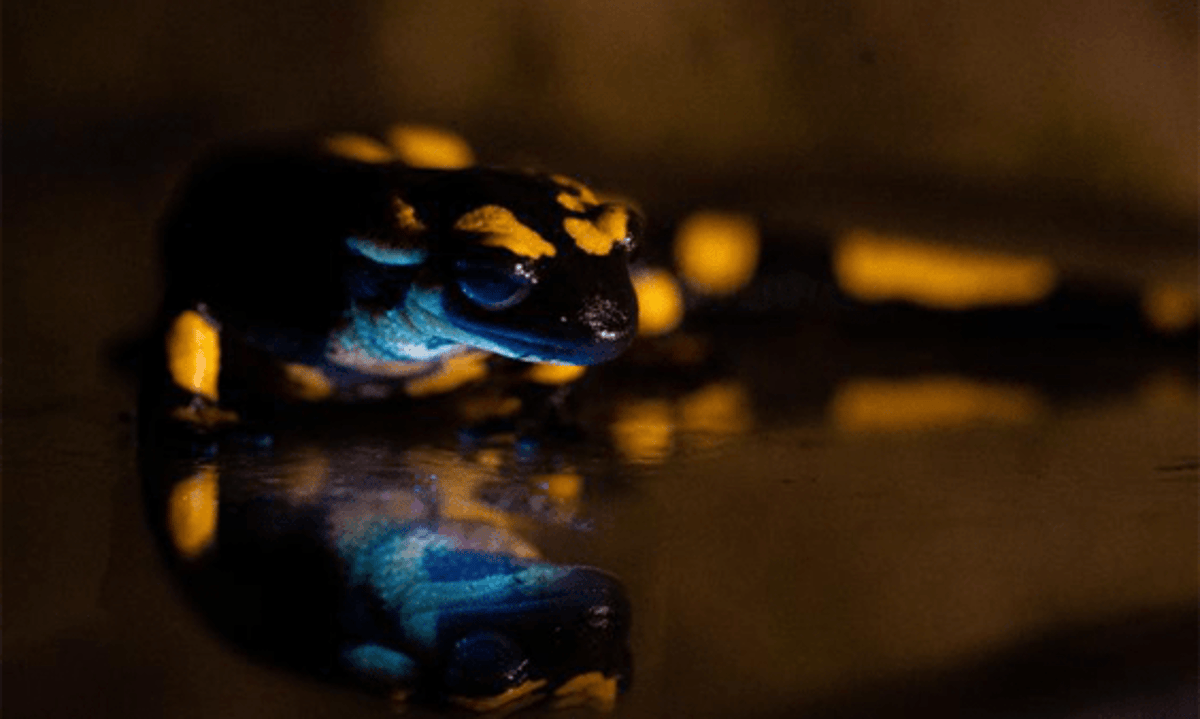
- •Fire salamanders glow blue‑green under 365 nm UV light.
- •Fluorescence originates from parotid gland secretions, not skin.
- •Juveniles lack fluorescence until gland maturation.
- •Fluorophores are novel, distinct from known steroidal alkaloids.
- •Researchers suggest communication or warning roles in low‑light environments.
Pulse Analysis
The discovery that the common fire salamander (Salamandra salamandra) emits a vivid blue‑green fluorescence under ultraviolet illumination adds a surprising layer to a species already famous for its aposematic coloration. Using 365‑nm flashlights, an international team from Spain and Germany documented bright sparkles concentrated around the animal’s yellow warning patches and extending down the limbs. Subsequent swabbing of the parotid glands revealed that the glow is tied to defensive secretions rather than skin pigments, marking the first confirmed case of gland‑derived fluorescence in a terrestrial amphibian.
The functional role of this fluorescence remains speculative, but several hypotheses align with the salamander’s nocturnal habits. Fluorescent cues could enhance intraspecific signaling, allowing individuals to locate mates or rivals in dim forest understories where UV components of moonlight persist. Alternatively, the glow may act as an additional warning signal, reinforcing the toxic skin secretions that predators already associate with bright coloration. Similar mechanisms have been documented in other amphibians, such as certain frogs and newts, where fluorophores either reside in the skin or are stored in specialized glands.
Beyond ecological intrigue, the unidentified fluorophores present a promising avenue for chemical‑ecology research and potential biotechnological applications. Because the compounds differ from the well‑studied steroidal alkaloids that give fire salamanders their toxicity, they may possess unique optical or pharmacological properties worth exploring. Ongoing analyses aim to isolate and characterize the molecular structure, which could inform the evolution of fluorescence across vertebrates. As more species are examined with modern UV imaging, the fire salamander case underscores how even familiar organisms can reveal hidden biochemical traits with broader scientific relevance.
Check Out the Newest Fluorescent Amphibian
Comments
Want to join the conversation?
Loading comments...