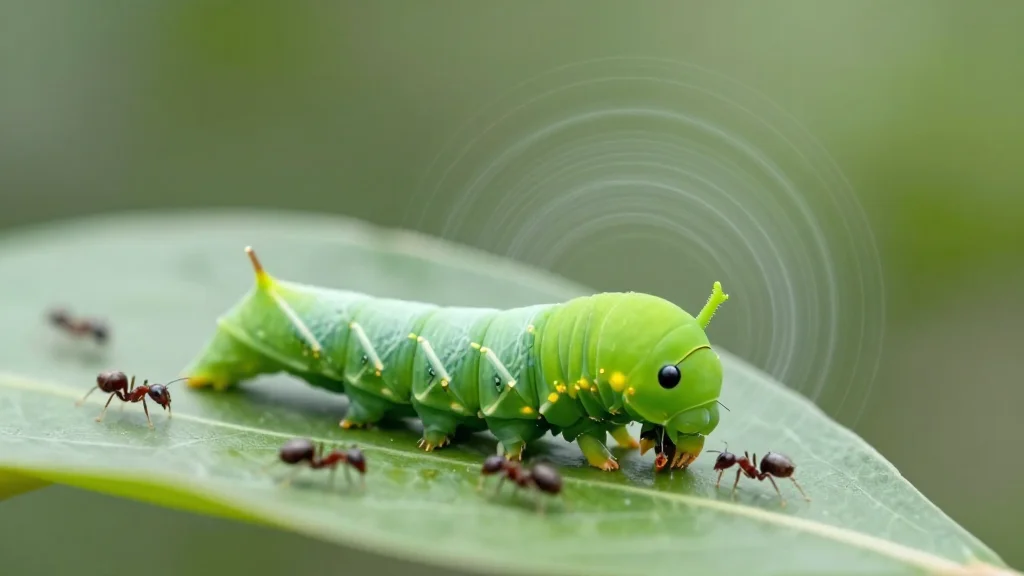
Cheeky Caterpillars Trick Ants Into Treating Them as Queens
Why It Matters
The discovery reveals a sophisticated cross‑species communication strategy that reshapes our understanding of parasitic mimicry and could inspire bio‑engineered signaling systems. It highlights how acoustic cues, not just chemicals, drive interspecies interactions in complex ecosystems.
Key Takeaways
- •Caterpillars mimic queen ant scent and rhythmic vibrations.
- •Double‑meter rhythm unique to highly myrmecophilous species.
- •Mimicry grants caterpillars queen-level care and food.
- •Energy‑saving strategy: signals emitted only when needed.
- •Study expands understanding of cross‑species acoustic communication.
Pulse Analysis
The research overturns a long‑standing assumption that chemical cues alone govern myrmecophilous relationships. By capturing the subtle vibrational patterns of ant queens, scientists demonstrated that caterpillars can replicate a rhythm so intricate it rivals primate vocalizations. This double‑meter signal, recorded with a custom high‑sensitivity device, acts as a social passport, allowing the larvae to bypass worker defenses and receive the same preferential treatment reserved for the colony’s reproductive leader. The precision of this acoustic mimicry adds a new dimension to the study of interspecies communication.
Ecologically, the ability to masquerade as a queen reshapes the balance between parasitism and mutualism within ant colonies. Highly myrmecophilous species such as *Phengaris alcon* and *Plebejus argus* exploit the colony’s resources while occasionally feeding on ant larvae, illustrating a nuanced cost‑benefit dynamic. Their intermittent signaling conserves scarce energy, triggering ant assistance only when the caterpillars need it. This strategy reduces detection risk and minimizes disruption to the colony’s routine, offering insight into how evolutionary pressures fine‑tune both chemical and acoustic adaptations for survival.
Beyond biology, the findings have implications for bio‑inspired engineering. Replicating the double‑meter rhythm could inform the design of low‑power communication protocols for swarm robotics, where devices must signal selectively to avoid interference. Understanding how a small organism encodes hierarchical status in a simple acoustic pattern may also guide novel approaches in synthetic biology and pest management, allowing targeted disruption of harmful mimicry without harming beneficial insects. Future work will likely explore the genetic mechanisms behind rhythm generation, opening pathways for interdisciplinary collaboration across ecology, acoustics, and technology.
Cheeky caterpillars trick ants into treating them as queens
Comments
Want to join the conversation?
Loading comments...