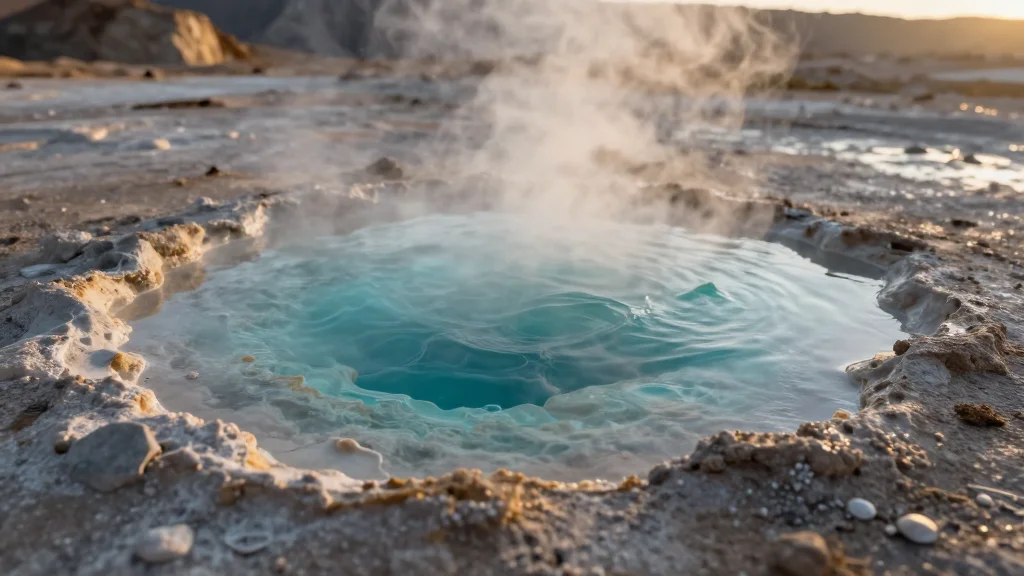
Chicxulub Impact May Have Fueled 8‑Million‑Year Hydrothermal Habitat

Why It Matters
The revised lifespan of Chicxulub‑induced hydrothermal vents reshapes our understanding of how life can rebound after mass‑extinction events. By demonstrating that impact‑driven ecosystems can endure for millions of years, the study suggests that Earth’s biosphere may be more resilient than previously thought, offering a template for how life could persist on planets that experience frequent bombardment. For planetary science, the findings provide a concrete analogue for assessing habitability on Mars and other rocky worlds where large impacts have punctuated geological history. If impact‑generated hydrothermal systems can sustain life for extended periods, future missions may prioritize ancient impact basins as high‑potential sites for detecting past or present microbial life.
Key Takeaways
- •Researchers drilled into Chicxulub’s peak‑ring crater, retrieving four core samples from 706‑756 m below the sea floor.
- •Argon‑isotope dating indicates hydrothermal activity from ~66 Ma to ~58 Ma, a span of up to eight million years.
- •The finding revises earlier models that limited post‑impact venting to two million years.
- •Impact‑fractured rocks may have created protected micro‑environments for chemosynthetic life.
- •Study suggests similar long‑lived hydrothermal habitats could have existed on early Mars, guiding future astrobiology missions.
Pulse Analysis
The Chicxulub hydrothermal longevity study injects fresh momentum into the debate over post‑extinction recovery mechanisms. Historically, the narrative has emphasized rapid ecological turnover driven by opportunistic species colonizing vacant niches. This new evidence adds a parallel pathway: a sustained, impact‑powered energy source that could have supported chemosynthetic communities independent of sunlight. Such a mechanism mirrors modern deep‑sea vent ecosystems, where primary production is decoupled from photosynthesis, and it may have acted as a biological bridge during the early phases of the Cretaceous‑Paleogene recovery.
From a planetary perspective, the work underscores the dual role of impacts as both destructive forces and creators of habitable environments. The notion that a cataclysmic event can seed long‑term habitats reframes how we evaluate planetary habitability, especially for bodies like Mars that retain a record of massive impacts. Future mission planners may now prioritize impact basins for drilling and in‑situ analysis, potentially shifting resources away from traditionally favored ancient lakebeds or river deltas.
Looking ahead, the key challenge will be scaling the localized observations at Chicxulub to a global context. If the eight‑million‑year venting was unique to the peak‑ring’s geometry, its broader relevance may be limited. Conversely, if similar fractured networks are common in large impact structures, the implications for Earth’s biospheric resilience—and for the likelihood of life elsewhere—could be profound. Continued interdisciplinary collaboration among geochemists, paleontologists, and astrobiologists will be essential to translate these findings into a coherent model of impact‑driven habitability.
Chicxulub Impact May Have Fueled 8‑Million‑Year Hydrothermal Habitat
Comments
Want to join the conversation?
Loading comments...