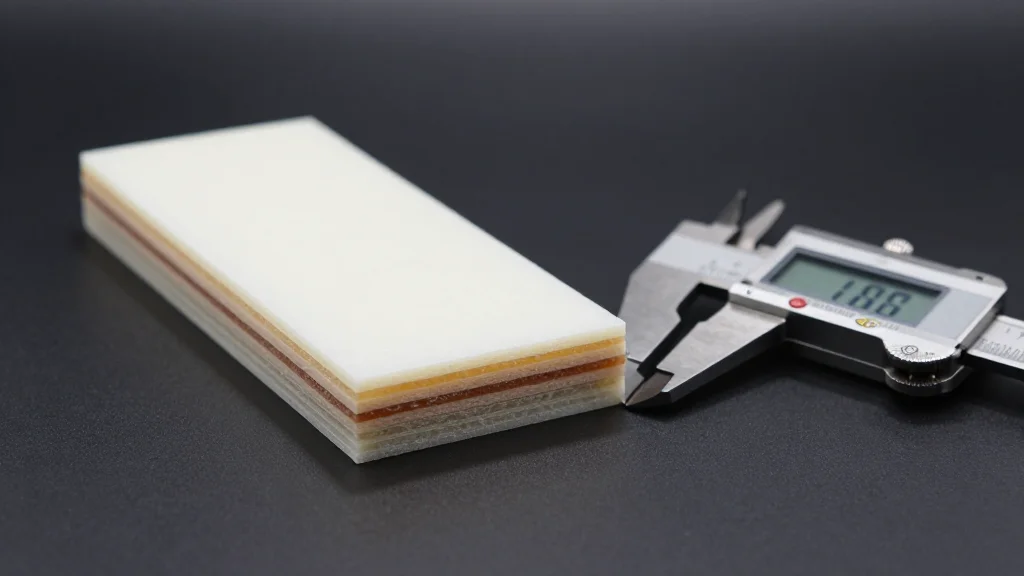
China: A Composite Material 26% Stronger for Drones, Planes and Rockets
Why It Matters
The technique cuts design complexity and material weight, giving aerospace manufacturers faster, cheaper paths to higher‑performance structures. It directly addresses the industry’s demand for lighter, stronger components in drones, aircraft, and rockets.
Key Takeaways
- •AI‑driven tool simplifies composite laminate design.
- •Double‑balanced layers boost stiffness 26% at equal weight.
- •Joint strength rises 13% using balanced patterns.
- •Triple‑balanced pattern offers tunable mechanical properties.
- •Enables lighter, more reliable drones and aerospace structures.
Pulse Analysis
The aerospace sector has relied on fibre‑reinforced composites for decades, prized for their high strength‑to‑weight ratio. Yet engineers have long wrestled with the anisotropic behavior of laminate stacks, where out‑of‑plane heterogeneity and coupling complicate both analysis and manufacturing. A research team from the Chinese Academy of Sciences, together with HKUST and Stanford, merged conventional mechanics with artificial intelligence to produce a design assistant that automatically generates balanced layer sequences. This approach reduces the number of variables engineers must consider, accelerating the path from concept to prototype.
Two balanced configurations emerged as especially effective: the double‑balanced and triple‑balanced patterns. Laboratory tests on V‑shaped coupons showed that double‑balanced laminates suppress warping during cure, while maintaining consistent bending stiffness across thickness variations. When applied to a variable‑thickness beam, the double‑balanced design delivered a 26 % increase in stiffness without adding mass, and joint strength improved by roughly 13 % compared with traditional uniform stacks. The triple‑balanced scheme adds an extra degree of freedom, allowing fine‑tuning of stiffness and strength while preserving uniformity.
The performance gains translate directly into lighter, more efficient airframes for drones, commercial aircraft, and even rockets. China’s GAC Group recently demonstrated the Govy AirCab, a multi‑rotor vehicle composed of over 90 % carbon‑fiber composites, showcasing the market appetite for ultra‑light structures. By streamlining laminate engineering, the AI‑assisted method lowers development costs and shortens certification cycles, giving manufacturers a competitive edge in a market where every gram counts. As the aerospace industry pushes toward higher payloads and longer endurance, such material innovations are poised to become a strategic differentiator.
China: a composite material 26% stronger for drones, planes and rockets
Comments
Want to join the conversation?
Loading comments...