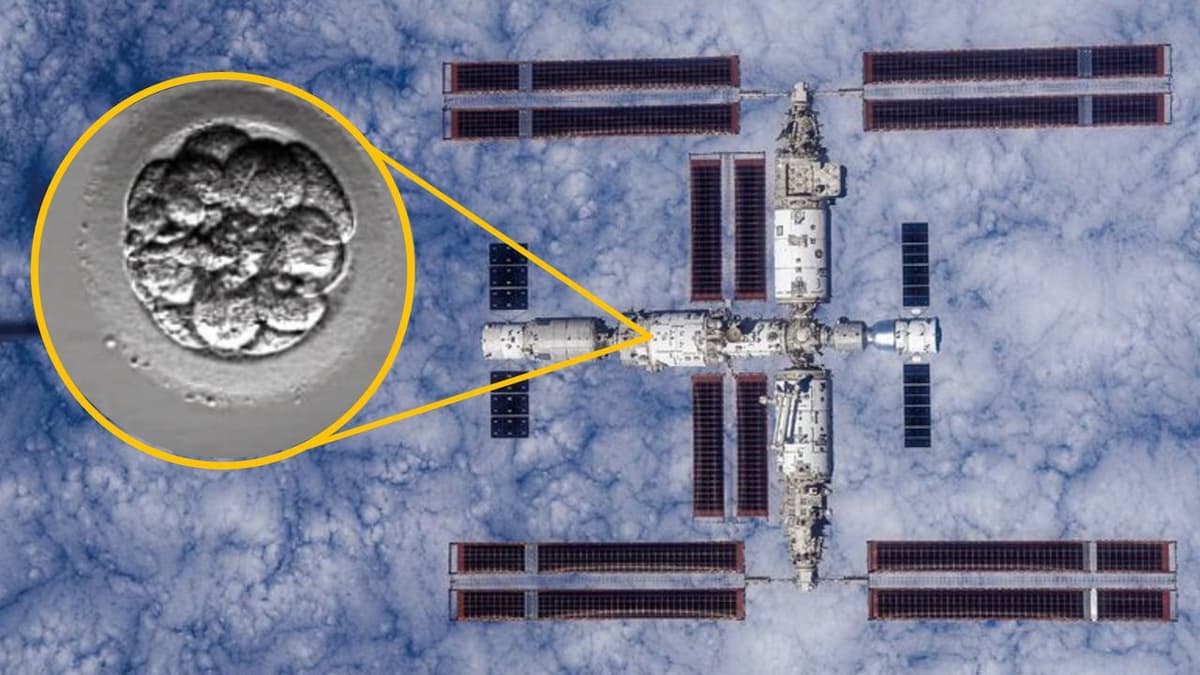
China Launches 'Human Artificial Embryos' To Space in Bid to See Whether Reproduction Is Possible Off-World
Why It Matters
Understanding embryogenesis in space is essential for establishing self‑sustaining colonies, as successful reproduction would reduce dependence on Earth supplies. The findings will also shape bio‑ethical guidelines and commercial approaches to space‑based fertility technologies.
Key Takeaways
- •China sent stem‑cell embryo models to Tiangong for five‑day growth.
- •Models mimic peri‑implantation and peri‑gastrulation stages of early development.
- •Space microgravity and radiation effects will be compared to Earth controls.
- •Findings could inform reproductive strategies for lunar and Martian colonies.
- •Experiment avoids ethical issues by using non‑viable artificial embryos.
Pulse Analysis
The prospect of human reproduction beyond Earth has moved from science‑fiction to laboratory inquiry. Earlier studies on zebrafish, mouse embryos, and sperm motility in microgravity have highlighted the twin threats of radiation and weightlessness to early development. As space agencies and private firms eye permanent habitats on the Moon and Mars, understanding whether the first steps of embryogenesis can survive off‑planet is becoming a strategic priority. The latest experiment by China’s Academy of Sciences adds a critical data set to this emerging field.
On May 11, the Tianzhou‑10 cargo vessel delivered two batches of human‑derived artificial embryos to the Tiangong space station. The models, built from pluripotent stem cells, represent peri‑implantation (day 14‑16) and peri‑gastrulation (day 18‑21) stages, yet lack the capacity to develop into a fetus, sidestepping many ethical objections. After a five‑day growth period in microgravity, the samples will be frozen and returned to Earth for side‑by‑side analysis with identical ground‑based controls. Researchers hope to isolate how reduced gravity and cosmic radiation alter cell division, tissue patterning, and gene expression.
If the Tiangong data reveal tolerable developmental windows, it could reshape life‑support planning for deep‑space missions. Viable reproduction would reduce reliance on Earth‑based cryopreservation and enable multi‑generational colonies, a scenario long championed by NASA and private ventures like SpaceX. Conversely, adverse findings may push agencies toward assisted‑reproductive technologies, such as in‑vitro fertilization and embryo culture chambers, to mitigate microgravity stress. The experiment also sets a precedent for international collaboration on bio‑ethical standards in space, a dialogue that will intensify as humanity expands its foothold beyond our planet.
China launches 'human artificial embryos' to space in bid to see whether reproduction is possible off-world
Comments
Want to join the conversation?
Loading comments...