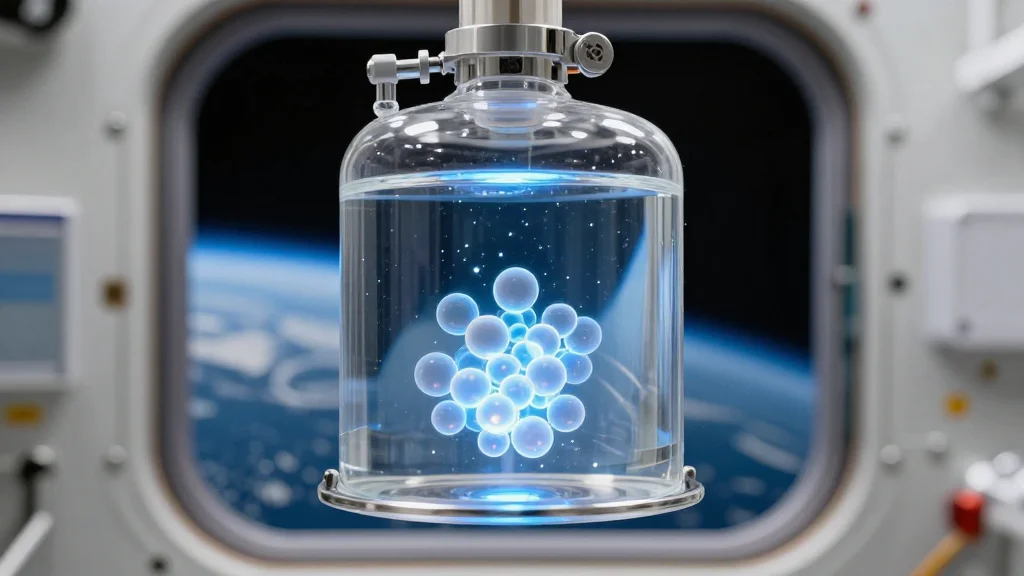
China Sends Lab‑Grown Human Embryos to Space to Probe Microgravity Effects

Why It Matters
The study could redefine our understanding of human development under conditions that differ fundamentally from Earth’s gravity, a prerequisite for safe long‑duration space habitation. By linking embryology with space science, the research bridges two fields that have traditionally operated in isolation, potentially accelerating breakthroughs in reproductive health and regenerative medicine. Beyond the scientific payoff, the mission forces policymakers to confront the ethical dimensions of conducting human‑related experiments beyond national borders. Establishing clear guidelines now could prevent future disputes and ensure that the pursuit of knowledge proceeds responsibly.
Key Takeaways
- •China launched artificial human embryos into orbit for the first time
- •Real‑time monitoring will track cell division and gene activity in microgravity
- •Findings may improve fertility treatments and inform space‑medicine protocols
- •The project has sparked global ethical debate over embryo research in space
- •Results are expected later in 2026, shaping future international space‑biology collaborations
Pulse Analysis
China’s decision to embed embryology into its orbital agenda reflects a strategic shift toward bio‑centric space exploration. Historically, space agencies have prioritized engineering and physical sciences; integrating life sciences signals a maturation of capabilities and a recognition that human expansion into space will ultimately depend on biological viability. This experiment positions China as a pioneer, potentially attracting partnerships with universities and biotech firms eager to access unique data sets.
From a competitive standpoint, the mission could pressure the United States, Europe and private actors to accelerate their own biological research in orbit. NASA’s upcoming Lunar Gateway includes provisions for life‑science payloads, but none have yet matched the direct study of human embryogenesis. If China demonstrates robust, ethically managed results, it may set a de facto standard, compelling others to adopt similar protocols or risk falling behind in a domain that could become critical for future colonization efforts.
Ethically, the launch forces a reevaluation of existing frameworks that were largely drafted for terrestrial research. International bodies such as the ISS partners have established guidelines for animal studies, but human embryo work remains a gray area. The mission’s transparency, data sharing policies, and post‑flight handling will likely become case studies for future governance. In the short term, the scientific community will scrutinize the data for any anomalies that could inform both space medicine and terrestrial reproductive health, while policymakers will grapple with how to balance innovation against moral responsibility.
China Sends Lab‑Grown Human Embryos to Space to Probe Microgravity Effects
Comments
Want to join the conversation?
Loading comments...