China Tests Submarine Cable Cutter at 3,500-Metre Depth
Why It Matters
The ability to sever cables and manipulate equipment at extreme depths gives China a new lever in both commercial offshore projects and maritime security scenarios, reducing dependence on foreign hardware and enhancing its undersea capabilities.
Key Takeaways
- •EHA cut test succeeded at 3,500 m, China’s deepest cable cutter.
- •Device integrates pump, valve, motor, controls into one compact unit.
- •Output force >50 kN, power ≥1 kW, pressure tolerance >35 MPa.
- •Domestic production meets 85% local content, reducing reliance on foreign suppliers.
Pulse Analysis
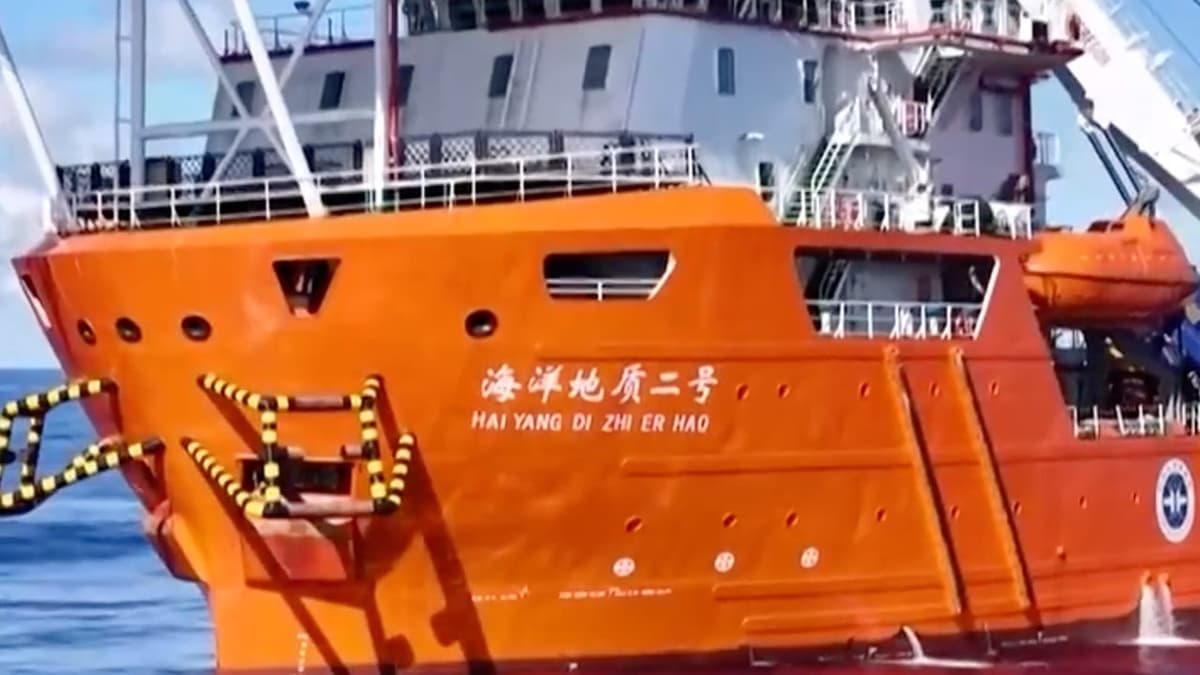
The successful deep‑sea trial of China’s electro‑hydrostatic actuator (EHA) signals a notable engineering breakthrough. By merging hydraulic pump, valve, cylinder and electronic controls into a single sealed module, the device can operate at pressures exceeding 35 MPa while delivering more than 50 kN of cutting force. Its compact design eliminates external oil lines, improving reliability and energy efficiency—advantages already proven in aerospace actuation. The Haiyang Dizhi 2’s 3,500‑metre test validates the actuator’s performance envelope, opening doors for subsea cable maintenance, pipeline repair, and deep‑water salvage.
Beyond commercial utility, the technology carries clear strategic implications. A domestically produced cutter that can sever fiber‑optic or power cables at abyssal depths equips China with a tool for potential maritime coercion or defensive counter‑measures, echoing concerns raised by analysts about dual‑use capabilities. The system’s 85 % local‑content target aligns with Beijing’s broader push for self‑sufficiency in critical defense and infrastructure sectors, reducing reliance on Western‑origin hydraulic equipment that may be subject to export controls. As other nations modernise their undersea assets, China’s ability to disrupt or protect subsea networks could shift the balance in contested regions such as the South China Sea.
For the global subsea market, the EHA introduces a competitive domestic alternative to expensive foreign cutting saws that have traditionally dominated the niche. Chinese offshore operators can now access a faster, more efficient tool—evidenced by earlier domestic saws cutting an eight‑inch pipe in 20 minutes at 2,000 metres—potentially lowering project costs and accelerating timelines. International cable‑laying firms may face new pricing pressure as Chinese firms leverage this technology in overseas contracts, while suppliers of legacy hydraulic systems could see demand erode unless they innovate comparable compact, high‑pressure solutions. The test underscores China’s accelerating capabilities in deep‑sea engineering, a trend that will likely influence both commercial and security dynamics in the years ahead.
China tests submarine cable cutter at 3,500-metre depth
Comments
Want to join the conversation?
Loading comments...