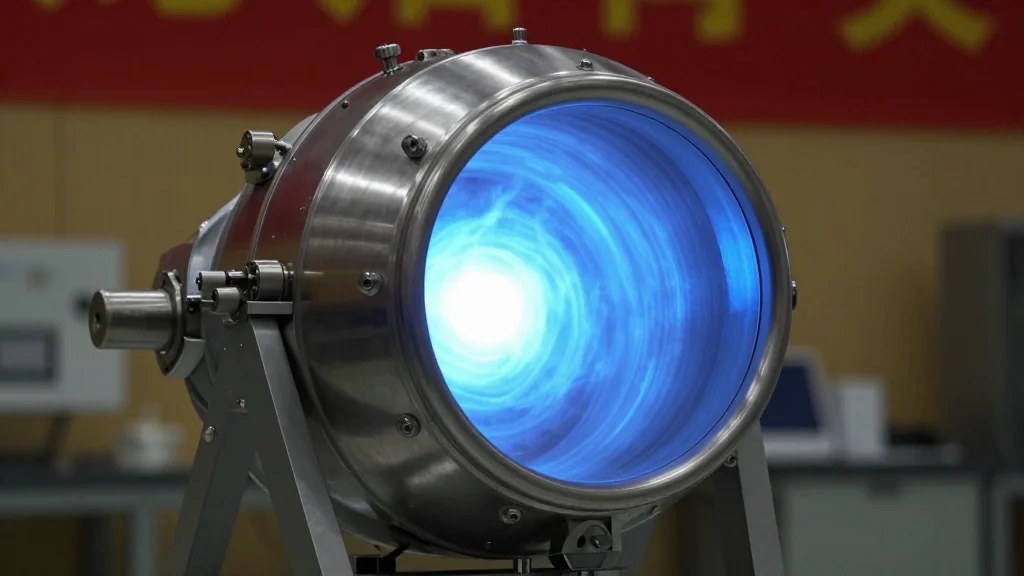
China's EAST Reactor Extends High‑Temp Plasma Run, Boosting Fusion Prospects

Why It Matters
Fusion energy offers a potential solution to two of the planet’s most pressing challenges: climate change and energy security. By replicating the sun’s power-generating process, fusion could deliver baseload electricity without the carbon emissions associated with coal, oil, or gas. China's progress with EAST signals that the technology may be moving from laboratory curiosity to a practical energy source, prompting governments and private investors to reassess long‑term energy strategies. The breakthrough also intensifies geopolitical competition in high‑tech energy research. As China demonstrates capability, other major powers may accelerate their own programs to avoid falling behind, potentially leading to increased public and private funding, talent migration, and collaborative frameworks that could shape the next decade of scientific innovation.
Key Takeaways
- •EAST tokamak maintained ultra‑high plasma temperatures for longer periods in recent tests
- •Stable plasma confinement is a critical hurdle for practical fusion power
- •China’s investment in advanced science projects positions it as a fusion leader
- •Other nations—U.S., France, Japan, U.K.—are concurrently advancing fusion research
- •Fusion still faces engineering, financial and scaling challenges before commercial deployment
Pulse Analysis
China’s latest EAST results underscore a strategic shift from incremental experiments to demonstrable performance milestones. Historically, the fusion field has been dominated by the ITER consortium, but China’s ability to extend plasma stability independently suggests a parallel pathway that could shorten the timeline to a viable reactor. This dual‑track approach may force a recalibration of global funding allocations, with investors seeking to diversify risk across both the multinational ITER roadmap and national programs like EAST.
From a market perspective, sustained high‑temperature plasma runs improve the economic case for fusion by reducing the frequency of costly shutdowns and restarts. If China can translate stability into net energy gain, the commercial value proposition could attract private capital previously hesitant to commit to a technology with an uncertain payoff horizon. Moreover, the geopolitical dimension cannot be ignored: energy independence is a national security priority, and a breakthrough in fusion could reshape trade balances and reduce reliance on imported fuels.
Looking forward, the key variables will be the pace at which engineering challenges—such as superconducting magnet durability and heat‑exhaust handling—are resolved, and the ability of the scientific community to coordinate standards across disparate national programs. Successful navigation of these factors could usher in a new era of clean, abundant energy, while failure to overcome them may relegate fusion to a long‑term research endeavor rather than a commercial reality.
China's EAST Reactor Extends High‑Temp Plasma Run, Boosting Fusion Prospects
Comments
Want to join the conversation?
Loading comments...