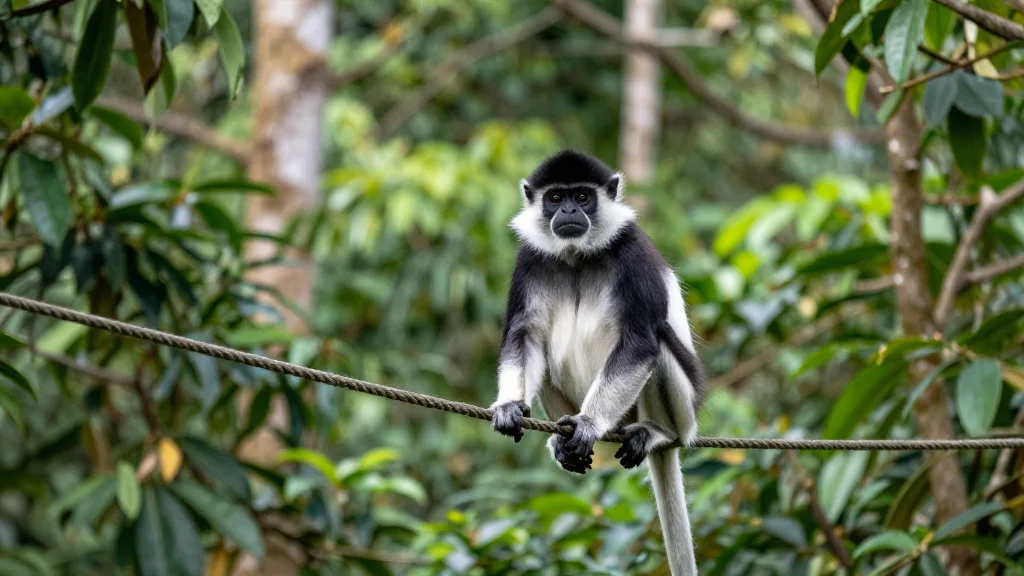
Citizen Science Helps Reconnect Singapore Treetops for Elusive Leaf-Eating Langurs
Why It Matters
The initiative shows how community‑driven data can directly shape urban wildlife conservation, boosting genetic diversity and long‑term viability of one of the world’s rarest primates while influencing Singapore’s broader biodiversity agenda.
Key Takeaways
- •Citizen scientists logged langur sightings, identifying food plants and corridors.
- •Singapore's langur population doubled to ~80 since 2011.
- •Rope bridges and wildlife overpasses now link fragmented forest patches.
- •Volunteer data drives habitat enrichment and public advocacy for protection.
Pulse Analysis
Urban Singapore is a paradox of dense development and pockets of secondary forest, leaving the critically endangered Raffles’ banded langur isolated in tiny canopy islands. By engaging more than 900 volunteers in systematic surveys, the citizen‑science program has generated a rare longitudinal dataset that pinpoints feeding hotspots, movement routes and demographic trends. This grassroots intelligence not only fills scientific gaps but also creates a compelling narrative that resonates with city dwellers, turning casual hikers into informed stewards of the island’s dwindling biodiversity.
Armed with volunteer‑derived insights, conservation agencies have rolled out tangible connectivity solutions. Rope bridges spanning roads and a 62‑meter wildlife overpass across the Bukit Timah Highway now provide safe arboreal highways, while enrichment planting of figs, mangroves and other preferred species expands food availability. Early monitoring shows hundreds of crossings, indicating that these structures effectively mitigate inbreeding risks and road‑kill fatalities, thereby accelerating population growth that has already doubled in a decade.
The success in Singapore offers a scalable model for other megacities confronting habitat fragmentation. By coupling community data collection with targeted engineering, policymakers can justify land‑use decisions that balance development with ecological corridors. Moreover, the program’s public‑engagement component builds political capital for protecting unprotected forests like the 30‑hectare Tagore site, potentially influencing future zoning. As regional cooperation with Malaysia deepens, the Singapore experience could anchor a transboundary metapopulation strategy, ensuring the long‑term survival of the species across its entire range.
Citizen science helps reconnect Singapore treetops for elusive leaf-eating langurs
Comments
Want to join the conversation?
Loading comments...