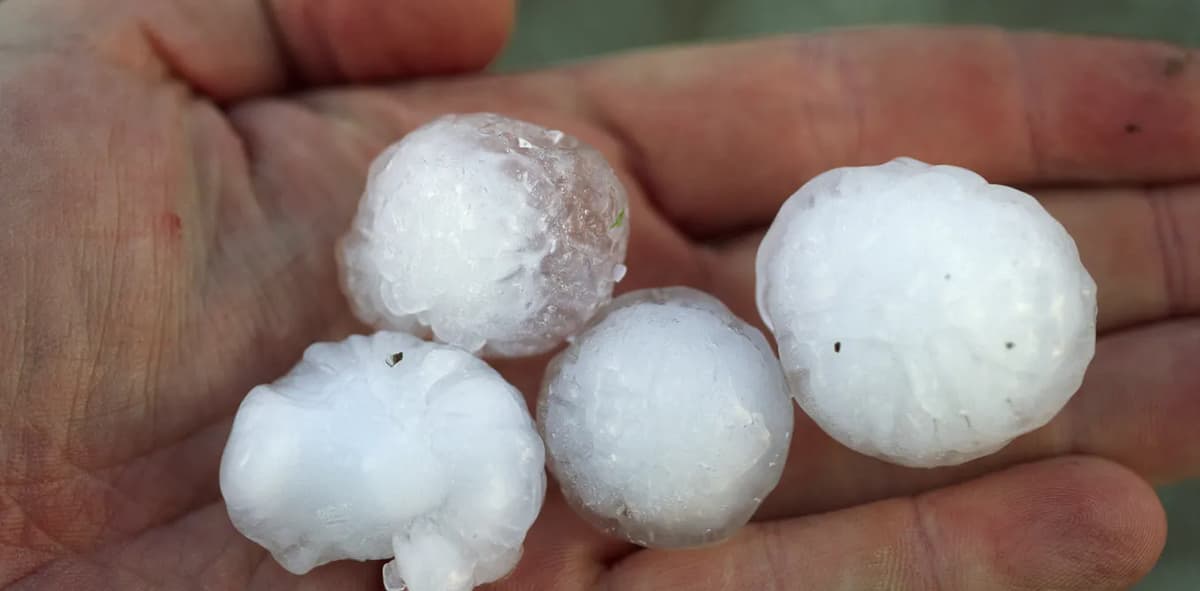
Climate Change May Shift Hailstorms Towards Earth’s Poles – New Study
Why It Matters
Insurance carriers, agribusinesses and infrastructure planners must reassess exposure as hail damage concentrates in new regions and seasons, potentially driving higher claim costs and supply‑chain disruptions.
Key Takeaways
- •Hail‑prone conditions shift toward northern Europe, Canada, and New Zealand.
- •Winter hail frequency rises while summer frequency declines globally.
- •Larger hailstones expected, increasing potential damage despite fewer events.
- •Australian insurance claims in 2025 totalled about $1.25 b USD.
- •Regional model disagreement remains high in tropical zones.
Pulse Analysis
The poleward migration of hail‑prone environments stems from two climate‑driven forces: warmer air that fuels stronger updrafts and increased atmospheric moisture, and higher temperatures that accelerate hail melting during descent. By analysing proxy indicators across eight global climate models, researchers identified a consistent northward shift in hail potential, with winter months showing heightened risk. This seasonal flip challenges traditional risk assessments that have focused on summer storms, prompting insurers and agricultural producers to recalibrate models for crops like wheat that mature in colder periods.
Beyond frequency, the size and destructiveness of hailstones are set to rise. The Peking University team applied a physics‑based hail growth model to the same climate scenarios, finding a clear trend toward fewer small hail events but a surge in large, high‑impact stones. In Australia, hail damage already cost insurers roughly $1.25 b USD in 2025, underscoring how amplified hail severity can translate into steep financial losses. Similar spikes are projected for northern Europe and the northwestern United States, where infrastructure and property values are high, raising the stakes for underwriters and municipal planners.
However, the picture is not uniform. Tropical regions exhibit divergent model outputs, reflecting limited resolution in global simulations and complex local dynamics. Stakeholders should therefore adopt a layered approach: integrate high‑resolution regional forecasts, invest in resilient building designs, and diversify crop varieties to mitigate winter hail exposure. Ultimately, rapid greenhouse‑gas reductions remain the most effective lever to curb the intensifying hail threat, aligning climate action with tangible risk‑management benefits for the insurance and agricultural sectors.
Climate change may shift hailstorms towards Earth’s poles – new study
Comments
Want to join the conversation?
Loading comments...