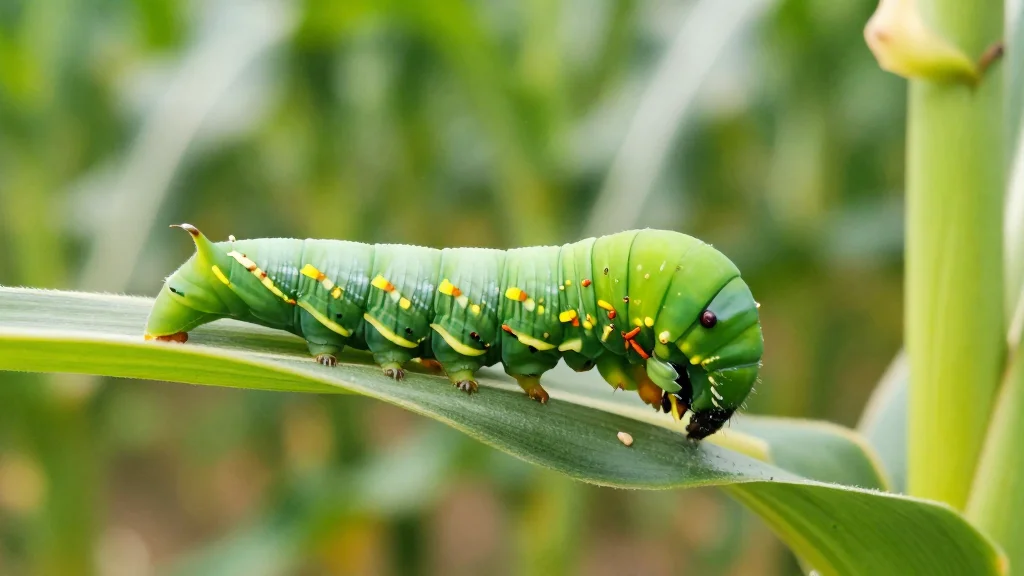
Climate Change Reshapes Potential Distributions and Seasonal Mismatch in a Host–Parasitoid System: Cotesia Ruficrus and Fall Armyworm
Why It Matters
The findings reveal where biological control with C. ruficrus will stay effective and where climate‑driven decoupling could undermine pest management, guiding growers and policymakers in adapting strategies to a warming world.
Key Takeaways
- •C. ruficrus tolerates 2–34 °C, colder than fall armyworm
- •Model predicts co‑suitability across tropical to temperate croplands
- •Warming expands FAW‑only zones, reducing parasitoid overlap in hot lowlands
- •Parasitoid activity starts earlier, but peaks diverge above 34 °C
- •Biocontrol remains viable in temperate regions and early season windows
Pulse Analysis
Climate change is reshaping the geographic range of agricultural pests and the insects that keep them in check. The fall armyworm (Spodoptera frugiperda) has already become a worldwide invader, threatening staple crops from maize to sorghum. Researchers combined laboratory thermal development data with the CLIMEX modeling platform to project how the parasitoid Cotesia ruficrus, a natural enemy of the armyworm, will fare under current conditions and under the A1B emissions scenario for 2050 and 2090. This mechanistic approach links physiological limits to climate grids, offering a more precise alternative to correlative niche models.
The experiments revealed that C. ruficrus can develop between 2 °C and 34 °C, giving it a colder tolerance than its host, which thrives from roughly 12 °C to 35 °C. Model outputs show extensive co‑suitability across tropical, subtropical and temperate cropping belts, yet persistent mismatches appear in the hottest, driest lowlands where temperatures regularly exceed the parasitoid’s upper threshold. As the planet warms, areas suitable only for the armyworm expand, especially in low‑elevation regions, while the parasitoid’s seasonal window shifts earlier, reducing overlap during peak summer heat.
For growers, these insights suggest that C. ruficrus will remain an effective biocontrol agent in temperate zones and during the early part of the growing season in warmer climates. Deployment strategies should prioritize early‑season releases and consider supplemental control measures when temperatures surpass 34 °C, a point at which the parasitoid’s efficacy wanes. The study underscores the value of integrating physiological data with climate projections to anticipate pest‑natural enemy dynamics, a practice that will become increasingly critical as agriculture adapts to a hotter, more variable world.
Climate change reshapes potential distributions and seasonal mismatch in a host–parasitoid system: Cotesia ruficrus and fall armyworm
Comments
Want to join the conversation?
Loading comments...