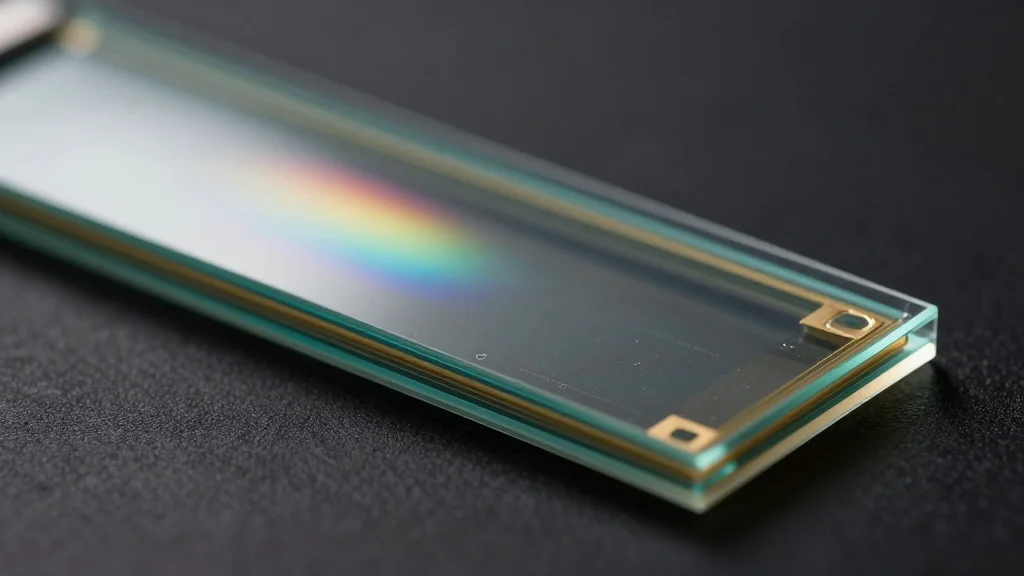
Co‐Evaporated Ratio‐Tunable TexSe1‐x Film for High‐Performance Multiband Photodetection Toward Subretinal Color Visual Functions
Why It Matters
The breakthrough provides a scalable route to high‑performance, color‑selective photodetectors, a critical component for next‑generation retinal implants and biomimetic imaging systems.
Key Takeaways
- •Co-evaporation yields high-quality, composition‑tunable Te‑Se films.
- •Detectors achieve >90% external quantum efficiency at 450 nm.
- •Dark current density reaches as low as 1.86 × 10⁻⁶ mA cm⁻².
- •Three‑device array mimics human cone cells with <0.4% wavelength error.
- •Platform enables subretinal color vision prosthetics.
Pulse Analysis
The co‑evaporation technique described in the study marks a significant advance in thin‑film engineering. By simultaneously depositing tellurium and selenium under precisely controlled flux ratios, researchers can fine‑tune the alloy composition across the entire 0 ≤ x ≤ 1 range. This compositional control directly adjusts the bandgap, allowing each photodetector to target a specific portion of the visible spectrum without resorting to complex post‑growth processing. Compared with traditional sputtering or chemical vapor deposition, co‑evaporation offers superior uniformity and lower defect densities, which translate into higher carrier lifetimes and reduced recombination losses.
Performance metrics underscore the practical relevance of the material system. The devices exhibit external quantum efficiencies exceeding 90% at the blue‑green region (450 nm) and maintain dark current densities below 2 µA cm⁻², a benchmark that rivals commercial silicon photodiodes. By varying the Te content (x = 0.3, 0.48, 0.55), the researchers created three detectors whose spectral peaks align with the S, M and L cones of the human eye. When operated together, the array resolves incident wavelengths with a mean error under 0.4%, effectively reproducing the color discrimination capability of natural vision.
The implications extend far beyond laboratory optics. Precise, low‑power photodetectors are a cornerstone of subretinal prosthetic devices that aim to restore color perception for patients with retinal degeneration. A tunable, high‑efficiency detector platform could reduce the number of implanted components, simplify surgical procedures, and lower overall system cost. Moreover, the technology is compatible with existing flexible substrate processes, opening pathways to conformal retinal patches. As the market for visual neuroprosthetics expands, this co‑evaporation‑based approach positions itself as a viable candidate for commercial adoption, driving both clinical outcomes and investment interest.
Co‐Evaporated Ratio‐Tunable TexSe1‐x Film for High‐Performance Multiband Photodetection Toward Subretinal Color Visual Functions
Comments
Want to join the conversation?
Loading comments...