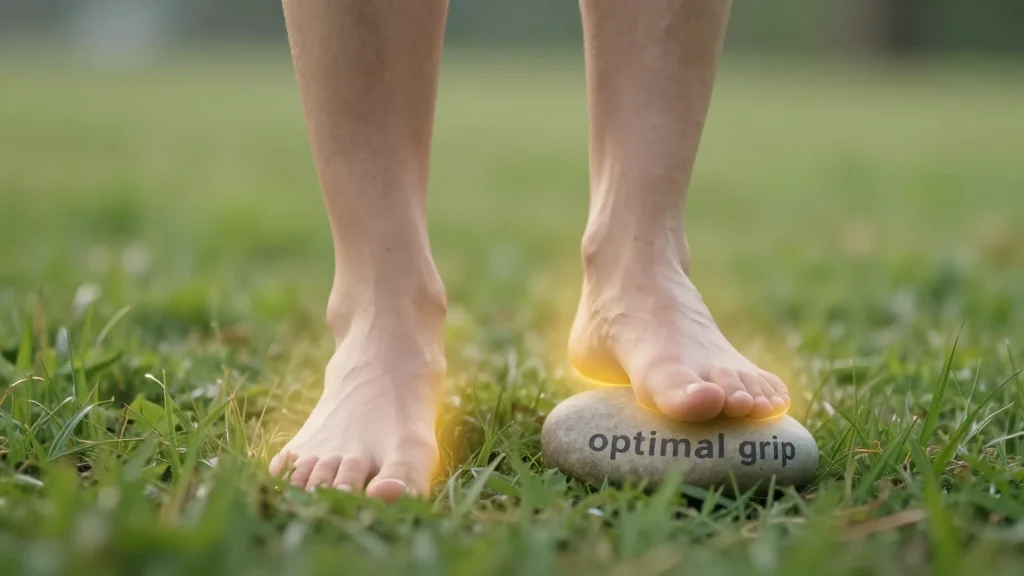
Cognition Might Emerge From Embodied “Grip” With the World Rather than Abstract Mental Processes
Why It Matters
Reframing cognition as embodied interaction challenges dominant computational models and opens new pathways for research on personality, mental health, and human‑machine design.
Key Takeaways
- •Cognition viewed as embodied 'grip' rather than internal computation
- •Optimal grip links perception, action, and personality traits
- •Phenomenology challenges traditional information‑processing models
- •Research needed to operationalize grip for empirical testing
Pulse Analysis
The debate over how the mind works has long been dominated by the information‑processing metaphor, which treats cognition as a series of internal computations. Recent scholarship, however, is reviving the phenomenological tradition championed by Husserl and Merleau‑Ponty, emphasizing that perception is inseparable from the body’s active engagement with its surroundings. By positioning cognition as an "optimal grip" on the environment, the article reframes mental activity as a dynamic, skill‑based process rather than a static symbol manipulation, aligning with contemporary enactivist and ecological approaches that prioritize sensorimotor loops over abstract representations.
"Optimal grip" functions as a relational property, akin to biological fitness, describing how well an embodied mind fits its current situation. This perspective reshapes our understanding of personality: traits such as extraversion or neuroticism become habitual ways of attuning to affordances, rather than fixed internal dispositions. When grip falters—due to mismatched demands or limited skill—the resulting breakdown can manifest as psychopathology. By linking grip to personality styles, the framework offers a nuanced lens for interpreting stable maladaptive patterns and suggests that therapeutic interventions might focus on enhancing embodied attunement rather than merely reshaping thought content.
Translating the rich philosophical language of "grip" into empirical science presents a key challenge. Researchers must devise reliable measures that capture the fluid, context‑dependent nature of embodied attunement without oversimplifying its nuance. Successful operationalization could bridge phenomenology with mainstream cognitive science, informing the design of more adaptable AI systems that learn through interaction rather than pre‑programmed algorithms. Moreover, integrating grip‑based models with existing theories may yield a more comprehensive account of human cognition, personality, and mental health, positioning embodied approaches at the forefront of future psychological research.
Cognition might emerge from embodied “grip” with the world rather than abstract mental processes
Comments
Want to join the conversation?
Loading comments...