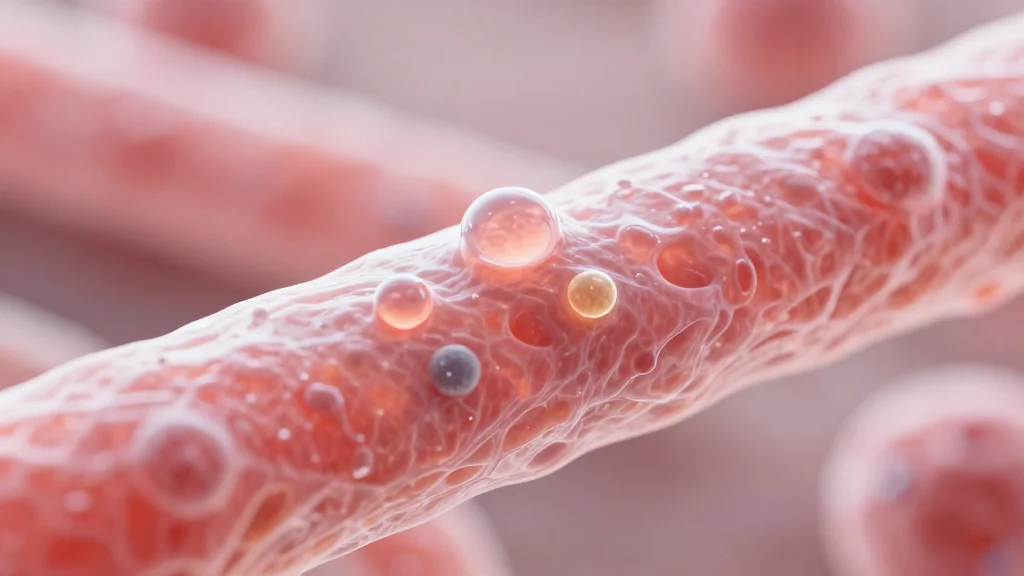
Collagen Resides Inside Cells in Liquid Condensate-Like Form
Why It Matters
Revising how collagen exits cells explains how cells avoid lethal intracellular fiber formation and opens novel therapeutic avenues for fibrotic diseases and cancer‑related extracellular matrix resistance.
Key Takeaways
- •Collagen assembles as liquid droplets in the ER, not rigid rods.
- •TANGO1 anchors condensates at ER exit sites without forming them.
- •Proposed “liquid extrusion” replaces conventional vesicle transport for collagen.
- •Findings link condensate dynamics to fibrosis, liver scarring, and tumor resistance.
- •Targeting condensates or TANGO1 may enable new anti‑fibrotic/cancer therapies.
Pulse Analysis
The discovery that procollagen I exists as a phase‑separated liquid droplet inside the endoplasmic reticulum overturns a half‑century‑old view of collagen as a pre‑formed rigid rod. By leveraging high‑resolution live‑cell microscopy, the CRG team visualized dynamic condensates that coalesce, divide and exchange proteins, a behavior characteristic of biomolecular liquids. This liquid‑like state likely shields the cell from premature fiber formation, which would otherwise be cytotoxic, and suggests that the intracellular environment actively regulates structural proteins through condensation rather than static assembly.
Central to the new model is the protein TANGO1, previously identified as essential for collagen export. The study shows TANGO1 does not initiate condensate formation but positions these droplets at ER exit sites, facilitating a “liquid extrusion” process. Unlike the classic vesicle pathway—limited to 60‑90 nm carriers—this mechanism allows the massive collagen trimer to be expelled via capillary‑like forces or pressure‑driven flow. The hypothesis aligns with physical principles of wetting and offers a coherent explanation for how cells transport such large macromolecules without compromising ER integrity.
Clinically, the findings have far‑reaching implications. In fibrotic disorders, excessive collagen secretion fuels tissue scarring; disrupting condensate formation or TANGO1 anchoring could blunt this pathogenic output. Similarly, tumors exploit dense collagen matrices to evade chemotherapy and immune surveillance; targeting the liquid‑extrusion pathway may weaken this protective shell. Ongoing work aims to visualize the extrusion event in vivo and develop mouse models, paving the way for drug designs that modulate condensate dynamics or TANGO1 interactions, potentially delivering a new class of anti‑fibrotic and anti‑cancer therapeutics.
Collagen Resides Inside Cells in Liquid Condensate-Like Form
Comments
Want to join the conversation?
Loading comments...