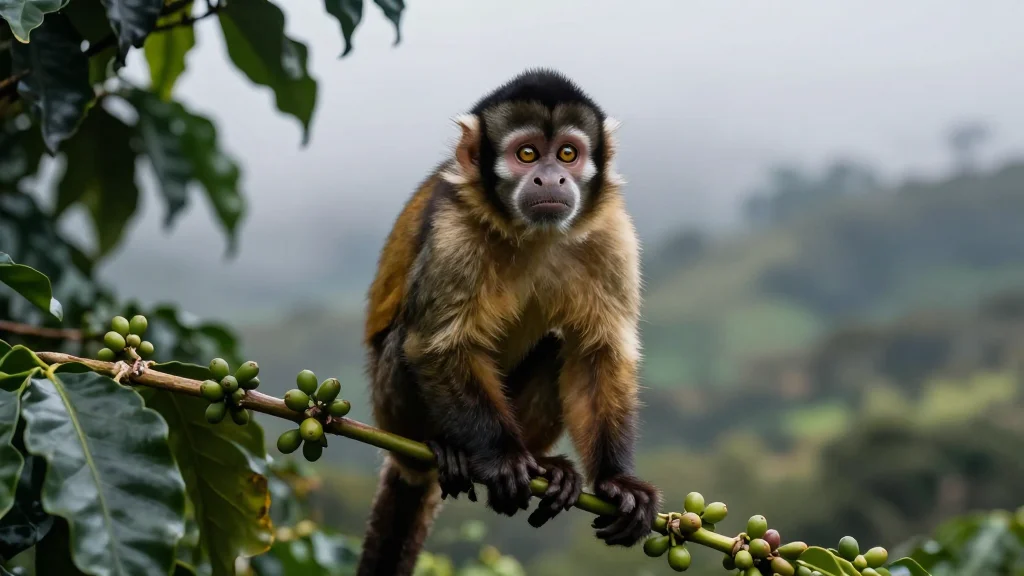
Colombian Night Monkeys: New Research Looks at These Primates, Little-Known Due to Their Nocturnal Nature
Why It Matters
Understanding night monkeys’ natural behavior informs conservation strategies for a uniquely American nocturnal primate, and enriches broader primate evolutionary research.
Key Takeaways
- •Night monkeys are the only nocturnal primates in the Americas
- •Their eyes are 50% larger than those of diurnal primates
- •They form lifelong monogamous pairs, raising up to three offspring
- •Field studies are hampered by darkness and limited visibility
- •New Colombian research aims to observe them in natural habitats
Pulse Analysis
Colombian night monkeys, commonly called owl monkeys, represent a rare evolutionary experiment: the sole primates in the Western Hemisphere that have fully adapted to a nocturnal lifestyle. Their oversized, rod‑like eyes—about 50% larger than those of daytime species—capture the faintest moonlight, enabling them to navigate dense cloud forests after dark. This physiological adaptation, coupled with a monogamous social structure, sets them apart from other nocturnal primates such as Asian lorises or African lemurs, which tend toward solitary living. By highlighting these distinctive traits, researchers underscore the importance of preserving the unique ecological niche these animals occupy.
Historically, most knowledge about Aotus species has emerged from captive settings, where controlled lighting and feeding mask natural behaviors. The darkness of their forest habitats poses logistical challenges: researchers must rely on infrared cameras, night‑vision equipment, and patient observation periods that can stretch for weeks. Montilla’s recent fieldwork in Quindío illustrates a shift toward in‑situ data collection, leveraging local farm landscapes and community engagement to track movement patterns, vocalizations, and pair bonding in real time. Such efforts promise to reveal how night monkeys respond to habitat fragmentation, climate variability, and human encroachment.
The implications extend beyond academic curiosity. Accurate data on population density, reproductive success, and habitat use are essential for crafting effective conservation policies in Colombia’s biodiverse Andes. As coffee cultivation expands and deforestation pressures mount, night monkeys could serve as bioindicators of forest health. Moreover, their unique eye evolution offers comparative insights for vision science and biomedical research. By bridging the gap between laboratory findings and wild observations, the new Colombian studies not only protect a charismatic species but also enrich our broader understanding of primate adaptation and ecosystem resilience.
Colombian Night Monkeys: New Research Looks at These Primates, Little-Known Due to Their Nocturnal Nature
Comments
Want to join the conversation?
Loading comments...