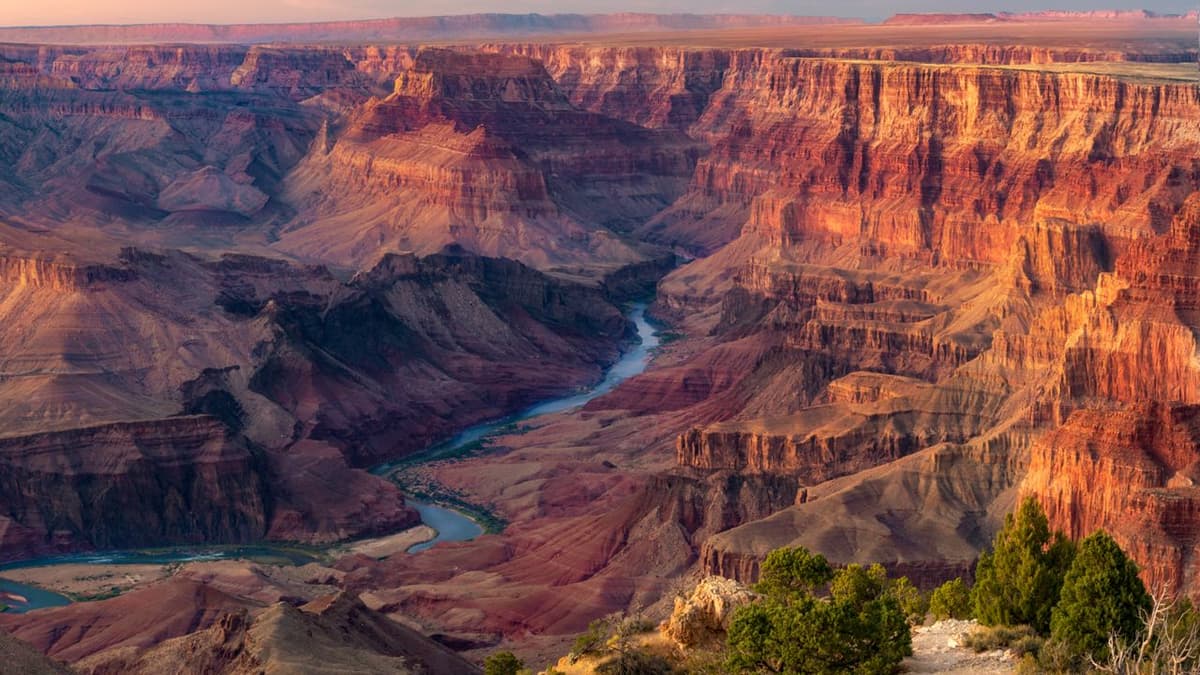
Colorado River May Have Pooled and Spilled over to Form the Grand Canyon, Solving a Long-Standing Mystery — but Not Everyone Agrees
Why It Matters
If validated, the lake‑spillover model reshapes the timeline and mechanisms of one of Earth’s most iconic landscapes, influencing how geologists reconstruct ancient river systems and climate. The debate also highlights the evolving nature of geological consensus, affecting education and future research funding.
Key Takeaways
- •Study finds ancient lake in Bidahochi Basin fed early Colorado River
- •Zircon analysis dates lake spillover to ~5.6 million years ago
- •Researchers argue lake spillover accelerated canyon carving, not catastrophic flood
- •Opposing geologists cite Kaibab Arch notch evidence for earlier river flow
Pulse Analysis
The Grand Canyon’s origin has long been a puzzle for geologists, with competing theories about whether the Colorado River cut its way through solid rock or followed a series of lake‑filled basins. Traditional models emphasize a gradual downcutting process, but recent work suggests a pivotal lake‑spillover event that could have dramatically altered the river’s energy and erosive power. By situating the river within a large, ancient lake, the new hypothesis offers a fresh lens on how massive water bodies can trigger rapid landscape transformation, a concept relevant to other canyon systems worldwide.
In the UCLA‑led study, scientists examined zircon grains—tiny, durable crystals that retain a geochemical fingerprint—from volcanic ash layers in the Bidahochi Basin. These zircons matched those from the upper Colorado watershed, confirming that water from the river fed the basin’s lake around 5.6 million years ago. Complementary evidence, such as fast‑current fish fossils and increased sediment influx, supports a scenario where a steadily rising lake eventually overflowed, creating a high‑energy river that began carving the canyon’s steep walls. This multidisciplinary approach blends geochronology, paleontology, and sedimentology to tighten the timeline of the river’s north‑to‑south migration.
The interpretation is not universally accepted. Critics point to a notch in the Kaibab Arch that may have allowed the Little Colorado River to flow through the region ten million years earlier, suggesting a more continuous river presence rather than a lake‑driven surge. This scholarly dispute underscores the importance of high‑resolution dating and integrated field data in resolving deep‑time geological debates. Future research, potentially involving deeper core samples and advanced isotopic techniques, could reconcile these views, refining our understanding of river‑driven canyon formation and informing broader studies of ancient climate and tectonic interactions.
Colorado River may have pooled and spilled over to form the Grand Canyon, solving a long-standing mystery — but not everyone agrees
Comments
Want to join the conversation?
Loading comments...