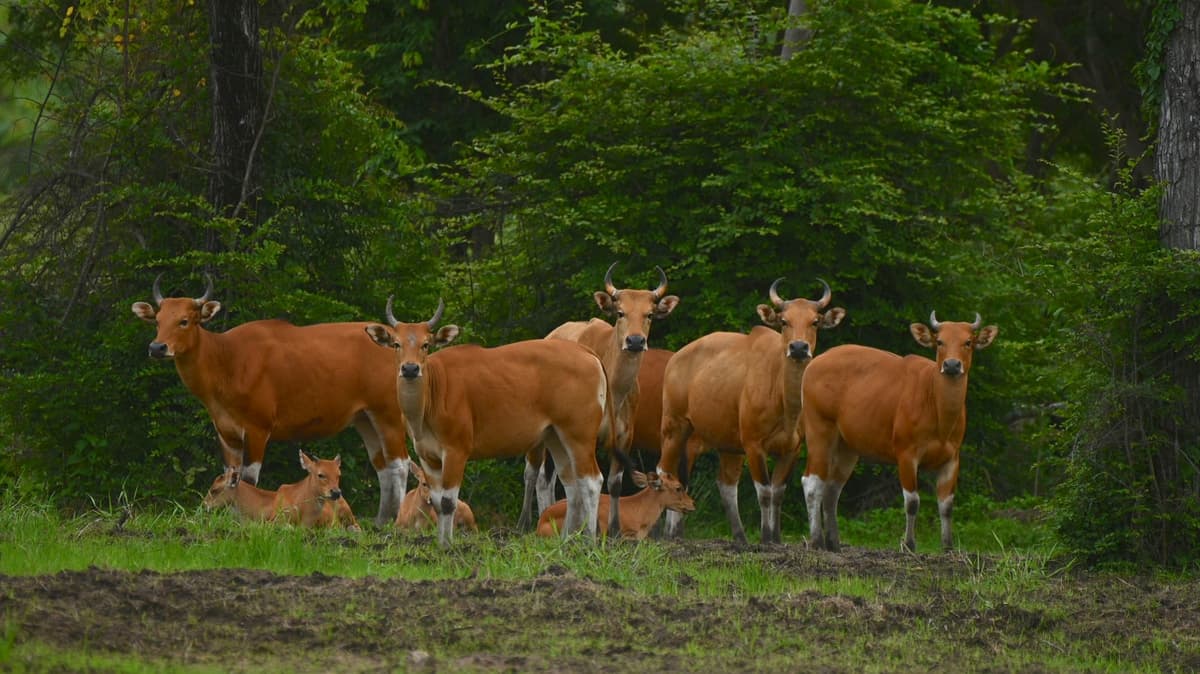
Community-Led Ecotourism Protects Rebounding Wild Cattle in Thailand
Why It Matters
The project shows how community‑driven ecotourism can turn wildlife conservation into sustainable economic growth, easing human‑wildlife conflict while safeguarding a rare species.
Key Takeaways
- •Banteng population in Huai Kha Keng reached ~1,400, largest in SE Asia
- •SMART ranger patrols helped double banteng numbers over 20 years
- •Community ecotourism now employs 320 residents from 19 villages
- •5% of tour revenue funds local infrastructure projects
- •Wildlife tours turned banteng from conflict risk to primary livelihood source
Pulse Analysis
The banteng (Bos javanicus) has long been a conservation priority in Southeast Asia, with Thailand’s populations once dwindling to a few hundred due to habitat loss and poaching. Recent adoption of the Spatial Monitoring And Reporting Tool (SMART) for ranger patrols has dramatically improved anti‑poaching effectiveness, allowing the Huai Kha Keng herd to double over two decades and reach roughly 1,400 individuals. This recovery underscores the power of data‑driven surveillance in protecting fragmented wildlife corridors.
Parallel to ecological gains, the Rabam subdistrict’s community‑led ecotourism venture illustrates a pragmatic pathway to align local livelihoods with conservation goals. Since its 2021 launch, the program has enrolled over 320 residents across 19 villages, offering guided banteng‑watching boat tours, cultural performances, and farm‑to‑table experiences. By channeling 5% of ticket sales into communal infrastructure, the initiative not only diversifies income but also reshapes cultural attitudes toward the forest, turning former hunting grounds into valued economic assets.
The Thai model provides a replicable blueprint for other regions grappling with human‑wildlife conflict. By integrating revenue‑sharing mechanisms, clear community rules, and robust monitoring, ecotourism can become a self‑sustaining financing tool for endangered species. Policymakers and NGOs should consider scaling such partnerships, leveraging technology like SMART to ensure wildlife safety while fostering inclusive rural development that benefits both people and biodiversity.
Community-led ecotourism protects rebounding wild cattle in Thailand
Comments
Want to join the conversation?
Loading comments...