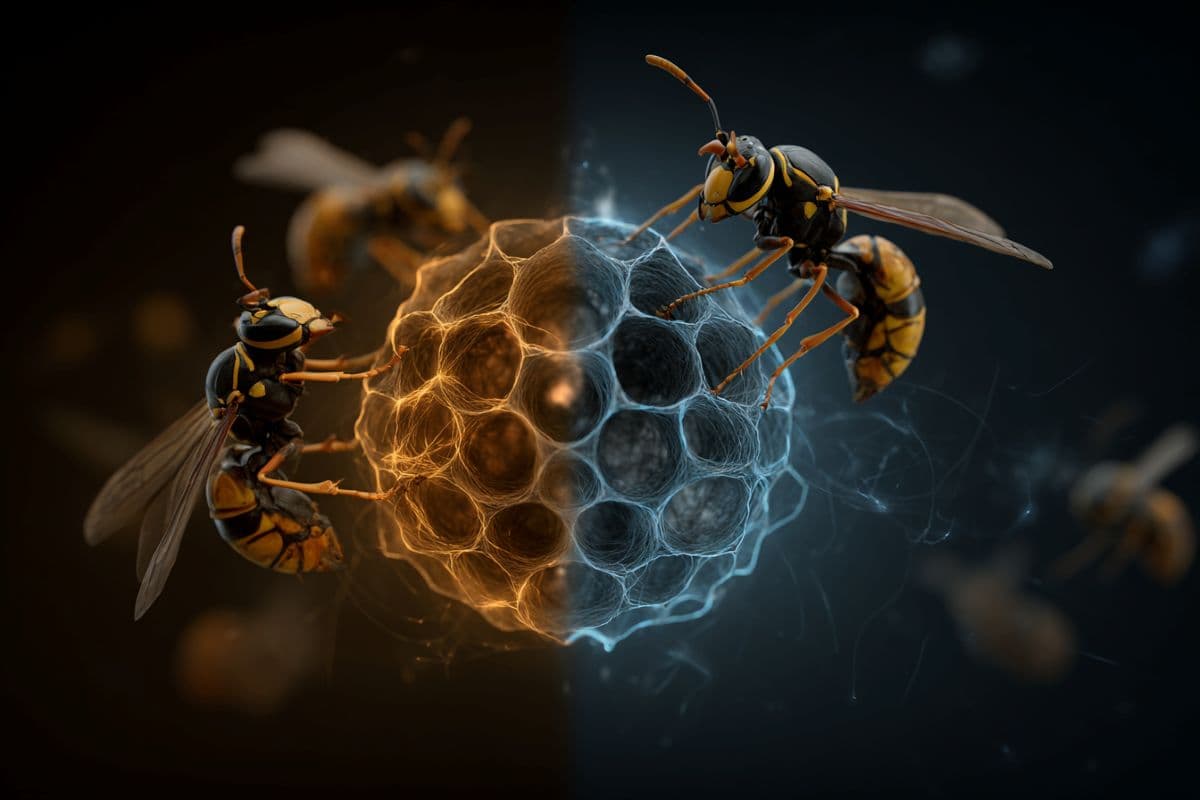
Compensator Wasps Proven to Save Colonies From Chaos
Why It Matters
The study reveals that cooperative societies can remain viable during aggressive succession if non‑combatants absorb the workload, reshaping theories of conflict resolution in animal and possibly human organizations.
Key Takeaways
- •Queen removal triggers violent power struggles in Polistes canadensis colonies
- •“Compensators” avoid fighting, boost foraging and brood care
- •Compensators show no morphological differences, indicating strategic behavior
- •Study challenges belief that orderly succession is required for stability
- •Insights could refine models of conflict resolution in animal societies
Pulse Analysis
The new research, published in *Animal Behaviour*, leveraged a rare field experiment in Panama where queens of tropical paper wasps were removed to observe the immediate social fallout. Within minutes, the colony’s hierarchy collapsed, and multiple workers engaged in fierce battles for reproductive dominance. Yet the colony did not disintegrate; a previously low‑profile cohort of workers, labeled compensators, redirected their energy toward essential tasks such as foraging and brood provisioning. By maintaining food flow and caring for larvae, these individuals buffered the colony against the costs of internal warfare.
From an evolutionary perspective, the findings challenge the classic paradigm that stable cooperation in social insects depends on rigid, pre‑ordained succession rules. Unlike temperate wasp species, which exhibit predictable hierarchies, *Polistes canadensis* demonstrates a flexible strategy where individuals can dynamically choose between aggressive competition and cooperative labor. This behavioral plasticity suggests that natural selection may favor context‑dependent decision‑making, allowing colonies to tolerate high‑risk succession events without collapsing. The lack of morphological differences between fighters and compensators underscores that the division of labor is not hard‑wired but driven by strategic choices.
Beyond entomology, the study offers a metaphor for human institutions facing leadership vacuums. Just as compensators sustain the wasp colony, essential workers in corporations, governments, or NGOs often keep operations running while elites vie for power. Recognizing and supporting these “quiet stabilizers” could improve organizational resilience during crises. Future research may explore the neurobiological cues that trigger compensatory behavior and test whether similar mechanisms exist in other cooperative species, potentially informing more robust models of conflict management across biological and social systems.
Compensator Wasps Proven to Save Colonies from Chaos
Comments
Want to join the conversation?
Loading comments...