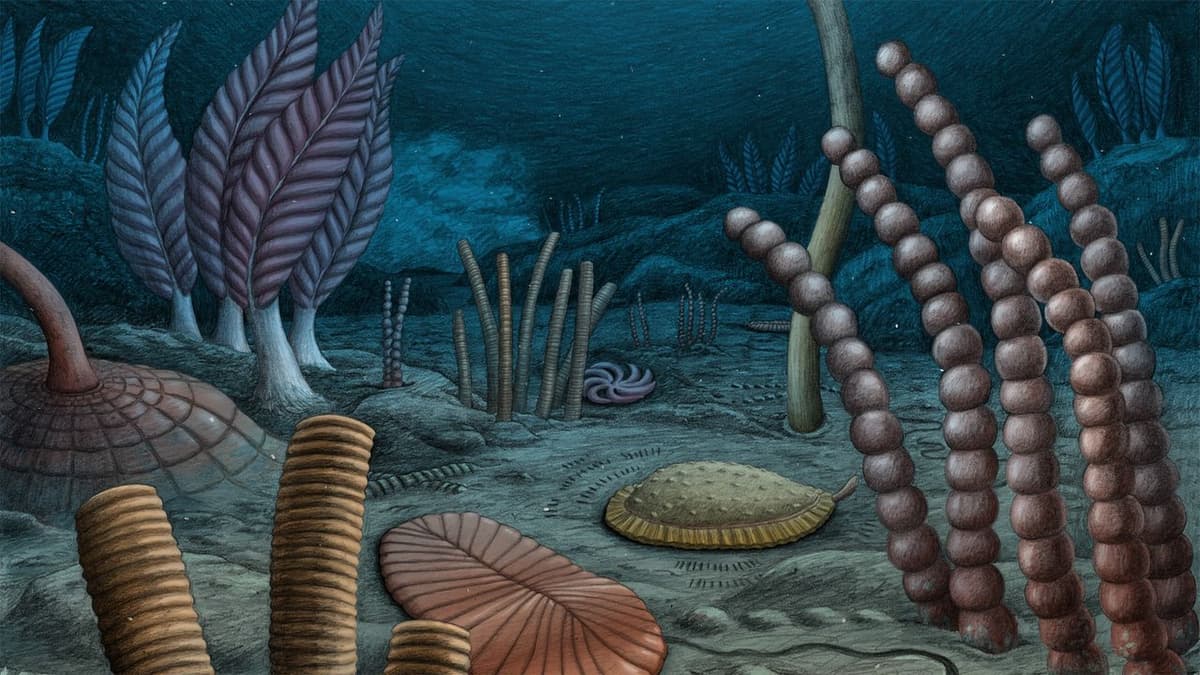
Complex Animals Evolved up to 10 Million Years Earlier than Previously Thought, Fossil Discovery Shows
Why It Matters
The earlier, deep‑water emergence of complex multicellular life reshapes our understanding of Ediacaran biogeography and evolutionary pathways, prompting a reassessment of how and where animal life diversified before the Cambrian explosion.
Key Takeaways
- •100+ fossils found, six taxa new to North America
- •White Sea assemblage fossils date 5‑10 Myr earlier than European finds
- •Discovery suggests deep‑water origin before shallow‑water expansion
- •Dickinsonia, Funisia, Kimberella among species indicating early sexual reproduction and bilateral symmetry
- •Site offers potential to rewrite Ediacaran evolutionary timeline
Pulse Analysis
The Canadian site, situated on the ancient Laurentian craton, delivers a rare, high‑resolution snapshot of the Ediacaran period, a time when soft‑bodied organisms left scant fossil records. By extending the known range of White Sea assemblage fauna into North America and backdating them by several million years, the discovery forces paleontologists to reconsider the timing of key evolutionary milestones, such as the emergence of bilateral symmetry and sexual reproduction, that set the stage for later animal diversification.
Beyond chronology, the sedimentology indicates these organisms inhabited deeper, more stable marine environments than previously assumed for the White Sea assemblage. This deep‑water origin hypothesis flips the conventional model that early animal life proliferated first in shallow, nutrient‑rich seas before moving offshore. Stable temperature and oxygen conditions in the deep ocean may have provided a refuge for experimental body plans, allowing evolutionary innovations to arise away from the volatile surface.
Looking forward, the site opens avenues for multidisciplinary research, from high‑precision isotopic dating to advanced imaging of soft‑tissue preservation. As more Laurentian localities are explored, scientists anticipate a more nuanced map of early animal distribution, which could refine global models of pre‑Cambrian ecosystems. Ultimately, this breakthrough underscores the importance of underexplored regions in rewriting Earth’s biological history, offering fresh data that could recalibrate textbooks on the origins of complex life.
Complex animals evolved up to 10 million years earlier than previously thought, fossil discovery shows
Comments
Want to join the conversation?
Loading comments...