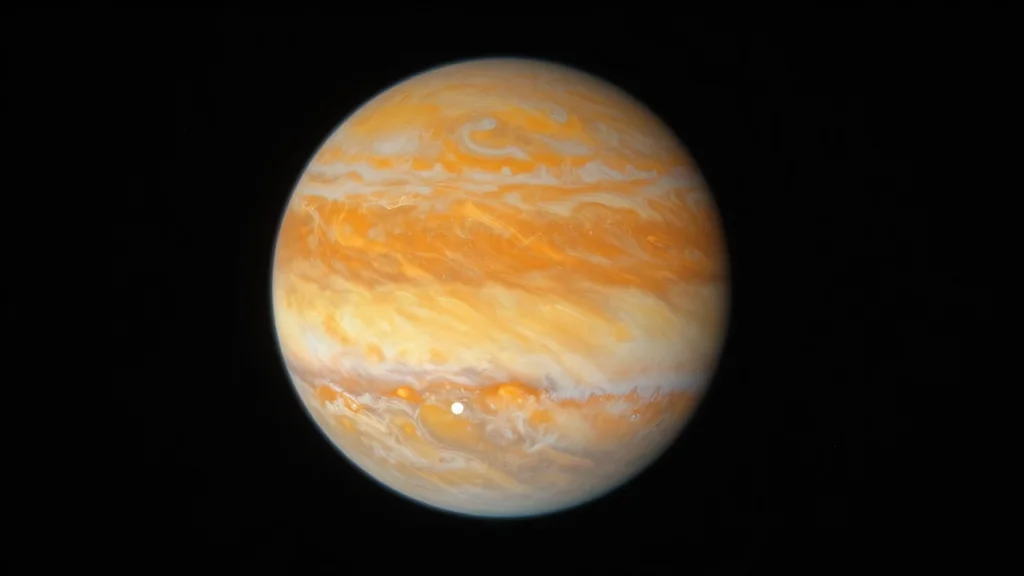
Cosmic Dust Identified as Source of Venus' Lower Haze, Boosting Cloud Formation by Up to 30%

Why It Matters
Resolving the origin of Venus's lower haze reshapes our understanding of the planet's climate system. By quantifying the contribution of extraterrestrial material to cloud formation, scientists can better model the planet’s energy balance, which is essential for interpreting past observations and planning future missions. The potential link between dust‑borne metallic elements and the unknown UV absorber also bridges atmospheric chemistry with solar system dynamics, offering a unified explanation for multiple long‑standing anomalies. Moreover, the study highlights the importance of exogenic processes in shaping planetary atmospheres, a factor often overlooked in terrestrial‑centric climate models. As missions like VERITAS and EnVision aim to probe Venus’s surface and atmospheric dynamics, incorporating cosmic dust effects will improve the accuracy of data interpretation and may influence the design of instruments intended to study cloud microphysics and composition.
Key Takeaways
- •Cosmic dust, not internal chemistry, creates Venus's lower haze
- •Dust particles increase cloud formation by 20‑30%
- •Metallic elements in dust may explain Venus's unknown UV absorber
- •Model matches Pioneer Venus data, validating the hypothesis
- •Findings will guide observations by upcoming VERITAS and EnVision missions
Pulse Analysis
The identification of cosmic dust as the driver of Venus's lower haze marks a paradigm shift in planetary atmospheric science. For decades, researchers focused on internal processes—volcanism, photochemistry, and sulfuric‑acid dynamics—to explain the haze. This new exogenic perspective forces a reevaluation of how external material fluxes can dominate atmospheric chemistry on terrestrial planets, especially those lacking a protective magnetic field.
Historically, Earth's upper atmosphere also captures meteoritic dust, but its impact on climate is negligible compared to internal processes. Venus, with its dense CO₂ envelope and slow rotation, provides a unique laboratory where dust can survive long enough to influence cloud microphysics. The study's integration of a realistic dust influx rate into a microphysical cloud model demonstrates that even modest external inputs can have outsized effects when the atmospheric chemistry is already primed for condensation.
Looking ahead, the findings could influence the scientific priorities of upcoming missions. VERITAS's radar mapper and EnVision's spectrometers will be able to detect variations in haze opacity and composition, directly testing the dust‑seed hypothesis. If the dust contribution proves variable over time, it may also explain historical discrepancies between different spacecraft observations. In the broader context, the work underscores the need to consider meteoritic influx in climate models of exoplanets with thick atmospheres, where similar processes might shape observable signatures.
Cosmic Dust Identified as Source of Venus' Lower Haze, Boosting Cloud Formation by Up to 30%
Comments
Want to join the conversation?
Loading comments...