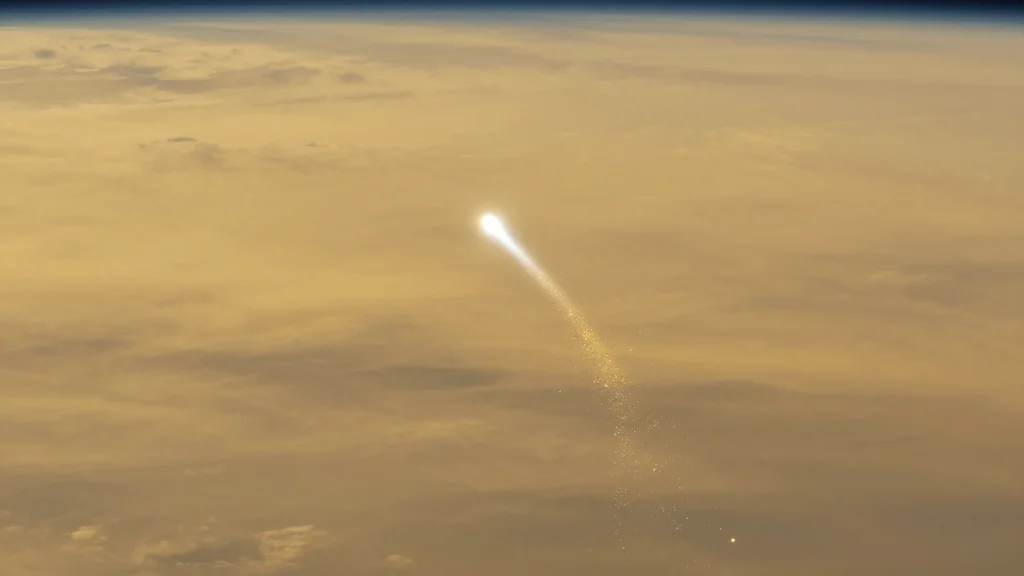
Cosmic Dust Identified as Source of Venus’s Lower‑Atmosphere Haze

Why It Matters
Understanding the source of Venus’s lower‑atmosphere haze resolves a decades‑old mystery about the planet’s cloud chemistry and its impact on climate dynamics. By establishing meteoroid dust as a key player, the research forces a reassessment of how external material influences atmospheric evolution on rocky worlds, with direct relevance to interpreting exoplanet spectra. The link between dust and a potential UV absorber also offers a tangible target for future missions, guiding instrument design and observation strategies. Beyond Venus, the study suggests that dust influx could be a universal mechanism shaping cloud formation on gas giants and exoplanets alike. This insight may help astronomers differentiate between atmospheric signatures driven by internal processes versus those seeded by cosmic debris, sharpening the search for biosignatures and habitability markers across the galaxy.
Key Takeaways
- •Cosmic dust from meteoroids burns up high in Venus’s atmosphere, leaving nanometer‑scale mineral particles.
- •Mineral cores act as condensation nuclei, boosting cloud formation by up to 30 percent.
- •Iron‑rich dust may explain the long‑standing unidentified UV absorber in Venus’s haze.
- •Simulation results match observations from Venera and Pioneer probes, confirming the dust‑driven haze model.
- •Findings could apply to gas giants and exoplanets, influencing future atmospheric studies.
Pulse Analysis
The dust‑driven haze model marks a paradigm shift in planetary atmospheric science. Historically, Venus’s thick sulfuric‑acid clouds were attributed mainly to volcanic outgassing and internal chemistry. By quantifying the exogenic contribution of meteoroid dust, the new research forces a re‑balancing of these factors, suggesting that external inputs can dominate cloud nucleation under certain conditions. This aligns with emerging evidence from Earth’s upper atmosphere, where meteoric smoke particles influence noctilucent cloud formation, indicating a broader planetary principle.
From a methodological standpoint, the study showcases the power of coupling high‑resolution particle dynamics with global climate models. The ability to reproduce historic haze observations validates the approach and sets a new standard for simulating atmospheric processes on bodies where direct sampling is impossible. As missions like VERITAS and EnVision deliver unprecedented data, the model can be refined, potentially revealing spatial variations in dust deposition that correlate with surface geology or magnetic field interactions.
Looking forward, the implications extend to exoplanet characterization. Spectroscopic signatures of hazes often obscure atmospheric composition, complicating the search for biosignatures. If meteoroid dust is a common haze catalyst, astronomers may need to factor dust flux estimates into retrieval algorithms, especially for planets orbiting within dense debris belts. The Venus case thus becomes a laboratory for disentangling internal versus external drivers of atmospheric opacity, a critical step toward accurate interpretation of distant worlds.
Cosmic Dust Identified as Source of Venus’s Lower‑Atmosphere Haze
Comments
Want to join the conversation?
Loading comments...