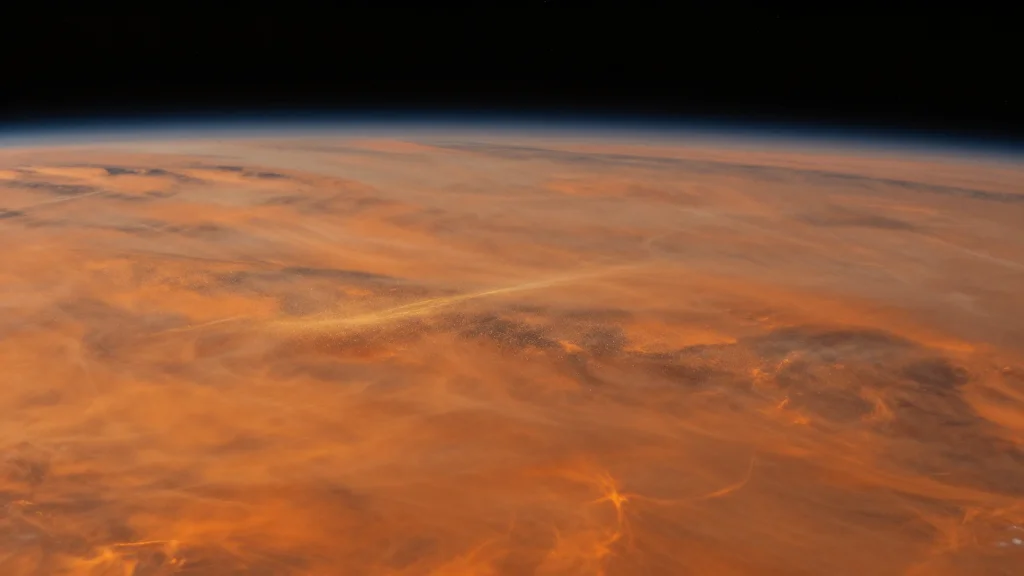
Cosmic Dust Identified as the Source of Venus's Enigmatic Lower Haze
Why It Matters
The finding links extraterrestrial material to Venus’s climate, forcing a revision of atmospheric models and influencing the design of future probes. It also offers a comparative framework for haze formation on exoplanets.
Key Takeaways
- •Cosmic dust particles settle into Venus's lower atmosphere, forming haze
- •Haze detected at 45‑55 km altitude, matching dust influx rates
- •Findings revise models of Venusian climate and sulfur cycle
- •Impacts future mission designs targeting atmospheric sampling
- •Supports hypothesis that interplanetary dust contributes to planetary hazes
Pulse Analysis
Venus’s thick, yellowish veil has long puzzled scientists, with theories ranging from volcanic sulfur emissions to photochemical reactions. While upper‑level hazes are well documented, the lower haze—situated between 45 and 55 kilometers—remained enigmatic due to limited direct observations. Traditional models struggled to explain its persistence without invoking unrealistically high sulfuric acid production, prompting researchers to explore external contributors that could seed cloud formation.
A collaborative team from the University of Tokyo and Tohoku University leveraged high‑resolution infrared spectra from the Akatsuki spacecraft, complemented by Earth‑based telescopic measurements, to pinpoint the composition of the lower haze. Their analysis revealed a signature consistent with micron‑scale silicate particles, identical to those found in interplanetary dust streams. By estimating the dust influx at roughly 10,000 kilograms per year, the researchers demonstrated that these particles provide ample condensation nuclei for sulfuric acid droplets, sustaining the haze without requiring excessive internal chemistry. This interdisciplinary approach bridges planetary science, astrophysics, and atmospheric chemistry, highlighting the value of cross‑mission data integration.
The implications extend beyond Venus. Recognizing cosmic dust as a driver of atmospheric hazes reshapes climate models for the planet, influencing the design of upcoming missions such as NASA’s VERITAS and ESA’s EnVision, which will need to account for dust‑induced cloud dynamics when planning descent and sampling strategies. Moreover, the discovery offers a template for interpreting hazy exoplanet atmospheres, where external dust influx may similarly mask underlying chemical processes. As the field moves toward comparative planetology, understanding how interplanetary material interacts with planetary atmospheres becomes essential for assessing habitability and atmospheric evolution across the solar system and beyond.
Cosmic Dust Identified as the Source of Venus's Enigmatic Lower Haze
Comments
Want to join the conversation?
Loading comments...